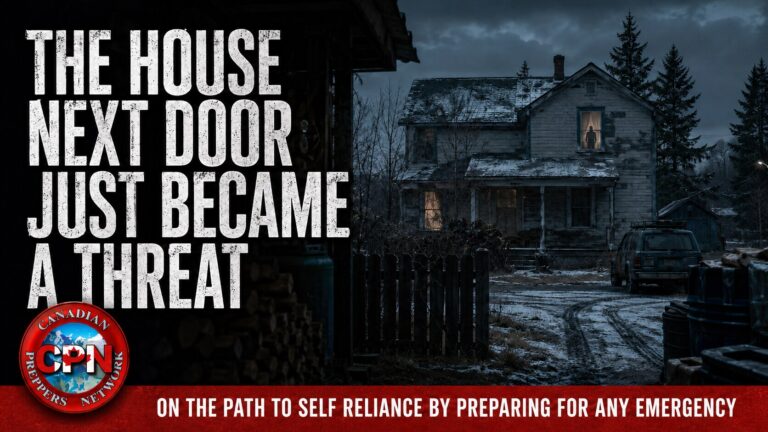
When nobody is coming to inspect the buildings—or rescue you from the wrong one
After the collapse, shelter may appear to be everywhere.
Empty houses line silent streets. Schools, stores, offices and warehouses still stand. Their roofs promise protection from rain and snow, while their walls offer relief from wind, cold and exposure.
From a distance, almost any building can look better than another night outdoors.
That appearance can kill.
A structure that survived the original disaster may have since been weakened by fire, flooding, freezing, snow load, vandalism or years without maintenance. Its basement may be flooded. Its roof may be close to failure. Its air may contain mould, smoke residue, sewage gases or chemical contamination.
It may also be occupied.
In the old world, a damaged building would be closed until professionals declared it safe. In the world that followed, nobody is coming to inspect it. The decision belongs to your group—and so do the consequences.
The objective is not to find the most comfortable-looking building. It is to determine whether the protection it offers is worth the exposure required to use it.
Stop the Group Before the Building
The first mistake often happens before anyone reaches the door.
A tired, wet or freezing group sees a standing building and begins moving toward it without a plan. Individuals spread out. People approach different entrances. Packs are dropped. Attention shifts from the surroundings to the promise of warmth.
Stop well short of the structure.
Account for everyone and keep the group together. Select a temporary rally point away from the building and identify at least one alternate shelter before committing to the first choice.
Establish rejection conditions immediately. These may include:
- Credible signs of occupancy
- Serious fire or water damage
- Leaning walls or a sagging roof
- Chemical, fuel, sewage or gas odours
- Downed electrical lines
- Flooded lower levels
- Blocked exits
- Aggressive animals
- Unexplained movement or sounds
- Any hazard the group cannot identify
These conditions must be decided before fatigue and desperation begin lowering the standard.
A building should never become acceptable simply because people are tired of searching.
Watch Before You Approach
A building that appears abandoned may still be someone’s home, observation point or supply location.
Do not rely on a quick glance through the front window. Watch from a safe distance and look for patterns.
Possible signs of occupation include:
- Smoke or heat shimmer from a chimney or vent
- Interior light visible after dark
- Curtains, blankets or cardboard covering windows
- Doors or windows that have been repaired or reinforced
- Fresh footprints, tire marks or bicycle tracks
- Snow cleared from an entrance
- Paths worn through grass, brush or debris
- Water containers or improvised collection systems
- Laundry, food packaging or relatively fresh garbage
- Cooking smells
- Animals that appear fed, restrained or protective
- Objects that change position
- Repeated voices, movement or mechanical sounds
When time permits, observe during more than one period. Activity may appear near sunrise, dusk or during poor weather when occupants believe they are less visible.
Pay attention to upper floors, rear entrances and attached outbuildings. A large building may appear empty even when one small section is occupied.
Silence proves nothing. Occupants may be sleeping, injured, frightened or deliberately keeping a low profile.
If credible evidence of occupancy exists, treat the building as claimed. The disappearance of law enforcement does not eliminate ownership, territorial behaviour or the consequences of surprising desperate people.
Avoiding contact is generally more valuable than winning a confrontation. If another shelter is available, withdraw and use it.
Look Beyond the Walls
Do not become so focused on the building that you miss the hazards surrounding it.
Study the ground, neighbouring structures, utility lines, trees, slopes and retaining walls. A relatively sound building may still sit beneath an unstable chimney, damaged power line or neighbouring wall ready to fall.
Watch for:
- Sinkholes and washed-out soil
- Cracks around the foundation
- Standing or receding floodwater
- Loose masonry
- Damaged balconies and exterior stairs
- Hanging signs or awnings
- Broken glass and exposed metal
- Trees leaning toward the structure
- Fuel containers or chemical drums
- Evidence of recent fire
- Signs that debris has recently shifted
Treat every power line as energized. Solar arrays, generators, battery systems and partial grid restoration may energize equipment even when the surrounding community is dark.
Strong or unfamiliar odours are withdrawal signals. Do not move closer simply to identify them.
Read the Structure From the Outside
The exterior assessment begins at the foundation and ends at the roof.
Leaning walls, bulging brickwork and major cracks are obvious rejection signs. More subtle warnings include crooked doors, windows that are no longer square and sections of wall separating from the roofline.
Fire damage requires particular caution. Heat can weaken hidden structural members while leaving exterior walls standing. A small burned section may have compromised the floor or roof above it.
Water can be equally destructive. It rots wood, corrodes metal, adds weight and undermines foundations. Repeated freezing and thawing enlarges cracks and pushes masonry apart.
The roof deserves special attention. Sagging sections, uneven ridgelines and pooled water suggest trouble. In Canadian winter conditions, an unheated building may carry a dangerous accumulation of snow and ice.
Commercial buildings are not automatically safer. Flat roofs can conceal heavy loads, while wide interior spaces may depend on a small number of critical supports.
If the exterior cannot be judged with reasonable confidence, reject the building. Uncertainty is itself a risk factor.
Make the Go-or-No-Go Decision
Before anyone moves closer, ask five questions:
- Is there credible evidence that someone is already inside?
- Does the structure show fire, water or impact damage?
- Can the group identify more than one escape route?
- Does the shelter provide enough benefit to justify the exposure?
- Is there a safer alternative nearby?
If the building fails one of these tests, move on.
The decision should be made by whoever has the best structural knowledge, not automatically by the loudest or most senior person. Someone with construction, firefighting, rescue or engineering experience may recognize warning signs others miss.
Once the decision is made, the group follows it. Repeatedly debating a rejected building wastes daylight and creates division.
Limit the Number Exposed
Do not send the entire group into an unknown structure.
Children, injured people and anyone not involved in the assessment should remain outside the hazard area at the agreed rally point. Essential supplies should remain consolidated and ready to move.
Everyone should know:
- Who is conducting the assessment
- Who remains with the main group
- Which areas are prohibited
- What conditions require withdrawal
- Where everyone meets afterward
- How long the assessment is expected to take
Nobody wanders. Nobody separates to “check one more room.” Nobody changes the plan without communicating it.
Use daylight whenever possible. Keep hands free, maintain an unobstructed retreat route and avoid elevators. Darkness narrows vision, hides damage and increases the chance that a simple mistake becomes permanent.
The purpose of the assessment is to reject an unsafe building quickly—not prove that it can somehow be made usable.
Floors Lie
A floor can look solid while being badly weakened underneath.
Water, rot and fire damage may be hidden below finished flooring. Areas around toilets, sinks, exterior doors, stair landings and leaking windows deserve particular suspicion.
Debris can conceal holes, missing sections and sharp objects. Concentrating several people in one area increases the load on a weakened surface.
Stairs present similar problems. Steps, railings and landings may have separated from supporting walls. A route that appears usable from above may be badly damaged underneath.
If reaching a room requires crossing an area that cannot be trusted, that room is unavailable.
No shelter space is valuable enough to justify gambling on the floor beneath it.
Keep Looking Up
People moving through debris naturally watch their feet. Many structural hazards are overhead.
Warning signs include:
- Sagging ceilings
- Wet or falling plaster
- Hanging fixtures
- Bowed roof members
- Fresh water stains
- Loose masonry
- Unexplained cracking
- Falling dust or debris
A ceiling stain indicates where water travelled, not necessarily where it entered. Extensive damage may be concealed above a small visible mark.
Listen to the building. Wind can move loose material, but repeated cracking, shifting or falling debris means withdraw. Do not remain inside attempting to diagnose the sound.
When a building begins giving warnings, believe it.
The Air Can Reject the Building
A structure may be standing and still be unusable.
Mould, sewage, smoke residue, damaged insulation, animal waste and industrial chemicals can contaminate the interior. Agricultural and commercial properties require particular caution because their former contents may not be obvious.
Dust may contain insulation fibres, lead paint or other hazardous material. Avoid disturbing debris unnecessarily.
A particulate respirator can reduce exposure to certain airborne particles. It does not replace oxygen, remove every gas or make an unknown atmosphere safe.
Burning eyes, difficulty breathing, dizziness or an unusual odour are immediate reasons to leave.
Basements are particularly suspect. They may contain flood contamination, sewage, damaged foundations and accumulated gases. Many have only one practical exit. What looks like a bunker may be a sealed trap.
Claim Only the Space You Need
If the building passes the initial assessment, resist the urge to occupy all of it.
A small shelter zone is easier to warm, illuminate, inspect and maintain. It also reduces the number of doors, windows and structural areas that must be watched.
The chosen room should have:
- A sound floor and ceiling
- At least two usable exits
- Protection from wind and precipitation
- No visible water intrusion
- Adequate ventilation
- Limited damaged glass
- Separation from contaminated areas
- Enough room without dangerous crowding
Close off and clearly mark unsafe rooms, stairways and floors. Nobody enters them alone or out of curiosity.
Keep sleeping areas away from exterior masonry, damaged chimneys and large windows. Maintain clear paths to every exit. Packs, boots, lights and critical supplies should remain organized for rapid departure.
Do not allow the group to scatter equipment throughout the building. The more established the shelter feels, the harder it becomes to abandon when conditions change.
Establish Shelter Discipline
A dangerous building begins feeling ordinary once people have spent a few nights inside. That familiarity can be deceptive.
Create simple shelter rules:
- Maintain accountability for every person
- Keep exits and travel routes clear
- Stay out of marked areas
- Control unnecessary noise and light
- Keep critical equipment together
- Inspect the occupied zone every day
- Record new damage, smells or outside activity
- Maintain an alternate shelter
- Reassess after storms, fire, flooding or freezing weather
A written observation log can reveal patterns that memory misses. Record structural changes, nearby movement, weather conditions and anything unusual around the building.
If circumstances justify it, maintain a rotating watch focused on early warning, fire detection and changing environmental conditions. The purpose is to create enough warning to withdraw—not to invite confrontation.
Security begins with awareness.
Fire and Heat Change Everything
Introducing fire or combustion into an unfamiliar building adds another hazard.
Existing fireplaces and chimneys cannot be trusted. Flues may be blocked, cracked or disconnected. Never operate barbecues, generators, camp stoves or outdoor heaters inside.
Battery-operated smoke and carbon-monoxide alarms provide an essential warning layer. Keep fire extinguishers near exits, where they can be reached without moving toward a fire.
Before using any safe indoor-rated heat source, determine:
- How ventilation will be maintained
- What combustible materials are nearby
- Who monitors the heater
- How a fire will be controlled
- Which route will be used to evacuate
Heat is valuable, but a questionable heating arrangement can destroy the only shelter available.
For more on maintaining a liveable shelter in Canadian conditions, visit CPN’s Shelter and Heat in Canada preparedness hub.
Sanitation Starts Immediately
An abandoned building without functioning utilities is not a house. It is a shell.
Toilets may not flush. Drains may back up. Lower fixtures may become entry points for sewage. Pouring water into a toilet is not a dependable solution when nobody is maintaining the municipal system.
Establish sanitation arrangements before the need becomes urgent. Keep human waste, garbage and food scraps away from sleeping, cooking and water-storage areas.
Rodents and insects will exploit exposed supplies. Store food sealed, organized and off the floor where possible.
A building that cannot support safe sanitation may work overnight but fail as a longer-term shelter.
Never Lose the Exit
The longer a group remains, the more difficult leaving becomes.
Equipment spreads out. People become comfortable. Warning signs begin to feel normal. Temporary improvements create an emotional investment in staying.
Do not allow the shelter to become a trap.
Keep critical supplies together. Maintain primary and alternate exits. Identify a fallback location before the current shelter fails. Everyone should know the rally point and the signal for immediate withdrawal.
Reassess after:
- Severe storms
- Rapid freezing or thawing
- Nearby fire
- Flooding
- Structural impacts
- New cracks or leaks
- Unexplained noises
- Signs of approaching or returning occupants
If the building no longer meets the original standard, leave while leaving remains possible.
The ruins may protect you from wind, rain and cold. They do not owe you another night.
The Final Decision
After the collapse, nobody is coming to declare a structure safe. There may be no fire department, building inspector, police patrol or rescue team.
That makes discipline more important—not less.
The best-looking building may conceal the greatest danger. A plain structure with a dry floor, sound roof and two exits may be far more valuable than a comfortable-looking house containing hidden damage.
A prepared destination remains preferable to an improvised one. A checked seasonal property, retreat or known evacuation location removes many of the unknowns associated with the ruins. CPN’s guide to finding and setting up a bug-out location in Canada can help with that planning.
Observe first. Establish limits. Control exposure. Avoid unnecessary contact. Remain ready to withdraw.
You are not taking a building.
You are deciding whether it is safe enough to keep your group alive.
Amazon Buying Box: Building-Assessment Equipment
Protective equipment cannot make an unstable or contaminated structure safe, but it can reduce exposure to common hazards during a survival assessment.
- Rechargeable LED headlamp — Keeps both hands available while examining visible hazards.
- N95 particulate respirators — Helps reduce exposure to certain airborne particles, but not gases or oxygen-deficient environments.
- Puncture-resistant work gloves — Provides basic protection from splinters, glass and sharp debris.
- Protective safety glasses — Helps protect the eyes in dusty or debris-filled areas.
- Battery-operated smoke and carbon-monoxide alarm — Provides an essential warning layer in temporary shelter.
- Compact ABC fire extinguisher — Supports basic fire readiness near occupied areas and exits.
- High-visibility marking tape — Marks prohibited rooms, damaged stairs and approved routes.
- Emergency bivy sacks — Provides portable warmth without relying on an unfamiliar heating system.
As an Amazon Associate, Canadian Preppers Network may earn from qualifying purchases.
Related Reading
Free Canadian Grid-Down Starter Kit
When the power, heat and normal services disappear, decisions made during the first few hours can shape everything that follows.
Download the free Canadian Grid-Down Starter Kit and begin building a practical household plan before you are forced to improvise.