When a neighbouring property changes hands, your entire security picture changes with it.
During normal times, the house next door is simply part of the neighbourhood. You recognize the vehicles, know when the occupants leave for work and barely notice the lights coming on at night.
After a prolonged collapse, that familiarity can disappear quickly.
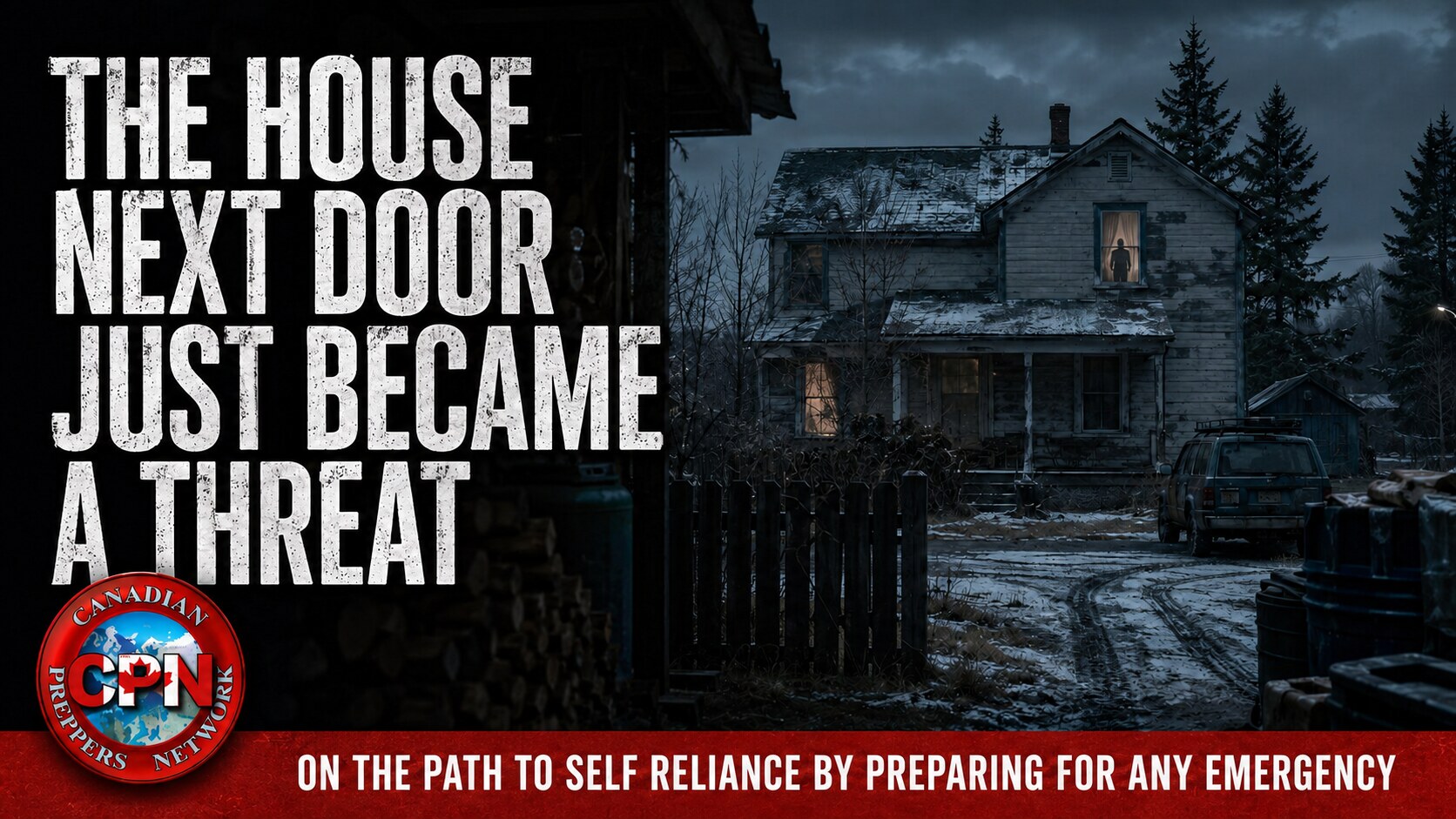
A neighbour may evacuate without warning. A vacant home may be occupied by displaced families, transient scavengers or people searching for supplies. Unknown vehicles may begin arriving after dark. Curtains may move inside a house that was supposed to be empty.
None of this automatically means the new occupants are hostile. It does mean that every assumption you previously made about that property must be reconsidered.
The threat next door does not always announce itself with shouting or violence. Sometimes it begins with one unfamiliar curtain moving in a house that was supposed to be empty.
Establish the Normal Pattern
You cannot recognize unusual activity unless you understand what normal activity looks like.
Before a crisis, learn the basic rhythm of the properties surrounding yours. You do not need to spy on your neighbours or document their private lives. Simply remain aware of what is already visible from your property:
- Which vehicles normally belong there
- Which doors and gates are regularly used
- Whether animals are usually present
- When exterior lights normally operate
- Which sheds and outbuildings are actively used
- Whether the occupants receive regular visitors
- Which windows usually have open or closed curtains
- Where people commonly enter and leave the property
After an evacuation or communications failure, changes in that pattern become important. One fresh track in a driveway may mean nothing. Repeated activity at unusual hours, combined with covered windows and unfamiliar vehicles, tells a different story.
Look for combinations of changes rather than treating every isolated detail as proof of a threat.
Recognize New Occupancy Early
An apparently vacant building can provide shelter, concealment and a clear view of surrounding homes. That makes abandoned properties attractive to displaced people and opportunists alike.
Signs of recent occupancy may include fresh footprints, displaced snow, recently opened gates, smoke, cooking smells, moved curtains, covered windows or rubbish appearing where none existed before. Water containers, improvised repairs and frequently opened doors may also indicate that someone has moved in.
Pay attention to how the occupants behave. A family attempting to establish shelter will generally develop a recognizable routine. They may unload bedding, food, clothing and water. Their movements will begin to centre on the house.
Brief visits are different. People may arrive with empty containers, enter for a short period and leave carrying something. They may use the property only at night or approach it from different directions.
A neighbouring house that is repeatedly visited but never properly occupied may be serving as a collection point, observation position or temporary staging area.
That possibility deserves attention long before anyone steps onto your property.
Reassess What They Can See
A neighbouring property that once felt harmless may overlook more of your operation than you realize.
Walk your own property and examine it from the direction of the newly occupied house. Consider what could be seen from its upper windows, attic, porch, garage, shed or tree line.
Can someone observe your main entrance? Can they see when you collect water, tend animals or start a generator? Do they have a clear view of your garden, fuel storage, solar equipment or supply deliveries? Can they estimate how many people live with you simply by watching daily movements?
Distance does not guarantee privacy. A dark upper window can conceal an observer during daylight, particularly when the interior behind it remains unlit.
Move sensitive work away from exposed sightlines where practical. Use existing fencing, sheds, vegetation and solid structures to screen routine activity. Keep stored supplies out of view and avoid repeatedly carrying obvious equipment along the same route.
Stop Broadcasting Your Routine
Predictability makes observation useful.
If you tend the animals at exactly the same time every morning, collect water by the same route and run equipment according to a fixed schedule, an observer can begin predicting when portions of your property will be unattended.
You do not need to operate in a constant state of paranoia. Small variations are enough to make your household more difficult to assess.
Change the order of routine chores. Avoid having everyone leave simultaneously. Do not repeatedly place the same person in an isolated location at the same time each day.
Control unnecessary light, smoke and noise. Conversations near open windows or property boundaries may reveal more than expected. Casual comments about dwindling fuel, stored food or absent household members can become valuable information to someone listening nearby.
Most operational-security failures do not result from dramatic interrogations. They come from ordinary conversations conducted within earshot of the wrong person.
Free Download: Prepare Before the Situation Changes
The free Canadian Grid-Down Starter Kit provides a practical starting point for organizing supplies and preparing your household for an extended disruption.
Make Contact Without Giving an Inventory
Ignoring new occupants completely can create uncertainty on both sides. A brief introduction may prevent misunderstandings and provide useful information, but first contact should be calm, cautious and limited.
If conditions permit safe communication, speak from a neutral location during daylight. Do not enter an unfamiliar building or invite unknown people inside your home merely to appear friendly.
Try to establish the basics:
- Who are they?
- Are they staying or moving on?
- How many people are with them?
- Do they have permission to use the property?
- Are they expecting anyone else?
- What immediate problem are they attempting to solve?
Offer little information about your own household. There is no reason to disclose how many people are present, how much food you possess or where you keep communications, medical and emergency supplies.
Be polite without appearing eager to provide everything they lack. Generosity may help build a useful relationship, but immediately supplying a stream of requested items can advertise abundance and create expectations you cannot sustain.
Establish Boundaries Early
Unclear boundaries become harder to enforce after they have been repeatedly ignored.
New occupants should understand which paths, buildings and resources belong to your household. Address wandering animals, open gates, water access and nighttime movement before these become established habits.
Keep the conversation factual. Explain what is private, what requires permission and what behaviour is causing concern. The objective is to remove ambiguity while learning how the other party responds to reasonable limits.
Their reaction matters.
A cooperative neighbour may have crossed a boundary because it was poorly marked or because they were unfamiliar with the area. Someone probing your household may argue, ask excessive questions, pretend not to understand or return later with a slightly different excuse.
Boundaries do more than protect space. They reveal character.
Watch for Probing Behaviour
The most important warning may not be who occupies the property, but how they interact with yours.
Probing often begins with requests that seem too minor to justify concern. Someone asks for matches, then water, then batteries. Another person casually wonders when your generator operates or how many people are staying with you.
Watch for repeated conduct such as:
- Asking who sleeps where
- Questioning household members separately
- Showing unusual interest in entrances or outbuildings
- Inventing reasons to approach different sides of the property
- Appearing whenever a particular person is alone
- Borrowing items mainly to discover what else you possess
- Watching deliveries, work parties or equipment use
- Testing whether gates, doors and boundaries are monitored
- Returning after being clearly told that an area is private
One awkward question may be harmless. A pattern of questions and minor intrusions may indicate that someone is measuring your awareness and willingness to enforce boundaries.
Record significant incidents while the details remain fresh. Note the date, time, location, description and what was said. Separate confirmed observations from assumptions.
A written record makes patterns easier to recognize and prevents rumours from controlling important decisions.
Protect Information Inside Your Household
Security fails when one person maintains caution while everyone else speaks freely.
Household members should understand what information remains private. This includes supply levels, medical conditions, storage locations, work schedules, communications capabilities and periods when the property has fewer occupants.
Younger or inexperienced members should not be frightened into silence, but they should know that friendly questions from unfamiliar adults do not require detailed answers. A simple response such as “You will have to ask the person in charge” is enough.
New neighbours may also attempt to establish separate arrangements with individual household members. This is not automatically malicious, but conflicting stories and private agreements can create dangerous confusion.
Important requests, exchanges and agreements should be brought back to the household rather than handled secretly.
Tighten Security in Stages
A changing property next door does not require an immediate confrontation. It requires a proportionate response.
Begin by improving observation and reducing what your household reveals. Check locks, gates, exterior lighting and early-warning measures. Move valuable equipment away from exposed areas and make sure everyone knows what to do when an unknown person approaches.
If probing or boundary violations continue, reduce casual contact. Stop lending equipment, restrict access and communicate expectations clearly. Increase observation during the times when suspicious activity has previously occurred.
Where functioning authorities or property owners remain reachable, document trespassing, theft or threats and report them through lawful channels.
The goal is not to control the neighbouring property. It is to prevent changes there from compromising yours.
Neighbours Can Also Become Allies
A new occupant is not automatically an enemy. Displaced people may bring useful skills, information and additional eyes on local approach routes. They may be just as concerned about your intentions as you are about theirs.
Trust should be built through consistent behaviour rather than granted after one friendly conversation.
Start with limited, low-risk cooperation before exposing critical resources or information. Observe whether agreements are kept, boundaries are respected and sensitive information is handled responsibly.
Reliable cooperation over time may eventually justify closer coordination.
Good neighbours can dramatically improve local security. Unreliable neighbours can quietly dismantle it.
Neighbourhood Early-Warning Buying Box
Disclosure: As an Amazon Associate, Canadian Preppers Network may earn from qualifying purchases.
Early-warning equipment should improve awareness without replacing observation, clear boundaries and household discipline.
Wireless Driveway Alarms
Provide advance notice when a person or vehicle enters a monitored approach. Look for weather-resistant sensors, adjustable sensitivity and receivers that can operate from backup power.
Trail Cameras
Useful for documenting unexplained activity around remote lanes, gates and outbuildings. Models that record to memory cards can continue working without internet service.
Battery-Powered Motion Alarms
Standalone alarms can provide simple warning around sheds, gates and secondary approaches without depending on household electricity or Wi-Fi.
Rechargeable Batteries and Chargers
Rechargeable AA and AAA batteries help keep cameras, alarms and other monitoring equipment functioning throughout an extended outage.
Bottom line: Purchase equipment that extends your awareness. No alarm, camera or sensor can compensate for predictable routines or ignored warning signs.
Related Reading
Final Thoughts
Preparedness security is not limited to doors, fences and equipment. It depends on noticing when the environment around you has changed.
An abandoned house can become occupied overnight. A familiar property can pass into unfamiliar hands. A seemingly harmless visitor can become a regular observer of your routines.
Recognize the change early. Reduce what your household broadcasts. Establish calm boundaries, watch for repeated probing and allow trust to develop slowly.
The house next door does not need to be openly hostile to alter your security situation. The moment its occupants change, your plan must change with them.