Before you run to the creek, know which questionable water sources are worth saving, which are only good for sanitation, and which should be left alone.
When people think about emergency water, they usually picture clear streams, hand pumps, rain barrels, or cases of bottled water stacked in the basement. That is the clean version of preparedness. It is useful, but it is also incomplete.
In a serious grid-down situation, the first water you collect may not be clean. It may not come from a picturesque wilderness stream. It may come from a roof, a sump pit, a water heater, a toilet tank, a half-filled kiddie pool, a flooded basement, a dripping eavestrough, or a muddy depression behind the shed.
That does not mean all dirty water is equal. Some questionable sources can be turned into drinking water with the right process. Some should be reserved for washing, flushing, soaking laundry, or cooling livestock. Some should be avoided entirely unless there is no other option and professional-level treatment is available.
The real skill is not simply finding water.
The real skill is sorting water by risk before desperation forces bad decisions.
Canadian preppers often focus on storage first, and rightly so. Stored potable water buys time. It keeps panic away from the door. It gives the household a buffer while everyone else is still trying to figure out why the taps stopped. If your water storage plan is weak, start with the basics here:
Water Storage and Filtration for Canadian Households
But storage is only the first layer. Once stored water begins to run down, you need a collection plan. More importantly, you need a dirty water collection plan.
Clean Water Is Not Always Available First
In a short outage, most people can get by with bottled water, stored jugs, or whatever remains in the plumbing. In a longer disruption, those sources disappear quickly. Municipal pressure may drop. Wells may stop working. Pumps may go silent. Roads may be blocked. Stores may be empty. Neighbours may be asking instead of offering.
That is when the household starts looking around.
The problem is that people often collect whatever is easiest before thinking about what it touched, where it came from, and what it might contain. Muddy creek water and roof runoff are not the same problem. Floodwater and rain barrel water are not the same problem. Water from a hot water tank and water from a basement sump pit are not in the same category.
A practical water system should separate sources into three broad groups:
- Potential drinking water after treatment.
- Utility water for washing, flushing, cleaning, and garden use.
- Avoid-if-possible water that may be chemically contaminated, sewage-contaminated, or otherwise beyond normal household treatment.
That sorting matters because a household that treats every source as drinking water will burn through filters, fuel, chemicals, and time. A household that treats every source as useless may run out of water while usable water is sitting nearby.
The First Source: Water Already Inside the House
Before anyone goes outside with buckets, check the water that is already inside the home.
The hot water tank may contain a significant amount of water, depending on the system. Toilet tanks, not bowls, may hold water that has not been exposed to waste if no cleaners or chemical blocks are being used. Pipes may hold a limited amount of drainable water. Ice cubes can melt. Canned vegetables, fruit, and soups contain liquid that can be used as part of meal preparation.
This is not glamorous water collection, but it is often the lowest-risk emergency source because it began as treated household water.
That does not mean it should be consumed blindly. Sediment, tank condition, plumbing materials, and chemical additives all matter. Still, in the early stage of a water emergency, indoor water is often safer and easier to control than running outside to collect from the nearest ditch.
The key is to think before flushing, draining, or wasting. Once the system is down, every litre already inside the house becomes part of the inventory.
The Second Source: Roof Runoff
Rainwater is one of the most obvious emergency sources, but roof runoff is not automatically clean.
Roof water may carry bird droppings, animal debris, asphalt residue, pollen, leaves, dust, insects, and whatever has settled on the roof between storms. After wildfire smoke, heavy wind, or long dry periods, the first flush off a roof can be especially dirty.
That does not make roof runoff useless. It means it needs discipline.
The first water off the roof should be diverted away when possible. Collection containers should be covered. Screens should keep leaves and insects out. Opaque containers are better than clear ones because sunlight encourages algae. Water meant for drinking needs proper filtration and purification before use.
Roof runoff is excellent for utility purposes. Garden watering, tool rinsing, toilet flushing, and some cleaning tasks can all use water that would be wasteful to treat as drinking water. In a long emergency, that distinction matters. Every litre of roof water used for flushing is one litre of stored drinking water saved.
For a deeper CPN water framework, keep this hub handy:
Water Collection & Purification in Canada
The Third Source: Rain Barrels and Stored Outdoor Water
Rain barrels are useful, but they are often misunderstood.
A rain barrel is not a complete water plan. It is a collection container. Without screening, shade, maintenance, rotation, and treatment, it can become a warm biological soup. Mosquitoes, algae, roof debris, and animal contamination can turn a good idea into a questionable source very quickly.
That does not mean rain barrels are bad. They are excellent for gardening, washing, flushing, and emergency reserve use. They also reduce the amount of potable water wasted on tasks that do not require potable water.
The mistake is treating rain barrel water like bottled water.
In a collapse situation, rain barrel water should be labelled and managed by purpose. One barrel might be dedicated to garden use. Another might be reserved for washing and flushing. A cleaner, covered, better-controlled system might feed into a treatment process for drinking water, but only after proper filtration and purification.
The point is not to reject rain barrels. The point is to stop pretending they are magic.
The Fourth Source: Creeks, Ponds, Ditches, and Low Spots
Surface water is where many people instinctively go once stored water runs low. It is also where risk rises quickly.
A clear stream can still carry biological contamination. A muddy creek may clog filters rapidly. A pond may contain algae, animal waste, agricultural runoff, or decaying organic matter. Ditches and low spots can collect road residue, fuel, pesticides, sewage overflow, and dead animals.
The first rule is simple: upstream matters.
What is above your collection point? Houses? Farms? Roads? Industrial areas? Livestock? Beavers? Septic systems? Flooded fields? A beautiful-looking creek below a road washout or farmyard can be worse than ugly-looking rainwater from a controlled roof.
Surface water should usually be settled and pre-filtered before it ever reaches a serious filter. This reduces sediment load and helps protect your better equipment. Dirty water should pass through a staged process: settling first, rough pre-filtration second, proper filtration third, and purification where required.
That process takes time. It also takes containers. This is where many emergency plans fail. People buy one filter and think the problem is solved. In reality, they also need buckets, lids, clean storage containers, dirty-water containers, strainers, cloth, spigots, and a way to prevent cross-contamination between untreated and treated water.
The filter is only one part of the system.
The Fifth Source: Snow and Ice
In Canada, snow looks like an obvious water source. In practice, it is labour-intensive and fuel-hungry.
Snow has low water yield compared with its volume. A full pot of snow may melt into far less water than expected. If you are using propane, wood, alcohol, or camp fuel to melt snow, that water has an energy cost.
Snow can still be valuable, especially when other water is frozen or inaccessible. But it should be collected carefully. Avoid snow from roadsides, driveways, animal tracks, roofs with questionable debris, and areas exposed to fuel, soot, or chemical contamination.
Clean-looking snow still needs safe handling. It should be melted in clean containers and treated according to intended use. Snowmelt for washing is one thing. Snowmelt for drinking deserves more care.
The bigger lesson is this: in winter, stored water and indoor reserves matter even more. You do not want your primary water plan to depend on melting snow all day.
The Sixth Source: Greywater
Greywater is lightly used water from washing, rinsing, or cleaning tasks. In a grid-down home, it becomes valuable.
Water used to rinse vegetables might be used again for flushing. Wash water might soak dirty clothing before final washing. Handwashing water might be collected for outdoor cleaning. Dish rinse water might be used for toilet flushing if grease and food debris are controlled.
Greywater is not drinking water. It should not be stored casually inside the living space. It can smell, grow bacteria, and attract pests. But when managed carefully and used quickly, it can reduce total water demand.
This is where household water discipline becomes more important than gear. A family that dumps every basin immediately will waste water. A family that reuses greywater intelligently can stretch stored water much further.
For related sanitation planning, see:
Building a Complete Off-Grid Sanitation System: Waste, Water, and Hygiene That Actually Works
Water You Should Be Very Careful With
Some water sources are not just dirty. They may be dangerous in ways ordinary boiling or basic filtration will not fix.
Floodwater is a major example. It can contain sewage, fuel, chemicals, pesticides, animal waste, sharp debris, and contamination from buildings, vehicles, farms, and industrial sites. Water from a flooded basement may be similarly compromised, especially if sewage backup, fuel tanks, stored chemicals, or contaminated soil are involved.
Roadside puddles, ditch water near traffic, water near farms after runoff, water near burned structures, and water near industrial sites should all be treated with suspicion.
The hard truth is that biological contamination and chemical contamination are different problems. Boiling can deal with many biological threats, but it does not remove chemicals. Some filters improve taste and reduce sediment but do not make chemically contaminated water safe. A household system must recognize that difference before someone gets sick.
When in doubt, downgrade questionable water to non-contact utility use or avoid it entirely. Do not waste your best filters trying to save water that should never have entered the drinking-water chain.
The Dirty Water Sorting System
A practical household should have a sorting system before the emergency happens.
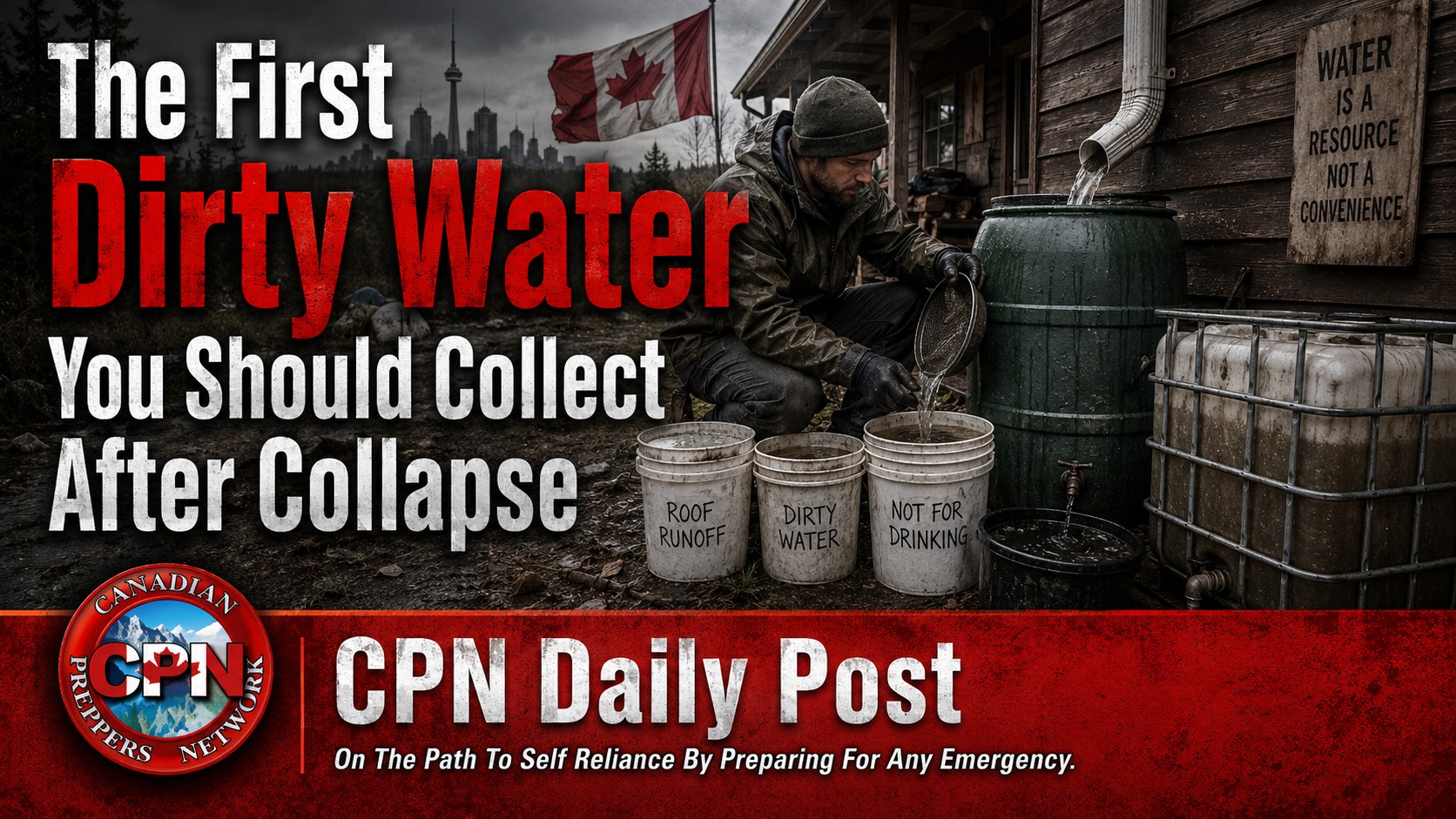
Use separate containers for dirty collection, settling, treatment, and clean storage. Mark them clearly. Do not dip dirty scoops into clean water. Do not use the same hose or funnel for untreated and treated water unless it has been properly cleaned. Keep lids on everything. Store clean water away from fuel, chemicals, garbage, and animals.
Think in terms of lanes:
- Drinking and cooking water.
- Hygiene water.
- Cleaning and laundry water.
- Flushing water.
- Garden and livestock water.
- Unsafe or suspect water.
This prevents a common collapse problem: wasting clean water on dirty jobs while risky water sits unused. It also prevents the opposite problem: using questionable water for drinking because nobody labelled anything.
A good water system is not just about making water safe. It is about assigning water to the right job.
Buying Box: Dirty Water Collection and Control Supplies
Disclosure: As an Amazon Associate, Canadian Preppers Network may earn from qualifying purchases.
A dirty water collection system needs more than a filter. These are the kinds of supplies that help separate, move, pre-filter, store, and manage questionable water before it becomes a household problem.
Collapsible Water Containers
Useful for collecting roof runoff, hauling surface water, and separating untreated water from clean storage.
Search Amazon.ca for collapsible water containers
Food-Grade Buckets With Lids
Useful for settling dirty water, storing utility water, and keeping debris, insects, and animals out.
Search Amazon.ca for food-grade buckets with lids
Bucket Spigots and Water Container Taps
Useful for controlled dispensing so people are not dipping cups or hands into stored water.
Search Amazon.ca for bucket spigots and water taps
Mesh Gutter Guards and Downspout Screens
Useful for keeping leaves, insects, and large debris out of rain collection systems.
Search Amazon.ca for gutter guards and downspout screens
First-Flush Rainwater Diverter Parts
Useful for reducing the dirtiest first runoff from a roof before water enters storage.
Search Amazon.ca for first-flush rainwater diverters
Gravity Water Filter System
Useful as one layer in a household treatment system when power and pressure are unavailable.
Search Amazon.ca for gravity water filter systems
Water Test Strips
Useful for monitoring stored water, chlorine levels, and general water quality indicators depending on the strip type.
Search Amazon.ca for drinking water test strips
Fine Mesh Strainers and Reusable Filter Bags
Useful for rough pre-filtration before water reaches better filters.
Final Takeaway
The first dirty water you collect after collapse should not automatically become drinking water.
That is the mistake.
The better approach is to collect early, sort carefully, treat according to risk, and assign each source to the right job. Indoor water, roof runoff, rain barrels, surface water, snow, and greywater all have potential uses. None should be trusted blindly. None should be wasted thoughtlessly.
Preparedness is not just having clean water stored.
It is knowing what to do when the clean water starts running out.