Household preparedness is stronger when responsibility can change hands.
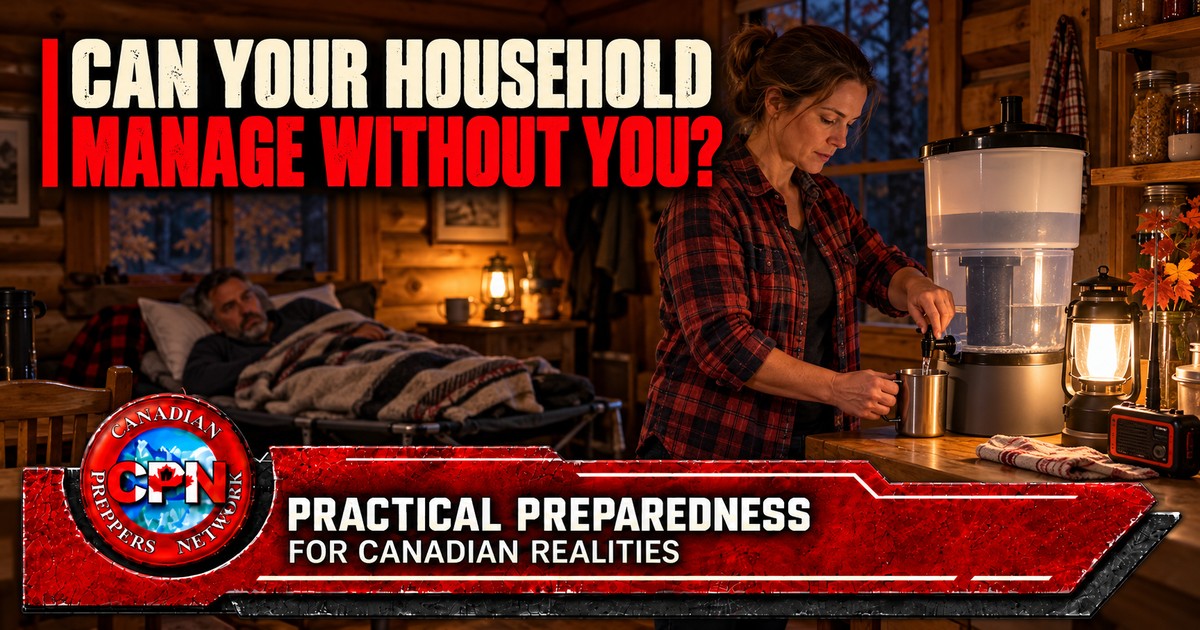
You are sick in bed. Nothing dramatic enough to require evacuation, but enough that you cannot carry water, start the generator or stand outside explaining which cord goes where.
The household still needs drinking water. Supper still needs cooking. Batteries are running low, and the temperature is dropping.
Does another adult take over, or does everyone keep coming back to you?
A household can own months of supplies and still depend on one person to make everything work. During prolonged disruption, that dependence becomes a weakness. It also puts relentless pressure on whoever carries the knowledge.
Today’s exercise is simple: let another capable adult run the essential household systems while you remain available to intervene. Find out what works, what needs teaching and which equipment makes independence easier.
The Hidden Dependency in Household Preparedness
Household preparedness often becomes the responsibility of one person.
They research equipment, buy supplies, maintain the backup systems and decide where everything goes. Over time, they become the person everyone asks.
That arrangement can work comfortably while normal services remain available. During a prolonged outage or collapse, the questions become more consequential.
How do we treat this water? Which fuel belongs in that stove? What can this battery supply? Who are we supposed to contact?
The person carrying all that knowledge may also be gathering firewood, repairing equipment, managing supplies and trying to rest.
Being needed for every decision is exhausting. Being unable to act without someone else’s instructions can be frightening.
Shared competence gives both sides some relief. One adult can step away, and another can act with confidence.
Start With the Household You Actually Have
This exercise needs to reflect people’s real abilities.
An adult with limited mobility may be able to operate the radios, manage charging or monitor a water filter while someone else handles lifting. A person uncomfortable with engines may still be perfectly capable of running meals, lighting and drinking water.
The objective of household preparedness is dependable coverage of essential tasks.
List the things that must continue if your usual organiser becomes unavailable:
- Producing safe drinking water.
- Preparing meals.
- Maintaining safe heat and lighting.
- Charging essential equipment.
- Communicating with the household’s agreed contacts.
- Recognising when a system needs to be stopped.
Choose a replacement operator for each essential task where your household has enough capable adults. Then check whether that person has actually performed it.
Watching a demonstration is a beginning. Completing the task independently tells you much more.
Water: Can Someone Else Produce the Next Batch?
Water is a useful place to begin because the job has a clear outcome.
Ask another adult to locate the equipment, identify the untreated water container and produce drinking water using your established method.
If you use a gravity filter, they need to understand its particular instructions, what it is designed to remove and any additional treatment your water source requires. A filter’s capabilities depend on the model; clear-looking water does not establish that treatment was adequate.
Can the replacement operator assemble the system, keep untreated water away from the clean outlet and recognise a problem?
Cold weather adds another question: do they know how your equipment must be protected from freezing? Follow the manufacturer’s instructions for the specific filter.
A gravity system may be a useful purchase where it reduces pumping or makes treatment easier for other household members. Its value comes from being suitable for the water and manageable by the people using it.
The practical test: have the replacement operator complete a normal treatment cycle and explain how they know the process was followed correctly.
Cooking: Can Supper Happen Without Your Supervision?
You may know exactly how your backup stove behaves. Someone else may only know where you keep it.
Have another adult prepare a familiar meal using the equipment and ingredients you expect to rely on during an outage.
Start with food already in your preparedness supplies. This tests the whole process: finding ingredients, measuring water, choosing cookware, operating the stove and cleaning up.
Keep the exercise manageable. A straightforward pot of soup or rice-based meal can reveal plenty.
Can they identify the correct fuel? Set the equipment on a stable surface? Control the heat? Shut it down properly?
Use combustion equipment only in locations and conditions permitted by its manufacturer. An outdoor stove remains outdoor equipment when the weather turns unpleasant.
Canadian winter conditions make this especially relevant. If your cooking arrangement only works comfortably on a warm, calm afternoon, the household needs to understand its limitations before January.
A suitable backup stove, stable cookware and an easy-to-use ignition method can support this task. Adding another stove with an unfamiliar fuel or operating procedure may simply create more work.
The practical test: the replacement operator prepares and serves a complete meal, then leaves the equipment safely shut down.
Power: Can Another Adult Keep the Essentials Running?
Backup power often becomes the most personalised part of a preparedness setup.
One person knows the charging cables, the battery connections and which appliances can run together. Everyone else sees a collection of boxes and wires.
Begin with the tasks another adult can safely perform: charging radios, phones, headlamps and power banks using the household’s established equipment.
They should be able to identify the correct charger, connect it properly and recognise normal operation. They also need to know when to stop—for example, if equipment is damaged, unusually hot or behaving unexpectedly.
If a generator is part of the plan, training must cover its operating instructions and the household’s safe arrangement, including outdoor placement, exhaust hazards, electrical connections, loads and refuelling. Supplying household circuits requires a properly installed transfer arrangement. A replacement operator should never have to improvise connections.
Avoid opening electrical panels or altering wiring as part of this exercise.
Purchases should reduce confusion. Compatible rechargeable lighting, clearly matched chargers and suitable power banks can make everyday power tasks easier to share.
Before buying another device, check whether it works with the charging system you already use.
The practical test: another adult completes a routine charging session and explains what equipment can be connected.
Lighting: Give People the Ability to Work Independently
A person trying to cook, inspect a filter or find supplies needs usable light.
A rechargeable headlamp gives an adult both hands for a task. A stable lantern can light a shared work area. Keeping these accessible allows people to begin a job without first hunting down the household’s equipment expert.
Have each adult practise finding and operating the lighting they would use during an outage. Check the controls in darkness. Confirm that the charging cable or spare batteries can be found.
Consider ease of use when choosing equipment. Complicated modes and unfamiliar controls can frustrate someone who simply needs enough light to complete a job.
Standardising a few dependable lights may help more than accumulating a drawer full of unrelated models.
The practical test: after dark, the replacement operator retrieves a light and completes an ordinary household task without assistance.
Communications: Can Someone Else Make Contact?
A radio is only useful when its operator knows what to do with it.
Another adult should be able to turn it on, select the agreed channel or frequency, adjust the volume and contact the intended person.
They should also understand what to do when nobody answers. Otherwise, an unanswered call can quickly become uncertainty about whether the equipment is broken or the other person is in trouble.
Practise from locations relevant to your property and routine. Buildings, terrain and other conditions affect radio performance, so advertised range figures cannot replace a test.
Choose equipment appropriate to the service and the operators’ qualifications. For routine household exercises, keep amateur-radio transmission with appropriately qualified operators. Suitable Canadian-market FRS radios offer a simpler option for local household practice.
A compatible pair of appropriate radios can support shared responsibility around a property. Extra complexity needs a clear purpose.
The practical test: the replacement operator makes an agreed check-in and follows the household’s procedure if the first call goes unanswered.
Step Back Without Turning It Into an Exam
Once the individual tasks have been practised, combine a few into a realistic exercise.
Let another adult manage an afternoon or evening: treat water, prepare supper, organise lighting and charge the equipment that needs it.
Stay available. Intervene immediately if something becomes unsafe.
For ordinary hesitation, give the person room to think. Constant correction can make people reluctant to try, especially when the usual operator has strong preferences about how everything should be done.
Explain which steps are essential to safety or correct operation. Allow reasonable differences in the rest.
Afterwards, discuss three questions:
- What could you complete confidently?
- Where did you need help?
- What would make the task easier next time?
A missing skill calls for practice. An awkward piece of equipment may call for a better arrangement. A cable stored somewhere unexpected may only need to move.
Avoid treating every difficulty as a shopping opportunity.
Buy Equipment That More Than One Person Can Use
Good household preparedness starts with a real gap. Choose equipment to address it. The strongest purchase helps another adult complete an essential task reliably.
A gravity filter might reduce the physical effort of treating water. A stable camp stove might make backup cooking easier to learn. A headlamp might let someone work without another person holding a torch. Compatible charging equipment might remove a daily source of confusion.
Check the whole job before making the purchase. Can the intended user lift a filled water reservoir? Operate the stove controls with cold hands? Read the charger indicators? Replace the radio batteries?
Equipment that works well for you still needs to work for the person taking over.
Make Yourself Less Essential
There is satisfaction in knowing you can keep your household functioning when services fail.
There should also be satisfaction in watching someone else do it.
Shared responsibility strengthens household preparedness by giving you time to recover, repair equipment or attend to another problem. It gives the people around you practical confidence and a clearer role in the household’s survival.
Start with one task this week. Teach it, let another adult perform it and work through the difficulties together.
Then build towards a day when you can rest without the entire preparedness plan resting beside you.
Related Reading
- Mental Resilience & Community Building in Canada — connect household roles, practical confidence and shared responsibility.
- Your Generator Shouldn’t Run All Night — organise generator use around essential loads and planned charging sessions.
- A Stomach Bug Can Cripple Your Retreat — prepare for illness that sidelines workers and increases the household workload.