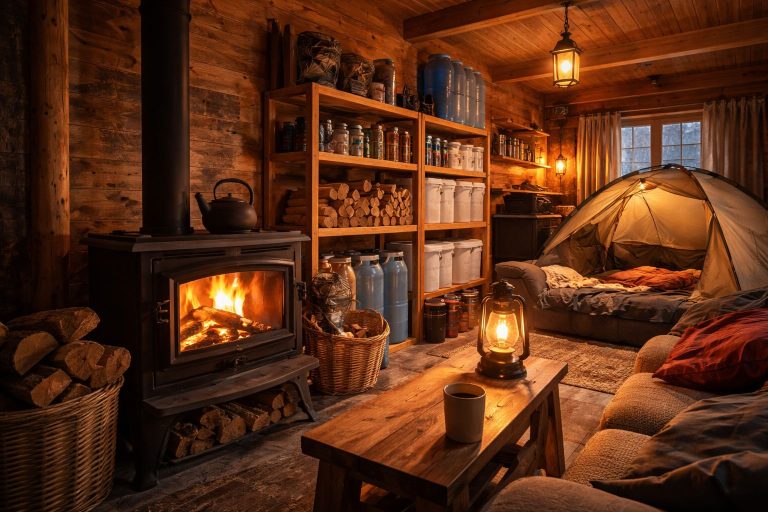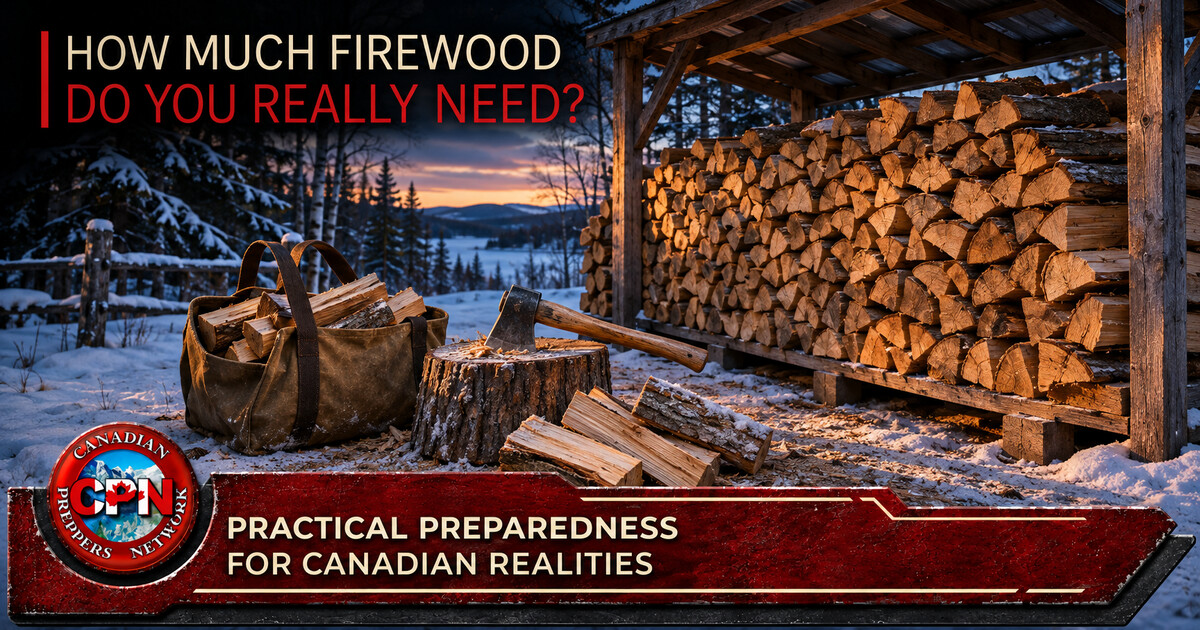
The furnace quits on Friday night. You’ve got a wood stove, a full rack by the door and another stack behind the shed. By Sunday morning, the rack is nearly empty. The stack behind the shed still looks generous, but the path is buried, half the wood is still green, and the largest pieces won’t fit through the stove door.
How many more nights can your firewood reserve keep the house warm?
You can answer that before the power fails. Measure what your stove burns over a cold day, count the dry wood you can actually get to, and decide how much of that supply belongs in your firewood reserve.
Table of Contents
Measure a full day of heat
If you normally light the stove after supper and let the furnace take over before dawn, your evening wood use tells you very little about how long a firewood reserve will last without the furnace. Find a cold day when you can track the stove through a full 24 hours of normal, safe operation. Record the outdoor conditions, the temperature in the rooms you rely on, and whether the furnace or another heater came on. Keep your regular heat available for the exercise. If it contributes, record that alongside the wood use.
A bathroom scale and a sturdy tote will do. Weigh yourself holding the empty tote, then weigh yourself with a load you can comfortably carry. Subtract the first reading from the second. Keep a tally as you bring wood in, and account for any pieces left over at the end. If you’d rather count loads, use the same carrier and roughly the same size and mix of splits each time. A basket of light softwood and a basket of dense hardwood can look equally full.
Start and finish at roughly the same point in your stove’s burn cycle. Record the overnight period too. If you let the fire go out and the house cooled until morning, write that down. The same goes for a distant bedroom or bathroom that stayed cold while the stove room was comfortable. You’re measuring how the house actually fared along with how much wood went through the stove.
Repeat the exercise in colder or windier weather if you can. For outage planning, start with the higher daily burn you observed while keeping the occupied rooms acceptably warm. If the furnace helped on both days, treat the wood tally as a starting point and allow for the heat the furnace supplied.
What to put in the burn log
Write the date, outdoor low and wind conditions on one line. On the next, record the room temperature at breakfast, bedtime and the next morning. Then record the wood used, what was left by the stove and when the furnace or another heater ran. Note which rooms were occupied and whether you closed any doors. Keep the sheet with your outage plan so someone else can repeat the measurements.
After a few runs, compare days that started at similar indoor temperatures. A stove that spends the morning warming a house that has already cooled is doing a different job from one maintaining heat overnight. If the furnace ran for hours, label that entry as a shared heating day. Use it to understand the house’s weak spots and look for a colder day when the wood stove carries more of the load. Record the wood species or mix too, especially if you count baskets instead of weighing loads.
|


Count the dry wood in your firewood reserve
Walk the stacks with a moisture meter, a tape measure and a notebook. Sort the wood into three groups before you count it toward your firewood reserve.
- Ready now: Dry, split wood that fits your stove and can be reached in winter.
- Still drying: Green wood, large rounds and batches that read too wet on a freshly split face.
- Hard to reach: Dry wood you’ll struggle to get to if snow drifts in, the path ices over or the shed door freezes shut.
Take samples from different parts of each stack, including a few larger splits. Split each sample again and test near the centre of the newly exposed face. Follow the meter’s instructions for wood temperature and pin placement. The Hearth, Patio & Barbecue Association of Canada recommends firewood below 20% moisture and outdoor storage off the ground with the top covered and the sides open to airflow. HPBAC’s Burn Smart guide
If you buy bulk firewood, ask for the quantity in full cords or stacked cubic metres and measure what arrives. A full cord is 128 stacked cubic feet. A row that measures 4 feet high by 8 feet long with 16-inch splits holds about one-third of a full cord. Ask for the split length as well. A good delivery can still leave you with a pile of pieces that need cutting before they fit your stove. Measurement Canada’s firewood buying guide
Calculate your firewood reserve in days
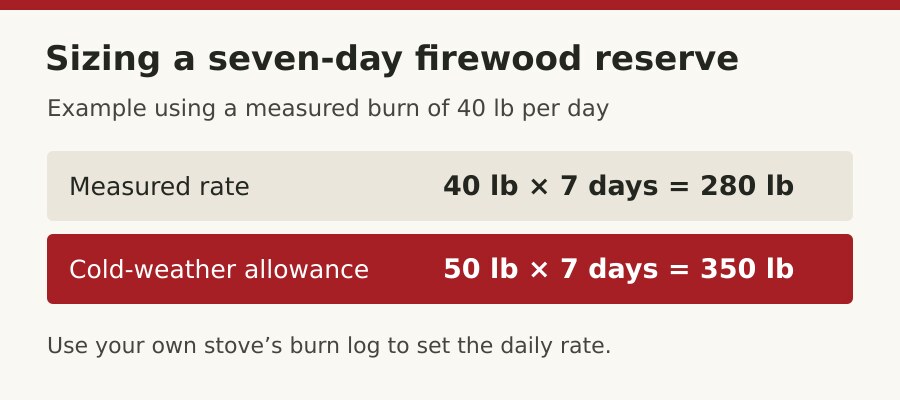
Say your stove used 40 lb of dry wood in 24 hours on a cold day. At that rate, seven days would use 280 lb. If you budget 50 lb a day to allow for a colder stretch, your seven-day target becomes 350 lb. Use your own burn log and pick an allowance based on the conditions you’ve measured.
You can do the same exercise with a rack or a bin. If your marked firewood reserve holds ten loads like the ones you counted and you used two a day, you have about five days at that burn rate. Put a marker where the last two days of wood begin. When you reach it during a prolonged outage, put the next part of your heat plan into effect. That may mean switching to another installed heat source or moving the household somewhere warm while travel is still possible. If the house becomes unsafe sooner, act sooner.
Keep the firewood reserve separate from your everyday winter use. If you pull from it during normal operation, refill it with dry wood. Mark the date you last topped up the firewood reserve so you can check it before the next cold snap. A fresh delivery in the same spot can make the stack look restored months before it’s ready to burn.
|


Keep your firewood reserve accessible after a storm
Put the first few days of your firewood reserve on a short, clear route from the door you’ll actually use. Think about where the wind leaves drifts and where meltwater refreezes. Keep a shovel and a light where you can reach them before stepping outside. Store a separate supply of dry kindling and keep smaller splits handy so you can restart a cold stove without processing wood in the dark.
Work out who will bring in the wood if the usual person is sick or injured. A smaller carrier and a well placed rack can make the difference between a job someone else can take over and a pile that stays where it is.
Keep combustibles clear of the stove and follow the appliance manual for clearances and operation. Check smoke and carbon monoxide alarms, including their battery backup, and keep up with chimney inspection and maintenance. If the stove can’t keep the occupied space warm within its normal operating limits, use your backup plan. HPBAC’s guide to heating safely during a power outage
Before the next cold snap, mark off one day’s worth of dry wood and see what that looks like beside the whole stack. Then ask how much of the rest you could bring in after a night of freezing rain. That’s the pile you can plan around.
Plan the first 72 hours
Firewood is one part of riding out a winter outage. Use CPN’s free guide to check water, food, lighting and communications while you work out your firewood reserve.
Download the Canadian Grid-Down Starter Kit: The First 72 Hours
Related Reading
- Shelter & Heat in Canada
- Your Wood Stove Needs Spare Parts Too
- Protect Your Pipes When the Power Fails
Gear for measuring and handling your firewood reserve
Amazon.ca
As an Amazon Associate, Canadian Preppers Network earns from qualifying purchases.
Pin moisture meter: Look for a meter with a wood setting and instructions for measuring a freshly split face.
https://www.amazon.ca/s?k=pin+firewood+moisture+meter&tag=canadianprep-20&ascsubtag=dailypost
Firewood log carrier: Choose a size that everyone who may need to bring in wood can handle comfortably when it’s full.
https://www.amazon.ca/s?k=canvas+firewood+log+carrier&tag=canadianprep-20&ascsubtag=dailypost
VEVOR Canada
Canadian Preppers Network may earn a commission from qualifying purchases through these VEVOR links.
4 ft outdoor firewood rack with top cover: Keep the ready-to-burn stack off the ground and leave room for air to move around the sides.
Manual kindling splitter: Make smaller pieces from dry splits ahead of an outage without relying on electricity.