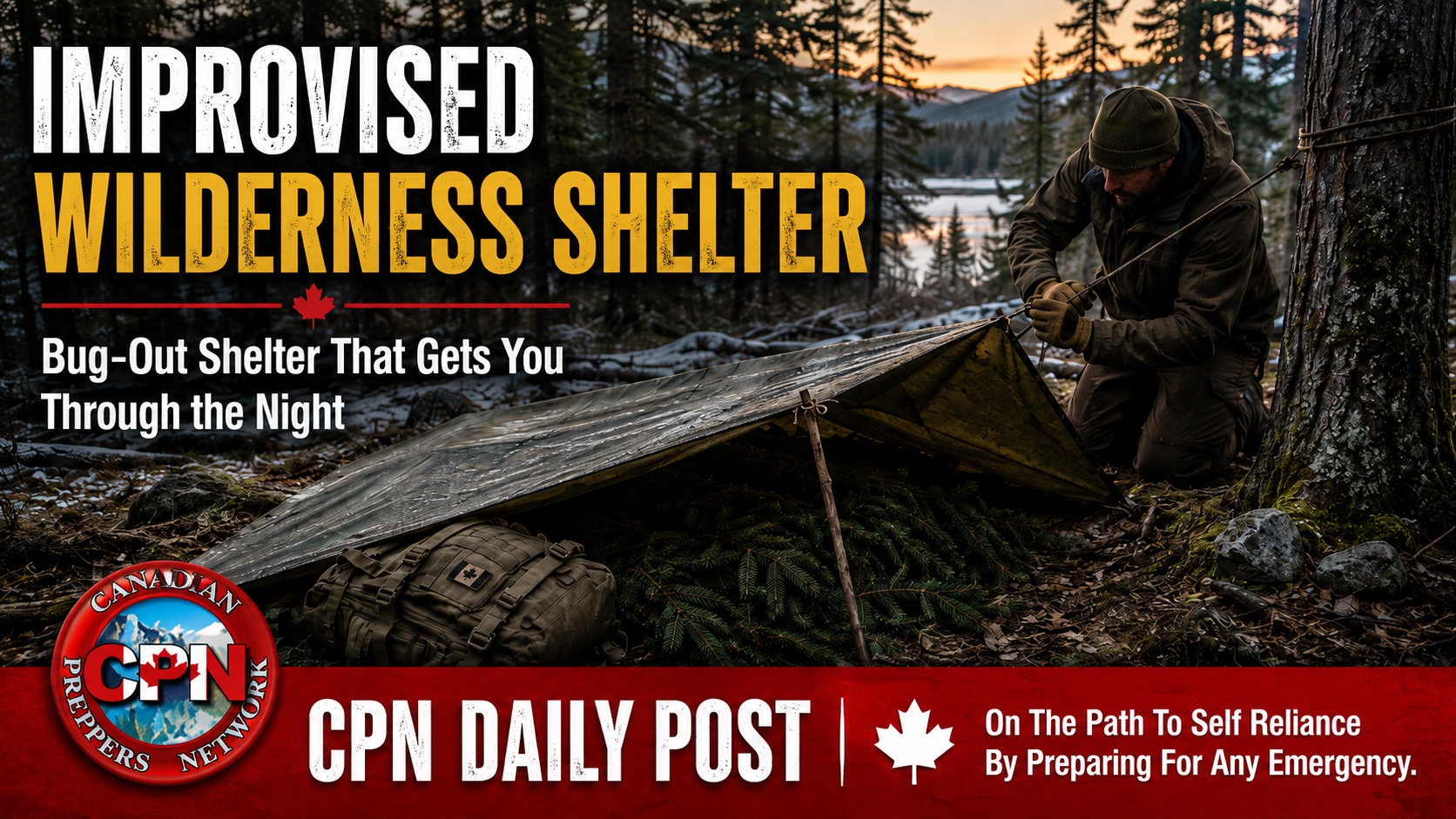
Improvised wilderness shelter for staying alive, staying mobile, and getting through one more night
A bug out rarely happens the way people picture it.
In the comfortable version, the vehicle is packed, the fuel tank is full, the roads are open, and the family rolls straight to a cabin, retreat, campground, or rural property. Everyone arrives tired but intact, with gear still organized and shelter already waiting.
The harder version is different. Roads are blocked. Bridges are washed out. A vehicle gets stuck, damaged, or abandoned. A planned route becomes unsafe. Fuel runs out. A family, couple, or small group is forced off the road and onto trails, logging roads, hydro cuts, fields, or bush. Suddenly, “bugging out” is no longer a transportation problem. It is a wilderness movement problem.
That is where shelter becomes brutally simple.
An improvised shelter during a wilderness bug out does not need to be pretty. It does not need to impress anyone. It does not need to look like a bushcraft magazine cover. It has one job: keep you dry enough, warm enough, protected enough, and rested enough to move again tomorrow.
That single night matters. Exhaustion ruins judgement. Wet clothing pulls heat away from the body. Wind turns mild cold into a serious problem. Poor sleep makes navigation, communication, first aid, and decision-making worse the next day. In a real evacuation or collapse scenario, the shelter is not the destination. It is a tool that buys time.
Canadian preppers already understand that shelter and heat are life-support systems, not comfort items. The same thinking that applies at home during a power failure also applies in the bush during a forced movement. The difference is that in the wilderness, the margin for error is smaller, the daylight is shorter, and the work has to be done while tired.
Stop Thinking Like a Camper
Camping is planned. Bugging out is reactive.
A camper chooses the weekend, checks the forecast, packs comfort gear, and usually has the option to leave. A person forced into a wilderness shelter during a bug out may be dealing with fear, bad weather, physical fatigue, limited food, wet boots, children, older family members, pets, injury, or a group that has already made mistakes earlier in the day.
That changes the standard.
The question is not, “What is the best shelter I can build?” The question is, “What is the fastest safe shelter I can create with the least wasted energy?”
That means a simple tarp pitch may be better than an elaborate debris hut. A natural windbreak may be better than clearing a new site. A low poncho shelter may be better than trying to make a tent-like structure from scratch. A group shelter using multiple tarps and packs may be better than everyone scattering into individual shelters.
The goal is not to build a permanent camp. The goal is to prevent exposure and preserve enough strength to continue the movement.
The Four Priorities of a Bug Out Shelter
Every improvised wilderness shelter should be judged by four basic priorities.
First, it must block wind. Wind strips heat fast, especially when clothing is damp. A shelter that does nothing against wind is often just decoration. Even a simple natural barrier, low tarp wall, rock face, dense evergreen stand, or brush screen can make a major difference.
Second, it must keep people off wet ground. Many people focus on overhead cover and forget that the ground can steal heat all night. A person lying directly on cold, damp soil can lose heat even if no rain is falling. A groundsheet, foam pad, pack, dry leaves, evergreen boughs, spare clothing, or any safe insulating layer can matter.
Third, it must shed rain, snow, or dripping condensation. A shelter that traps moisture inside may solve one problem while creating another. In wet conditions, a low, sloped tarp or poncho can be more useful than a roomy shelter that catches wind and sags.
Fourth, it must be safe enough to sleep near. That means avoiding dead branches overhead, unstable trees, drainage channels, loose rock, animal trails, flood-prone low spots, and places where a small fire mistake could turn into a larger emergency. A shelter site chosen in panic can become more dangerous than the weather itself.
Those four priorities matter more than the shelter style. Wind, ground, overhead cover, and safety. Get those right and the shelter has a chance of doing its job.
The Tarp Lean-To: Fast, Simple, and Realistic
The tarp lean-to is one of the most practical wilderness bug out shelters because it is fast and forgiving. A tarp, poncho, or emergency sheet can be angled low to block wind and shed rain. It can be tied to trees, supported by branches, or anchored close to the ground.
The mistake is pitching it too high. A high shelter feels roomy, but it also catches wind and allows cold air to move through. During a bug out, lower is usually better. A low roof, a protected back, and a sleeping position close to the windbreak are more useful than headroom.
The open front can face away from the wind. Packs can be placed along the edges to reduce drafts. Wet outer layers can be kept away from sleeping insulation. If a group has several tarps, one can become the roof, another can become the ground barrier, and another can be angled as a side wall.
A tarp shelter is not magic. It still needs insulation underneath. It still needs drainage awareness. It still needs to be checked for sagging if rain or snow builds up. But for a tired group trying to stop before dark, it is one of the most realistic options.
The Poncho Hooch: The Shelter You Actually Carry
A heavy poncho or compact tarp is one of the most overlooked shelter tools in a bug out kit. It can be rain gear while moving and shelter when stopped. That dual use matters because people tend to overload bug out bags with items that only do one job.
A poncho shelter is small. That is not a weakness. In cold or wet conditions, a smaller shelter is often easier to protect from wind. It can be pitched low, tucked into natural cover, and combined with a groundsheet or emergency bivy.
The limitation is space. A poncho hooch is not ideal for sorting gear, cooking, or managing a large group. It is a one-person or tight two-person solution. For families, ponchos work better as part of a layered system: one person’s rain gear, one person’s emergency roof, one side wall for a larger tarp shelter, or a quick cover for gear.
In a real bug out, the shelter you actually carry is more valuable than the perfect shelter you left at home.
The Debris Shelter: Useful, But Expensive in Energy
Debris shelters have their place, especially if gear is lost, damaged, or never packed properly. A thick layer of natural material can block wind and slow heat loss. In deep wilderness with no tarp, no tent, and no bivy, debris may be the only option.
But preppers should be honest about the cost.
A proper debris shelter takes time, labour, and available material. It can be physically demanding. It can soak up daylight. It can leave a person sweating, exhausted, and chilled if they overwork in cold weather. A poor debris shelter may look impressive while doing very little.
That does not make debris shelters useless. It means they should be treated as a fallback, not a fantasy. In a bug out, debris is often best used to improve a faster shelter. Pile brush as a windbreak. Use dry leaves or boughs as ground insulation where appropriate. Add natural material around the windward side of a tarp. Use the landscape first, then add labour only where it gives a clear return.
The smartest shelter is not always the one that took the most work. It is the one that preserved the most body heat for the least energy.
Natural Shelter: Let the Landscape Do Some Work
A wilderness bug out shelter does not always begin with building. Sometimes it begins with noticing.
A dense stand of evergreens may reduce wind. A large rock face may create a protected side. A fallen tree root mass may offer a partial wall. A slope may provide drainage if the group stays out of the runoff path. A low hollow may hide a group from view, though it may also collect cold air or water.
Natural shelter saves time, but it has to be judged carefully. Dead overhead branches are a serious hazard. Low ground can flood. Tree wells can conceal unstable footing. Animal trails may not be a place to sleep. Areas under heavy snow load or damaged trees can be unsafe.
The point is not to crawl into the first natural opening and call it good. The point is to use the terrain intelligently. A tarp pitched against a natural windbreak is stronger than a tarp standing alone. A group bedded behind thick brush is less exposed than a group in an open clearing. Packs and tarps arranged against an existing barrier can create a serviceable camp much faster than starting from nothing.
During a bug out, time and energy are supplies. Spend them carefully.
Snow, Cold, and the Temptation to Dig In
In Canadian conditions, snow can be both hazard and tool. It can block wind. It can insulate. It can also soak clothing, collapse, hide obstacles, and make movement exhausting.
For most preppers, the practical snow shelter is not an igloo or elaborate snow cave. Those require skill, conditions, and judgement that cannot be assumed during a crisis. The more realistic approach is using snow as a wind barrier, packing it where it helps, staying off wet snow where possible, and combining it with tarps, pads, boughs, or emergency bivies.
The biggest danger is pretending that snow shelter skills can be improvised under stress. Winter shelter should be practised before it is needed, in safe conditions, with proper supervision and a way to leave. In a real bug out, cold-weather mistakes compound quickly. Wet gloves, soaked cuffs, sweat, poor insulation, and bad site choice can turn a rough night into a dangerous one.
That is why winter movement requires a more disciplined kit. A foam pad, bivy, dry socks, hat, gloves, and waterproof packing matter as much as the shelter material itself. Shelter is not just a roof. It is the whole heat-retention system around the body. The same lesson shows up clearly when looking at extreme cold during a grid-down emergency: once heat loss starts, every other problem gets harder.
Group Shelter Is a Leadership Problem
A lone person can make a small shelter quickly. A group is harder.
Families and small groups bring more bodies, more gear, more fear, and more needs. Someone may be slower. Someone may be cold earlier. Someone may be embarrassed to admit they are struggling. Children may need to be kept calm. Older members may need a better sleeping position. Pets may need containment. One person may want to push on while another is already done.
That means group shelter is not only a bushcraft problem. It is a leadership problem.
Someone has to call the stop before everyone is spent. Someone has to choose the site. Someone has to assign simple jobs. One person handles the roof. One person improves the ground layer. One person organizes dry gear. One person manages water and food. One person keeps track of time, light, and group condition.
This is where preparedness becomes more than gear ownership. A group that has never practised roles will waste energy arguing. A group that knows the routine can get under cover faster. That same group-management mindset is central to mental resilience and community building, because no shelter plan works well if the people inside it are already falling apart.
Low Profile Without Paranoia
A wilderness bug out shelter should not advertise itself unnecessarily.
That does not mean playing soldier in the woods. It means using common sense. Avoid skylining the shelter on a ridge. Avoid bright gear in open view if the situation calls for discretion. Keep reflective materials covered unless they are being used for signalling. Stay away from obvious travel corridors if the group needs rest. Keep noise low. Keep gear consolidated. Leave the site cleaner than it was found.
There is a balance. In some emergencies, being visible to rescuers is the right choice. In others, a low profile is wiser. Preppers should avoid one-size-fits-all thinking. The purpose of the bug out, the condition of the group, the level of danger, and the chance of organized help all matter.
Security during movement is not about looking for trouble. It is about avoiding unnecessary exposure, protecting the group’s rest, and keeping enough awareness to leave early if the site no longer feels safe. That broader habit of thinking ahead belongs with the same practical mindset used in security and defense planning: avoid preventable problems before they become confrontations.
Water, Fire, and the Shelter Site
A shelter site should be close enough to water to make collection possible, but not so close that the group is sleeping in damp ground, flood risk, animal movement, or an obvious traffic area. Water access matters, but sleeping right beside it is not always wise.
Water treatment also has to be part of the shelter routine. A tired group may be tempted to drink questionable water because stopping feels like failure. That is exactly when a simple, reliable water plan matters. Filters, purification tablets, boiling when appropriate and safe, and clean containers should already be built into the bug out system. Shelter and water cannot be treated as separate problems, which is why any serious movement plan should also account for water collection and purification before the group ever leaves the road.
Fire is more complicated. It may provide warmth, morale, drying, and water treatment, but it also brings risk. Smoke, light, sparks, fuel use, burns, and fire spread all matter. In some conditions, fire is useful. In others, it is a liability. A shelter plan that depends entirely on fire is weaker than one that begins with wind protection, ground insulation, dry clothing, and body heat conservation.
Heat discipline starts before the match is struck. Stay dry. Block wind. Insulate from the ground. Eat if food is available. Keep sleeping gear protected. Avoid sweating while building. Ventilate enclosed spaces. Treat fire as a tool, not a guarantee.
Communication Still Matters Once You Stop
A shelter stop is not just a place to sleep. It is also a point where the group needs to reassess.
Where are we? Who is cold? Who is hurt? How much daylight remains? Can we contact anyone? Do we need to change direction tomorrow? Are we still on the planned route, or are we now improvising?
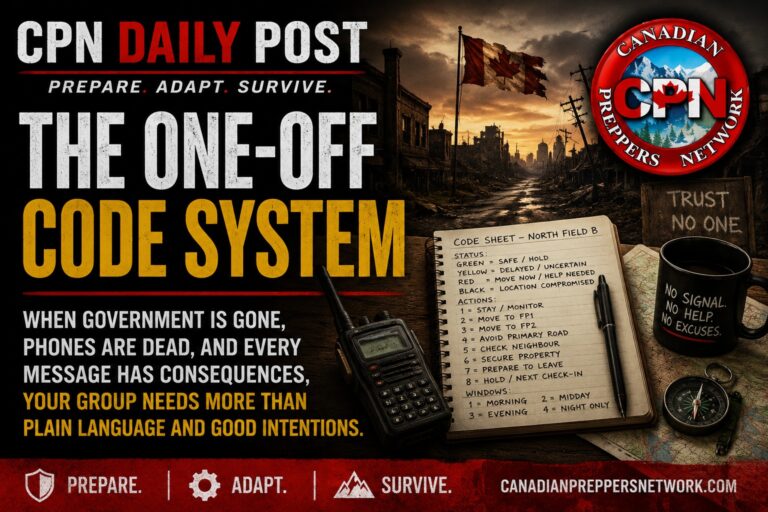
That is where communication planning matters. Radios, signal plans, written route notes, check-in times, and simple message discipline can all become part of the larger bug out system. The shelter gives the group a temporary pause, but communications planning helps turn that pause into a decision point instead of just a cold night in the bush.
The Bug Out Shelter Kit Should Be Boring
A good wilderness shelter kit is not flashy. It is boring, compact, and redundant.
The core items are simple: a tarp or poncho, cordage, ground insulation, an emergency bivy or blanket, waterproof storage, and clothing layers that still work when conditions turn ugly. None of these are exciting. That is the point. They solve real problems.
The best kit is also practised. A tarp that has never been pitched in the rain is still mostly theory. A bivy that has never been opened may surprise you. Cordage packed at the bottom of the bag may be useless when daylight is fading. A groundsheet that is too small may not protect the sleeping area. A foam pad that seemed bulky at home may become the most valuable item in the bag once the ground is cold.
Gear does not replace judgement, but it gives judgement more options.
Buying Box: Improvised Shelter Gear for a Wilderness Bug Out
Disclosure: As an Amazon Associate, Canadian Preppers Network may earn from qualifying purchases.
Lightweight camping tarp
https://www.amazon.ca/s?k=lightweight+camping+tarp&tag=canadianprep-20
Heavy-duty rain poncho
https://www.amazon.ca/s?k=heavy+duty+rain+poncho&tag=canadianprep-20
Emergency bivy sack
https://www.amazon.ca/s?k=emergency+bivy+sack&tag=canadianprep-20
Closed-cell foam sleeping pad
https://www.amazon.ca/s?k=closed+cell+foam+sleeping+pad&tag=canadianprep-20
Reflective emergency blanket
https://www.amazon.ca/s?k=heavy+duty+emergency+blanket&tag=canadianprep-20
Paracord or utility cord
https://www.amazon.ca/s?k=paracord+utility+cord&tag=canadianprep-20
Waterproof dry bags
https://www.amazon.ca/s?k=waterproof+dry+bags&tag=canadianprep-20
Tent stakes and guy lines
https://www.amazon.ca/s?k=tent+stakes+guy+lines&tag=canadianprep-20
Practise Before the Bad Night
Improvised shelter is not a skill to save for disaster day.
Practise in controlled conditions. Try setting up a tarp in wind. Try doing it with gloves on. Try organizing a family shelter before dark. Try packing the shelter items where they can be reached quickly. Try lying on the ground with and without a proper insulating layer so the lesson is learned before it matters.
Do not practise recklessly. Do not turn shelter training into an endurance stunt. The point is not suffering. The point is learning what works before stress, weather, darkness, and fatigue make learning harder.
The best shelter lesson is usually humility. Everything takes longer when people are cold. Knots are harder with numb fingers. Wet gear is heavier. Deadfall is more dangerous in the dark. Children get quiet when they are too cold. Adults make poor choices when they are embarrassed to admit they are tired.
Training exposes those problems early.
Final Takeaway
A wilderness bug out shelter only has one job: get you through the night in good enough condition to keep moving.
That means staying out of the wind, off the wet ground, under some kind of cover, and organized enough to function in the morning. It means choosing simple shelter over impressive shelter. It means using the landscape before burning energy. It means carrying boring gear that works. It means understanding that shelter is not separate from water, security, communication, health, and group leadership.
In a real bug out, the goal is not to live in the woods forever.
The goal is to survive the night, protect the group, and still have enough strength left to make the next decision.