Decide what to keep warm, what to drain and how the toilet will work.
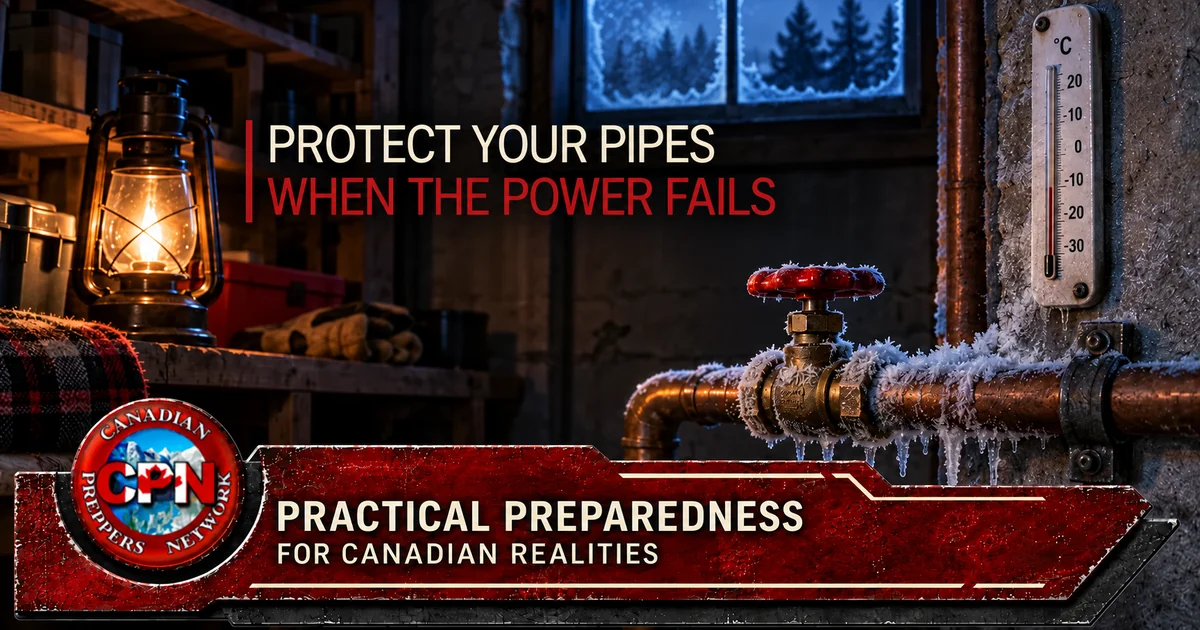
A winter power outage threatens more than the heating system. Water can freeze in a pipe behind a kitchen cabinet, in a line crossing an unheated crawlspace or in plumbing left inside an empty house. The damage may only become obvious when the pipe thaws and water starts moving again.
The decision is whether you can keep the plumbing warm enough or need to shut off and drain the system before it freezes. That decision also affects your toilet, handwashing and safe-water supply. Canadian power-outage guidance specifically warns that pipes can freeze during winter outages and advises draining plumbing when necessary.
Find the Pipes Most Likely to Freeze
Start with the routes water takes through the house. Check lines along exterior walls, under sinks, beside basement windows, through crawlspaces and garages, and between the well or municipal service and the first heated room. Include outdoor taps, washing-machine connections and any pipe serving an outbuilding.
An insulated pipe can still freeze when its surrounding space becomes cold enough. Before winter, repair drafts and damaged insulation, disconnect and drain garden hoses, and make sure you can reach and operate the main water shutoff. Our fall maintenance audit covers the wider inspection; an outage is when those findings become a decision.
Put a thermometer near the most vulnerable indoor pipes. The temperature of the room where you are sitting may tell you little about a closed cabinet against an outside wall.
Keep Heat Where the Plumbing Needs It
If the outage looks short and the house remains warm, focus on the vulnerable areas. Open cabinet doors to let room heat reach pipes beneath sinks. Close drafts without blocking ventilation required by a heating appliance. Check cold spaces regularly, especially overnight.
If you have a working backup heat source, work out whether it protects the plumbing as well as the people. Heating one living room can make the occupants comfortable while pipes elsewhere in the house continue to cool. Do not assume a stove or fireplace in one area protects a distant bathroom, basement service line or crawlspace.
Letting an exposed line drip can help in some circumstances; Health Canada’s well-safety guidance mentions it when a pipe is at risk of freezing. But dripping depends on an available water supply and a working drain.
For a household on a private well, do not casually run taps during an outage. Using the remaining pressure can depressurise the system. Health Canada advises well owners against opening faucets or flushing toilets while the pump is without power. Plan stored water and a separate sanitation method instead.
Know When to Shut Off and Drain
A house that is steadily losing heat needs a different plan from one with dependable backup heating. If you cannot keep vulnerable plumbing warm, locate the main shutoff before a pipe freezes.
Hydro-Québec’s winter-outage instructions advise shutting off the main valve and emptying water lines by opening hot and cold faucets and flushing toilets when a home must be protected from freezing. They also identify appliance drain lines as points requiring attention.
Draining is not identical in every house. A well system, pressure tank, water heater, hydronic heating loop and appliances may each have different isolation or drainage requirements. A hot-water heating loop is particularly important: do not assume that opening household taps drains it. Learn your system’s procedure from a qualified plumber or heating technician while power, light and parts are available.
Before draining the domestic supply, fill clean containers with water for drinking, food preparation and handwashing. Keep that water indoors where it cannot freeze. Set aside clearly labelled non-potable water for cleaning or a manual toilet flush only if the sewer or septic system still works.
Make the decision before the house gets cold:
- Can backup heat protect the rooms and cavities that contain water lines?
- Can every household member find and operate the main shutoff?
- Which appliances or heating systems need their own draining procedure?
- Where will drinking and handwashing water be stored after shutoff?
- Will the toilet still have a functioning wastewater route?
Protect the Sanitation System Too
Frozen supply pipes stop water from reaching a toilet, but the sanitation question continues beyond the supply line. Check whether the sewer or septic system is functioning before relying on manual flushing. If wastewater service is impaired, stop flushing and use the temporary toilet arrangement you prepared for an outage. Do not send more water down a drain that is backing up.
Keep a handwashing station ready even if the house is being drained: soap, a controlled supply of suitable water, and a container or suitable route for wastewater. Place it beside the toilet setup and keep drinking-water containers separate. Our off-grid sanitation guide explains why waste handling and water protection have to work together.
The same planning applies to an RV, cabin or retreat building left unheated. A building does not need occupants for a frozen pipe to cause damage; it only needs water left in the wrong place.
If a Pipe Freezes, Slow Down
A tap that suddenly stops flowing during a cold spell may indicate a frozen line. Look for frost, swelling or leaks, but remember that a split pipe may not leak until ice thaws. Know where the shutoff is and close it if a break is suspected.
Health Canada advises using hot air or steam to thaw frozen water pipes and consulting a licensed well contractor or plumber if a well-water system has frozen. Avoid an open flame. If a pipe is inaccessible, damaged or part of a more complicated system, arrange professional help rather than forcing water through it.
Once heat or power returns, inspect vulnerable areas before leaving the water on unattended. Restore service cautiously and check under sinks, around appliances, in the basement and wherever pipes cross cold spaces. If your private well lost all pressure, Health Canada advises testing its water before use.
The household drill is simple: find the shutoff, identify every line that depends on heat or electricity, decide when you would drain the house, and establish how you would drink, wash hands and manage the toilet afterwards.
If the power failed tonight and the heat did not return, which part of your plumbing would reach freezing conditions first?
Related Reading
- Water Collection and Purification in Canada: plan a safe backup supply
- Your Well Is Not a Water Plan: prepare for pump failure
- Building a Complete Off-Grid Sanitation System: manage waste and hygiene
Practise Before the First Deep Freeze
Walk the water line from its entry point to the last tap. Label the main valve, identify cold sections and write down the order in which your particular house must be shut off and drained. Include the toilet and handwashing arrangements on the same page. A short practice run now can reveal an inaccessible valve or forgotten appliance before a winter outage makes either one expensive.