
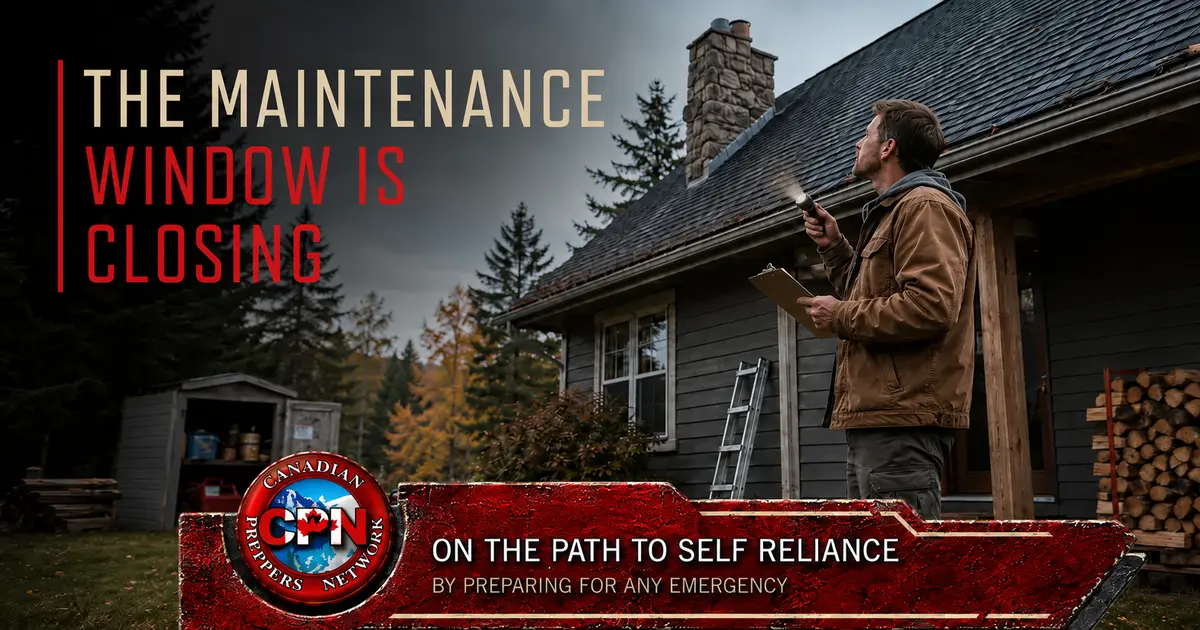
Find the failures that winter will turn into emergencies.
Late summer and early autumn can create a dangerous sense of security.
The furnace is quiet. The woodstove is cold. The snowblower has not moved in months. A small roof leak, loose weatherstrip or reluctant generator does not feel urgent while the temperature remains comfortable.
Winter changes the consequences.
A draft becomes a constant drain on stored fuel. A blocked downspout becomes an ice problem. A weak battery leaves the generator silent. A damaged stovepipe becomes a fire or carbon-monoxide hazard. A forgotten valve makes it impossible to isolate a frozen pipe.
Under ordinary conditions, these failures are inconvenient and expensive. During a prolonged outage, supply disruption or wider collapse, they may make the house uninhabitable.
A fall maintenance audit is about finding every developing failure while replacement parts, fuel deliveries, hardware stores and skilled labour are still available.
Begin With the Building Envelope
Your shelter is a system designed to keep weather outside and controlled conditions inside. Begin the audit where that separation is most likely to fail.
Walk the entire exterior during daylight. Do not simply glance at the walls from the driveway. Look closely at corners, penetrations and transitions—the places where different materials meet.
Inspect for:
- Missing, lifted or damaged roofing
- Loose flashing around chimneys, vents and roof edges
- Cracked siding or deteriorated exterior caulking
- Gaps around utility lines and pipes
- Damaged foundation vents
- Cracks that have grown since spring
- Water staining below windows or roof edges
- Animal entry points
- Doors that no longer close squarely
- Windows with damaged frames or failed seals
Binoculars or a camera with a zoom lens can reveal obvious roof problems without climbing. A fall during a maintenance inspection can create a far greater problem than the damaged shingle you were attempting to repair.
The objective is to identify small defects before wind, driven snow and repeated freezing enlarge them.
Follow the Water
Water often reveals a building failure before cold air does.
Clean the gutters and confirm that every downspout carries water away from the foundation. Look for sagging sections, loose fasteners and places where runoff collects beside the house. Extend downspouts where necessary and restore the grade if soil has settled toward the foundation.
Check basement walls, crawlspaces and attic surfaces for staining, dampness or mould. Pay particular attention after heavy rain. A dry-weather inspection may show nothing even when water enters during a storm.
Confirm that sump pumps operate and that their discharge lines are clear. If the house depends on an electric sump pump, determine what will happen during an extended outage. A backup power plan is useful only if someone has calculated the pump’s load and tested the proposed power source.
Once the ground freezes, correcting drainage becomes considerably more difficult. Water trapped in the wrong place becomes ice, and ice has enough force to open gaps that did not previously exist.
If damage is already present, When the Roof Starts Leaking and No One Is Coming explains how to protect the interior and stabilize the shelter when professional repairs are unavailable.
LIMITED-SPACE OUTDOOR EVENT
PLINKIN’ IN THE WOODS
With Frugal Gunnie
Spend a full day developing practical outdoor rimfire marksmanship skills in a controlled setting.
Saturday, September 12, 2026 · 8:00 a.m.–5:00 p.m.
Great Ape Empire · 267 Highway 6, Wiarton, Ontario
Admission: $250 CAD · Weekend camping: $20 per person
Search for Heat Leaks
A house does not need a dramatic hole to lose an alarming amount of heat. Numerous small leaks can steadily consume a limited fuel supply.
Inspect:
- Exterior door seals and sweeps
- Window frames and locks
- The attic hatch
- Basement windows
- Dryer and exhaust vents
- Electrical outlets on exterior walls
- Plumbing penetrations
- Fireplace dampers
- Attached-garage doors
- Access panels leading to unheated spaces
On a cool, windy day, drafts can often be detected with the back of a bare hand or a thin piece of tissue. Repair obvious leaks with suitable weatherstripping, caulking or rigid materials.
Do not confuse air sealing with blocking necessary ventilation. Fuel-burning appliances require correct venting, and a house still needs moisture and indoor air managed safely. The objective is controlled airflow—not an improvised airtight box.
Inspect insulation in accessible attic, basement and crawlspace areas. Look for insulation that has been compressed, displaced by animals, soaked by water or pulled away during earlier repairs.
Every heat leak corrected now reduces the amount of fuel that will be required later. Natural Resources Canada’s Keeping the Heat In guidance explains how heat, air movement and moisture interact within the building envelope.
Start the Heating System Before You Need It
The first cold night is the wrong time to discover that the primary heating system will not start.
Run the furnace, boiler or heat pump long enough to confirm that it starts, operates and distributes heat normally. Listen for unfamiliar noises. Check filters, vents, pumps and thermostats. Look for visible leakage, damaged wiring and signs of corrosion.
A system that merely turns on has not necessarily passed the audit. It must continue operating long enough to reach its normal temperature and reveal problems that appear only after warm-up.
Wood-burning systems require their own inspection. Examine the stove, door gasket, firebrick, stovepipe and visible chimney components. Look for corrosion, distortion, loose joints, damaged seals and evidence of previous smoke leakage. Confirm that the chimney is clear and has been properly cleaned.
Do not assume that a chimney is safe because the stove worked last winter. Animals, debris, corrosion and creosote can alter the system while it sits unused.
Inspect the area around every heat source. Combustible materials gradually migrate closer during summer. Firewood, furniture, clothing and stored supplies must be moved before the system returns to service.
Our article, The Post-Collapse Woodstove, examines the long-term role of solid-fuel heat when conventional heating and fuel deliveries can no longer be trusted.
FREE CANADIAN PREPAREDNESS DOWNLOAD
Canadian Grid-Down Starter Kit
Use this printable first-72-hours checklist to test your household’s food, water, sanitation, power, communications and operating routines before a short outage becomes a prolonged emergency.
Count the Fuel You Actually Have
Most households describe heating fuel with vague language:
“We have plenty of wood.”
“The propane tank is mostly full.”
“There should be enough furnace oil.”
Those statements are not an inventory.
Record the actual amount of each fuel on the property. Note its condition, location and the equipment that uses it. Firewood must be sufficiently dry and protected from precipitation while still receiving airflow. Propane cylinders should be inspected and stored correctly. Fuel required for generators, vehicles, chainsaws or snow-clearing equipment must not be counted twice.
Estimate how long each supply would last under three conditions:
- Normal household heating
- Reduced heating with unused rooms closed
- Emergency heating of a limited living area
The third figure is the most important. It reveals whether the household can stretch its fuel by contracting into a smaller winter living zone.
Fuel is only useful when the equipment needed to burn it works. Spare filters, gaskets, belts, lubricants, stove components and basic repair materials may matter more than another container of fuel.
Audit the Plumbing Before the Freeze
Trace the water system from its source to every vulnerable outlet.
Locate and operate the main shutoff valve. If it is seized, hidden behind stored items or known only to one household member, correct that now. Label it clearly.
Inspect exposed plumbing in basements, crawlspaces, garages and exterior walls. Look for corrosion, slow leaks, damaged insulation and pipes exposed by renovation or animal activity.
Disconnect and drain exterior hoses. Close and drain outdoor taps where the system allows it. Check well equipment, pressure tanks and pump controls. Determine which components require electricity and how quickly the household loses water when power fails.
Develop a deliberate plan for protecting or draining the plumbing during a prolonged heating failure. A house can survive several cold days and then suffer extensive damage when frozen pipes thaw.
Store the tools and materials needed to isolate a leak. These may include the correct shutoff key, pipe wrench, adjustable wrench, repair clamps and suitable containers. Owning repair supplies without knowing where the shutoff is located does not constitute a plan.
Friday’s article, Your Water Supply Has a Winter Problem, covers the separate risks to stored water, containers and filtration equipment.
SPECIAL TRAINING WEEKEND
Barefoot Bushcraft Archery Intensive
Hands-on archery training presented by Barefoot Bushcraft in partnership with Canadian Preppers Network, PreppersMeet, Great Ape Empire and Off Grid School.
Sunday, September 13, 2026
Great Ape Empire · 267 Highway 6, Wiarton, Ontario
Test Backup Power Under Load
A generator that starts in September may still fail when asked to carry a real load in January.
Inspect the oil, fuel, air filter, battery, spark plug, cords and visible wiring. Start the unit and allow it to reach operating temperature. Then connect the essential loads it is expected to power.
Confirm whether the generator can operate:
- Heating-system components that require electricity
- A well or sump pump
- Refrigeration
- Communications equipment
- Essential lighting
- Battery chargers
Do not add the running wattages printed on appliance labels and assume the result is reliable. Motors, pumps and compressors may draw considerably more power during startup. Testing the real combination exposes overloads, damaged cords and unrealistic expectations.
Fuel-burning generators must remain outdoors and well away from buildings, doors, windows and air intakes. Federal guidance recommends at least six metres of separation, with the exhaust directed away from occupied structures.
A generator must never be operated inside a house, garage, shed, basement or crawlspace.
Confirm that the planned outdoor location will remain accessible during deep snow. Protect the generator from weather without enclosing its exhaust or restricting airflow.
Inspect the Warning Systems
Cold-weather emergencies frequently involve fire and carbon monoxide as well as loss of heat.
Test every smoke and carbon-monoxide alarm. Confirm that battery backup works. Replace expired units and keep suitable spare batteries on hand.
Inspect fire extinguishers and ensure that they are visible and accessible. An extinguisher buried behind winter storage will not help when a stovepipe begins glowing.
Walk the nighttime escape route from each sleeping area. Make sure windows open, doors are not obstructed and everyone knows where to assemble outside.
Heating arrangements may change during an outage. People close doors, move into different rooms and begin using equipment that normally sits in storage. Alarm placement and escape planning must still protect the areas where people will actually sleep.
Health Canada warns that carbon-monoxide exposure is more common during the colder months because of fuel-burning heating equipment and the misuse of outdoor appliances during outages. Review the federal power-outage safety guidance before relying on emergency heating or generation equipment.
WEAR THE NETWORK
Visit the CPN Shop
Support Canadian Preppers Network with CPN clothing, books and preparedness resources—including the garment-washed CPN cap.
Prepare the Exterior for Winter Operations
The property must remain usable after snow and ice conceal its normal hazards.
Clear debris from walkways and emergency exits. Mark the edges of driveways, drainage ditches, septic components, fuel tanks and other objects that may disappear beneath snow.
Inspect trees and large branches that could strike the house, power service, chimney, vehicles or access road. Check gates and locks before ice makes them difficult to operate.
Service snowblowers, ploughs, tractors and chainsaws. Start them, test them and verify that their fuel, oil, belts, shear pins and starting systems are ready. Place shovels and traction material where they can be reached without crossing an icy property.
A retreat that cannot be entered by an ambulance, fuel truck or repair vehicle may be isolated long before the surrounding community experiences a wider collapse.
Check the Outbuildings and Supplies
Garages, sheds and barns often receive less attention than the house even though they contain critical equipment.
Inspect roofs, doors, locks, windows and foundations. Look for rodents, moisture and damaged containers. Move liquids that cannot tolerate freezing. Raise vulnerable supplies off concrete floors and away from exterior walls.
Confirm that firewood, tools, animal feed, fuels and repair materials will remain accessible during heavy snow. A well-stocked shed is of little value if its door is frozen shut or blocked by a drift.
Review what rodents or moisture have already damaged. The loss of one inexpensive gasket, cable or replacement filter may disable a much more valuable system. The Rodents Are Moving In provides a complete fall inspection and control plan for stored supplies and outbuildings.
Finish With a Failure Drill
An audit becomes more useful when it ends with a test.
Choose a cool evening and shut off normal grid power for several hours. Do not wait for a winter storm to perform the first trial.
Observe what happens:
- Which lights are immediately missed?
- Does the heating system still function?
- Can the generator be deployed safely in darkness?
- Does the well provide water?
- Can the main water shutoff be reached?
- Are flashlights where people expect them to be?
- Which rooms cool first?
- Can communications equipment be operated?
- Do household members understand their jobs?
Record every failure, delay and missing item. Correct them while the maintenance window remains open.
BUILD KNOWLEDGE THAT SURVIVES THE EMERGENCY
CPN Gold Membership
Gold Membership includes access to the CD3WD collection and hundreds of practical manuals covering shelter, heating, construction, repairs, water, sanitation, food production and self-reliance.
Members also receive the monthly Canadian Preparedness Intelligence Briefing.
Winter Does Not Create Weakness
Winter exposes weaknesses that were already present.
A damaged seal, neglected chimney, unreliable generator or inaccessible shutoff valve may remain unnoticed for months. Once cold weather arrives, that small defect becomes attached to larger consequences: lost heat, consumed fuel, frozen plumbing, fire, carbon monoxide or the complete loss of shelter.
The purpose of a fall maintenance audit is not to predict exactly what winter will bring. It is to reduce the number of ordinary failures capable of becoming emergencies.
Inspect now. Test now. Repair now.
Once the temperature falls and the supply system is under pressure, the maintenance window has already closed.
Fall Maintenance Audit Kit
These supplies support the inspections, tests and minor repairs covered in this audit.
- Exterior door weatherstripping and sweeps
- Exterior window and door sealant
- Building-material moisture meter
- Infrared thermometer for locating cold areas
- Carbon-monoxide alarms with battery backup
- Smoke alarms with battery backup
- Home fire extinguishers
- Foam pipe insulation
- Emergency pipe-repair clamps
- Cold-weather generator extension cords
- Generator fuel stabilizer
- Rechargeable headlamps
Disclosure: This article contains Amazon affiliate links. As an Amazon Associate, Canadian Preppers Network may earn from qualifying purchases.
Related Reading on CPN
- Shelter & Heat in Canada
- Shelter and Emergency Heat Buying Guide
- The Post-Collapse Woodstove
- When the Roof Starts Leaking and No One Is Coming
- Dealing With Extreme Cold During a Grid-Down Emergency
What part of your property is most likely to fail when the first serious freeze arrives?

One Comment