Keeping a damaged house habitable after help disappears
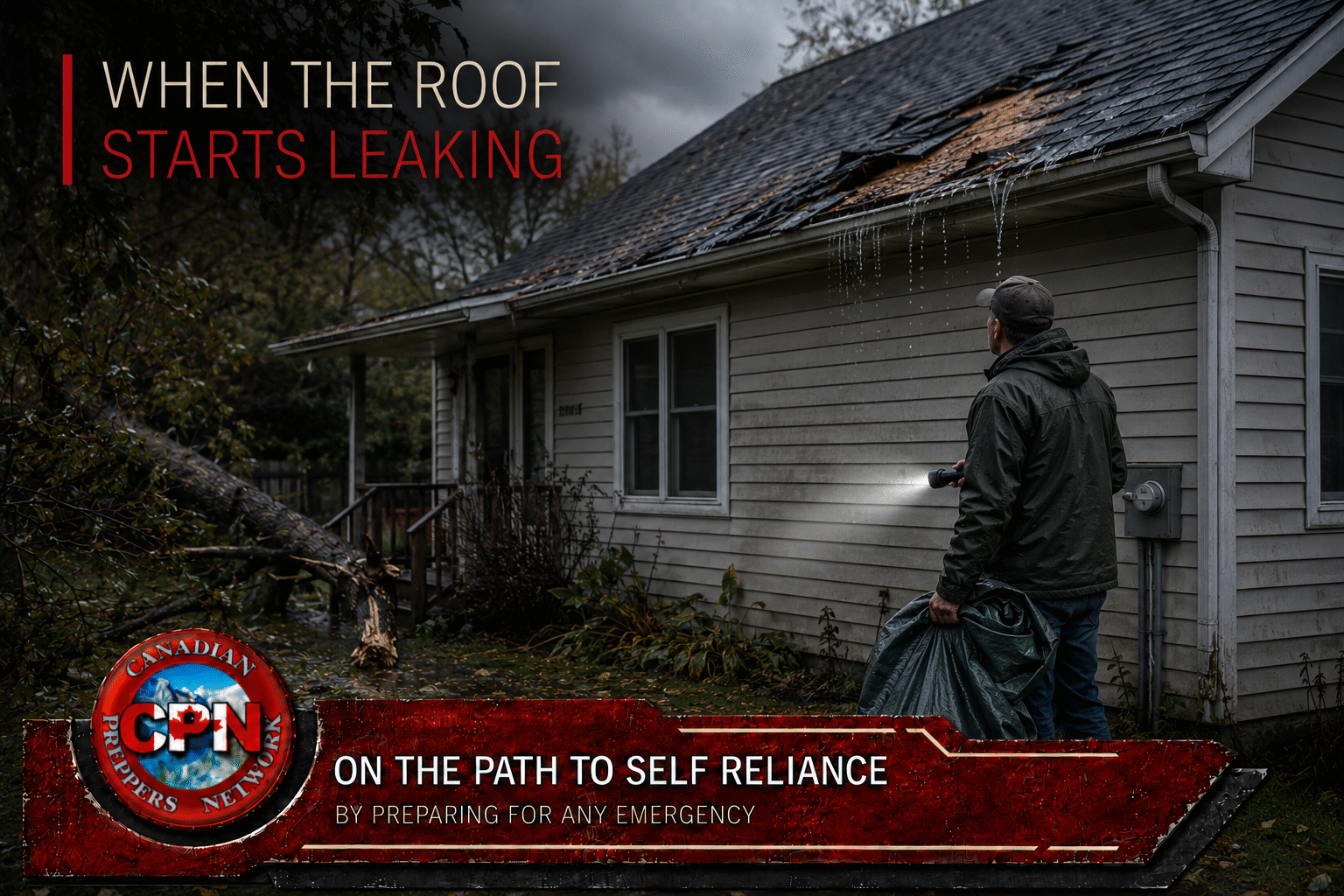
A roof leak is rarely treated as a survival emergency. Under normal conditions, it means buckets on the floor, a call to the insurance company and a roofer arriving within a few days.
That changes after a widespread disaster or prolonged collapse.
A windstorm may damage thousands of homes simultaneously. Roads may be blocked, contractors unavailable and building materials scarce. In a deeper collapse, no professional help may be coming at all. The household must either control the damage or watch a small opening gradually destroy its shelter.
A leaking roof does more than make a room uncomfortable. Water soaks insulation, damages ceilings, reaches electrical systems, encourages mould and begins attacking the wooden structure supporting the roof. During winter, wet insulation loses much of its usefulness, while repeated freezing can enlarge openings and separate damaged materials.
The objective is not necessarily to restore the house perfectly. It is to stop the damage from spreading, preserve the strongest portion of the building and keep at least one dry, habitable area functioning.
Free Download: The First 72 Hours
The first three days after a storm, blackout or evacuation order can determine whether a household remains secure or begins reacting under pressure. Download the Canadian Preppers Network guide and use it to review your immediate preparations.
Begin With Structural Safety
The first instinct may be to climb onto the roof. Resist it.
A roof damaged by wind, falling trees, fire or accumulated snow may no longer support a person. Rain, frost, loose shingles and wet leaves make even an intact roof dangerous. Damage that appears minor from the ground may hide broken sheathing, split rafters or weakened trusses.
Begin with observations that do not require roof access. Walk around the building from a safe distance and look for:
- A visibly sagging roofline
- Broken or displaced rafters
- A tree or large limb resting on the structure
- Sections of roofing that have lifted or disappeared
- A damaged chimney
- Bulging exterior walls
- Pieces of roofing or lumber hanging overhead
- Electrical service lines pulled away from the house
- Water entering near electrical fixtures or the service panel
Inside, listen for cracking, popping or shifting. Watch for ceilings that are bowing downward, doors that suddenly bind and walls developing new cracks. These can indicate movement within the structure.
Keep everyone away from rooms beneath visible sagging, major impacts or badly damaged framing. Close the door if possible and mark the area so nobody enters accidentally.
The house does not need to collapse completely to kill someone. A waterlogged ceiling, weakened chimney or partial section of roofing can fail independently.
Find the Water’s Route
The place where water appears inside is not always directly below the opening.
Water can enter near a damaged shingle, chimney, vent or flashing joint, then travel along the underside of the roof deck or down a rafter before finally dripping into the room. A stain on the ceiling therefore identifies where the water escaped—not necessarily where it entered.
If the attic can be reached safely, inspect it from established flooring or solid joists. Never step between joists onto the ceiling material below. Use a headlamp and look for:
- Daylight visible through the roof
- Wet roof decking
- Darkened rafters
- Dripping nails
- Matted or saturated insulation
- Water following wiring or plumbing penetrations
- Fresh stains below chimneys, vents and roof valleys
- Debris pushed through the roofing
Mark the wet area while it is still raining. Chalk, tape or a pencil mark will make it easier to find after the surface dries.
Do not assume there is only one opening. Wind that lifts one section of roofing often loosens material elsewhere.
Plinkin’ in the Woods with Frugal Gunnie
A full day of practical outdoor rimfire marksmanship, field positions, accuracy work and hands-on instruction.
Saturday, September 12, 2026
8:00 a.m.–5:00 p.m.
Great Ape Empire
267 Highway 6, Wiarton, Ontario
Weekend camping: $20 per person
Space is strictly limited. Adult participants must meet all applicable legal and organizer requirements.
Control the Water Inside First
If conditions are still dangerous outside, concentrate on protecting the interior.
Move food, bedding, radios, medical supplies, ammunition, documents and other critical items away from the affected area. Cover anything that cannot be moved with waterproof sheeting, but do not trap existing moisture underneath it.
Place containers under active drips. A large plastic tote, livestock tub or child’s wading pool can collect more water than an ordinary bucket. Suspend or slope plastic sheeting so water drains into the container instead of spreading across the floor.
A ceiling bulging with water may collapse without warning. Clear the room rather than standing beneath it. Releasing trapped water through a small controlled opening is sometimes recommended during ordinary repair work, but only when the ceiling is known to be non-structural and there are no electrical hazards. In a severely damaged or unfamiliar building, staying out is safer.
Water near wiring, outlets, light fixtures or the electrical panel creates a separate hazard. Shut off the affected circuit—or the main supply—only if the panel and the route to it are completely dry and accessible. Do not touch electrical equipment while standing on a wet floor.
Stop Water at the Highest Safe Point
The most effective temporary repair sheds water before it enters the building. That usually means covering the damaged area from above, but roof access should never be improvised during wind, rain, ice or uncertain structural conditions.
If the roof cannot be approached safely, work from below.
A sheet of heavy plastic or a tarp positioned beneath the leak in the attic can form a temporary catchment. Slope it toward a container or a hose leading outside. Keep the collected water away from wiring and do not attach heavy loads to damaged rafters.
This does not waterproof the building. It buys time and reduces damage until exterior work becomes possible.
When the roof is dry, stable and safely accessible, a proper emergency covering must extend beyond the damaged area and shed water naturally downslope. Its upper edge needs to prevent water from running underneath. Loose tarps held down with bricks, firewood or random debris are unreliable and can become dangerous projectiles.
Battens—straight lengths of lumber wrapped into or laid over the tarp—spread the holding force across a wider area. Fasteners should enter sound decking or framing, not crumbling material. Every hole created during the temporary repair becomes part of the later permanent repair.
A steep, high or structurally questionable roof remains unsuitable for improvised work. Preserve the interior instead of risking a disabling fall.
Build Knowledge That Survives the Emergency
CPN Gold Membership includes access to the extensive CD3WD offline reference collection, including practical material on construction, roofing, drainage, sanitation, agriculture and low-technology repairs.
Gold members also receive the monthly Canadian Preparedness Intelligence Briefing.
Drying Becomes a Daily Survival Task
Stopping the rain is only the first half of the job. Materials that remain wet continue damaging the shelter.
Remove saturated fibreglass insulation and spread it somewhere dry if it can be salvaged. Bag material that is contaminated, deteriorated or mouldy. Wet cellulose insulation compacts badly and is much harder to recover.
Open enclosed spaces when weather permits. Move air through the attic and affected rooms with fans if power is available. In a grid-down situation, natural cross-ventilation, sunlight and controlled heating may be all that remains.
Do not seal wet lumber behind plastic or replacement panels. Trapping moisture may make the room look repaired while decay continues out of sight.
Check the affected area every day. Feel the rafters, inspect the containers, examine nearby walls and smell for mustiness. A patch that survives one gentle rain may fail under wind-driven rain or melting snow.
Shrink the House Before the Damage Spreads
A household may reach a point where repairing the entire building is unrealistic.
The correct response is not necessarily immediate abandonment. A damaged house can sometimes be divided into usable and expendable zones.
Choose the driest structurally sound section. Move sleeping arrangements, food, medical supplies, communications equipment and essential tools into that area. Close doors to damaged rooms and use plastic sheeting to control drafts, dust and damp air.
Protect the route between the living area and the exit. A dry room is not a viable refuge if reaching the door requires passing beneath a failing ceiling.
If water is entering an upper floor, the safest living space may be below a completely different section of roof—not directly underneath the leak. If the basement is being considered, first check for flooding, sewage backup and moisture. CPN’s earlier article,
The Basement Trap
,
explains why moving supplies downstairs is not automatically the safest answer.
Permanent Repairs May Look Different After Collapse
Ordinary roof repairs are expected to match the existing materials and preserve the home’s appearance. Long-term emergency repairs have a simpler standard:
Does the repair shed water, resist wind and protect the structure?
Salvaged metal roofing may replace damaged shingles. Sound lumber from an unusable outbuilding may become roof decking. Heavy membrane, roll roofing or layered boards may protect a small section better than attempting to reproduce the original roof with insufficient materials.
Work from the strongest surviving structure outward. Replace rotten or broken support material before covering it. Maintain water flow from the ridge toward the eaves. Avoid creating pockets where rain or snowmelt will collect.
Prioritize the roof over cosmetic wall repairs. Once water is controlled from above, damaged windows and siding can be addressed. Reversing that order allows every new storm to undo the work already completed.
Communications When Repair Crews Cannot Be Reached
Prepper Radio Canada’s Canadian Basic Amateur Radio Course teaches the knowledge, operating skills and Canadian regulations needed to work toward the ISED Basic Qualification.
Know When the House Is Lost
Preparedness should not turn attachment to a building into a death sentence.
Leave the affected portion—or the entire structure—when there is:
- Continuing structural movement
- Major roof sagging or spreading walls
- A damaged chimney threatening occupied rooms
- Fire damage to roof supports
- Extensive tree impact
- Floodwater undermining the foundation
- Uncontrollable water around electrical systems
- Rapid mould growth that cannot be isolated
- No dry, structurally sound route to an exit
- More damage than the household can safely stabilize
Before leaving, recover supplies only from areas that remain safe to enter. Shelter can be replaced. A spinal injury, electrical shock or crushing injury may be impossible to treat when medical assistance has also disappeared.
Build a Roof-Failure Cache Before the Storm
The worst time to search for roof-repair materials is after a storm has damaged every house in the area. Store essential supplies where they will remain accessible if the main building is damaged.
- Heavy-duty ultraviolet-resistant tarps
- Reinforced plastic sheeting
- Roofing screws with sealing washers
- Roofing cement and repair sealant
- Peel-and-stick repair membrane
- Manual roofing and demolition tools
- Building-material moisture meters
- Headlamps and area lighting
- Respiratory protection for mould and insulation
- Work gloves and eye protection
- Flexible drain hose and water-control supplies
As an Amazon Associate, Canadian Preppers Network may earn from qualifying purchases at no additional cost to you.
Shelter Is a Structure You Can Keep Alive
Stockpiled food and filtered water are of little use if rain is falling onto the beds, medical supplies are moulding and winter wind is passing through the roof.
A home does not become useless the moment it is damaged. It becomes a survival problem requiring triage. Protect people first. Stop water where it can be reached safely. Dry the structure. Sacrifice rooms that cannot be defended and concentrate resources on the strongest remaining section.
In normal times, a roof leak is a contractor’s problem.
When no one is coming, it becomes shelter management—and shelter management keeps every other preparation usable.