How sanitation failure turns local water into a shared hazard
Canada’s lakes, rivers and groundwater create a dangerous sense of confidence. When the taps stop running, many people assume they can simply collect water nearby, filter it and carry on.
That plan ignores everything happening upstream.
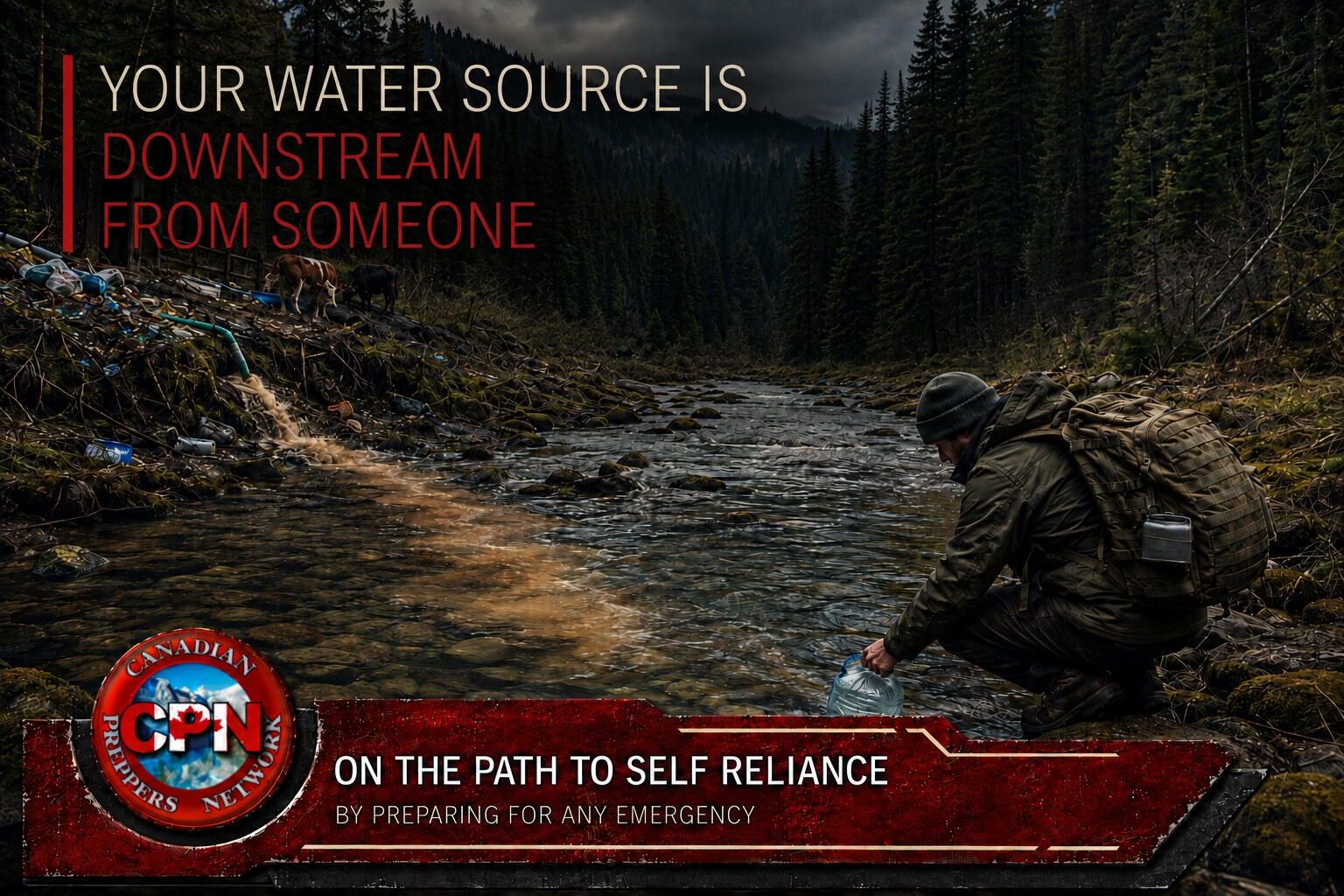
During a prolonged collapse, the same creek may serve as one family’s water source, another family’s washing area and a third family’s waste-disposal route. Septic systems begin overflowing. Toilets are emptied outdoors. Livestock crowd closer to occupied buildings. Fuel containers leak. Garbage accumulates. Rain carries contamination downhill, while groundwater quietly moves it below the surface.
Water preparedness is therefore not just a question of finding water. It is a question of controlling what enters the water before it reaches you.
The First Water Crisis May Be Sanitation
In the early stages of an outage, most households concentrate on drinking water. They fill containers, ration bottled water and locate nearby wells, streams or ponds.
Meanwhile, waste continues to accumulate.
Every person in the area is still producing urine and feces. Kitchens generate dirty water and food waste. Animals produce manure. Diapers, hygiene products and household garbage require somewhere to go. When toilets, sewage pumps and garbage collection stop working, those materials do not disappear.
They move outdoors.
This creates a predictable sequence:
- Municipal water pressure or private well pumps fail.
- Toilets become difficult or impossible to use normally.
- Households improvise waste-disposal methods.
- Septic systems are overloaded, damaged or used without sufficient water.
- Waste is buried, dumped or stored wherever space appears available.
- Rain, insects, rodents, animals and human traffic spread contamination.
- Local water sources become increasingly questionable.
The problem becomes more serious as displaced people concentrate around dependable water. A spring, community well or accessible riverbank may attract dozens of households, each bringing containers, animals, waste and washing activity into the same small area. Abundant water can become unsafe water surprisingly quickly.
Sanitation Knowledge Belongs in Your Preparedness Library
CPN Gold Membership includes access to the CD3WD collection, including detailed offline material on sanitation without sewers, human-waste disposal, hygiene, greywater and community-scale systems.
Gold members also receive the monthly Canadian Preparedness Intelligence Briefing.
Surface Water Connects the Entire Area
A creek is not an isolated feature on your property. It is a moving collection of everything entering the watershed above you.
Upstream contamination can include:
- Human and animal waste
- Failed septic systems
- Flooded barns and manure piles
- Fuel and lubricants
- Household cleaning chemicals
- Pesticides and fertilizers
- Decomposing animals
- Garbage and food waste
- Runoff from roads, workshops and industrial properties
A clear appearance proves very little. Water may look, smell and taste normal while carrying microorganisms capable of causing serious illness. As explained in Clear Isn’t Clean, treated water can also be contaminated again through dirty hands, cups, lids and containers.
In a functioning society, a case of diarrhea is usually unpleasant but manageable. In a prolonged emergency, it can become life-threatening. The patient loses water and electrolytes just as the household’s clean-water supply is under pressure. Caregivers must use additional water for washing, cleaning and patient care. Poor hand hygiene can then spread the illness through the entire group.
Groundwater Also Moves
Private wells are often treated as though they draw water from a sealed underground tank. In reality, groundwater moves through soil, sand, gravel, cracks and bedrock. The direction and speed vary considerably.
A sanitation site that appears safely distant from a well may still be a threat if groundwater flows from the waste site toward the well. Sandy or gravelly soil allows water to move differently than dense clay. Fractured or karstic bedrock can provide rapid underground pathways that bypass much of the natural filtering normally expected from soil.
Research into pit latrines and groundwater shows why a single universal setback cannot guarantee safety. Separation distance matters, but so do:
- Groundwater-flow direction
- Depth of the water table
- Well depth and construction
- Soil permeability
- Bedrock fractures
- Slope and surface drainage
- Density of nearby waste sites
- Amount of waste entering the ground
- Heavy rain and flooding
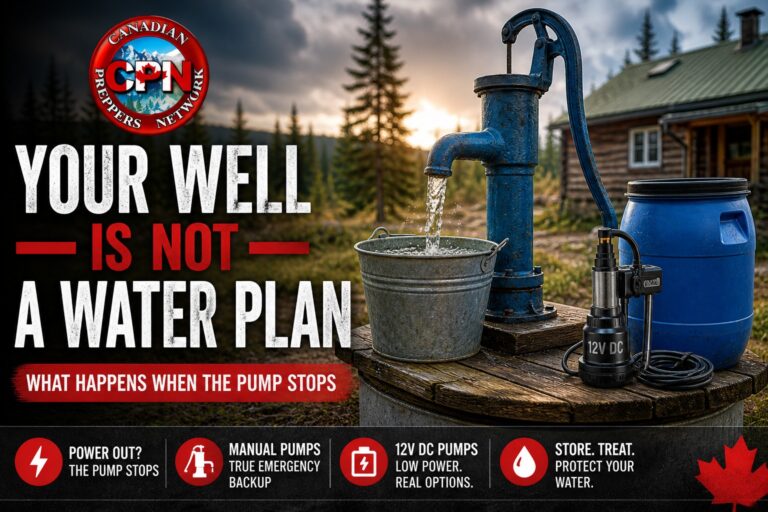
A properly constructed deep well situated away from contamination pathways is generally better protected than a shallow dug well downhill from several improvised latrines. However, no well should be assumed safe merely because the water comes from underground. A well also needs a plan for power loss, pump failure and surface contamination, as discussed in Your Well Is Not a Water Plan.
Distance Alone Is Not a Plan
Emergency-sanitation references commonly recommend keeping latrines at least 15 to 30 metres from groundwater sources and maintaining vertical separation between the bottom of a pit and the water table. Other guidance recommends still greater distances.
Those figures are starting points—not promises.
A distance that works in deep, dry clay may be inadequate in shallow soil over fractured limestone. Heavy rain can raise the water table, flood a pit or carry waste across the surface. Snowmelt can produce the same problem in spring. A previously acceptable location may become unsafe when conditions change.
Keep waste downhill, downstream and as far from water sources as the property and terrain realistically permit.
Then examine what lies beyond your own property. Your sanitation plan may protect your well while a neighbour’s failed septic system sits directly within its groundwater recharge area. In a prolonged collapse, protecting water becomes a community problem whether the community recognizes it or not.
Plinkin’ in the Woods with Frugal Gunnie
A full day of practical outdoor rimfire marksmanship, field positions, accuracy work and hands-on instruction.
Saturday, September 12, 2026
8:00 a.m.–5:00 p.m.
Great Ape Empire
267 Highway 6, Wiarton, Ontario
Weekend camping: $20 per person
Space is strictly limited. Adult participants must meet all applicable legal and organizer requirements.
Map the Contamination Before You Need the Water
Every serious retreat, rural property and neighbourhood group should create a local water-risk map.
Begin with the sources:
- Drilled and dug wells
- Springs
- Creeks and rivers
- Ponds and lakes
- Cisterns
- Rainwater systems
- Drainage ditches
- Wetlands and seasonal watercourses
Then identify potential contamination points:
- Septic tanks and leaching fields
- Outhouses and planned latrine sites
- Barns, pens and manure storage
- Fuel tanks and workshops
- Chemical and pesticide storage
- Garbage areas
- Roads and parking areas
- Flood-prone basements
- Industrial or commercial properties
- Neighbouring homes located upstream or uphill
Mark the normal direction of surface drainage. Observe the property during heavy rain rather than guessing from dry ground. Water may travel through shallow swales, culverts and ditches that are almost invisible in good weather.
Groundwater direction is harder to determine. Well records, local terrain, nearby water levels and professional assessments may provide useful information before systems fail. This is work to complete now, while records and expertise remain available.
Create Separate Water Zones
A surviving household cannot treat every wet place as part of the drinking-water system. Establish distinct zones for specific activities.
The Protected-Water Zone
This contains treated water, clean containers, drinking vessels and treatment equipment that has completed the dirty-water stage. Animals, dirty buckets, fuel, waste and unwashed hands do not enter this zone.
The Raw-Water Zone
This is where questionable water is delivered, settled and pre-filtered. Raw-water containers remain clearly marked and never become drinking-water containers without proper cleaning and disinfection.
The Washing Zone
Laundry, bathing and equipment cleaning should occur away from the collection point. Dirty washing water must not drain back toward the source.
The Animal-Water Zone
Livestock and pets should not drink from, stand in or defecate near the household collection point. Their access should be downstream or supplied through separate containers.
The Sanitation Zone
Toilets, latrines, stored waste and handwashing facilities belong together—but well away from food preparation and protected water. The route between the toilet and handwashing station should be short enough that people actually follow it. The objective is to prevent cross-contamination. A good filter cannot protect treated water from the dirty hands, funnel, cup or bucket used immediately afterward.
Move Upstream Before Treatment Becomes Impossible
When a water source becomes questionable, the first response should not automatically be “use more treatment.” Source selection is the first treatment stage.
Moving a collection point upstream from a settlement, livestock crossing, drainage ditch or sewage release may reduce the contaminant load substantially. Drawing from a protected spring may be preferable to drawing from a warm pond. Stored rainwater reserved for utility use may protect limited drinking water by handling washing and toilet needs.
There are also situations in which water should be abandoned entirely.
Water affected by fuel, solvents, industrial chemicals, pesticide concentrates or unidentified chemical runoff cannot be made reliably safe by ordinary boiling or backpacking filters. Boiling controls many biological hazards, but it does not remove every chemical. It can reduce the volume of water while leaving contaminants behind.
If the source smells of fuel, carries an oily sheen, lies below a chemical storage area or has been mixed with industrial floodwater, find another source. For a closer look at what common treatment methods can and cannot accomplish, read Where DIY Charcoal and Sand Filters Actually Fit.
Sanitation Requires Group Discipline
One careful household cannot protect a shared stream while ten other households empty waste beside it. If people are living close enough to share a watershed, they need common rules:
- No human waste near water sources
- No washing directly at collection points
- No animal access above drinking-water intakes
- No garbage disposal in waterways
- No fuel storage beside wells or shorelines
- Clearly marked drinking- and utility-water areas
- Dedicated clean and dirty containers
- Immediate reporting of spills, sewage releases or illness
- Regular inspection after rain, flooding and snowmelt
These rules are not about permission or bureaucracy. They are about preventing one careless act from disabling everyone’s water supply.
The person dumping a toilet bucket upstream may believe the current will carry the waste away. From their perspective, it does. It carries it to someone else.
When Normal Communications Fail
Protecting a shared water source requires people to report contamination, coordinate collection points and warn neighbouring households when conditions change.
Prepper Radio Canada’s Canadian Basic Amateur Radio Course teaches the knowledge, operating skills and Canadian regulations needed to work toward the ISED Basic Qualification.
Watch for Changes in the Human Environment
Source assessment cannot be performed once and forgotten. Conditions change as the emergency continues.
A creek that was acceptable during the first week may become unsafe when a large group establishes camp upstream. A well may become questionable after heavy rain floods a nearby latrine. A spring may be affected when livestock are moved into its recharge area. An intact septic system may fail when occupied by several additional families.
Watch for:
- New camps or occupied buildings upstream
- Increased animal activity
- Sudden illness within nearby households
- Changes in colour, odour or turbidity
- Flooding around wells or waste sites
- Overflowing septic systems
- Dead animals near drainage routes
- Fuel or chemical spills
- Algae growth or stagnant water
- Improvised toilets appearing near the source
Visible warning signs should change the plan immediately. Their absence, however, does not prove that water is safe.
Build a Clean-and-Dirty Water Station
Keep collection, treatment and sanitation equipment physically separated. These supplies help turn that rule into a working household system.
- Colour-Coded Food-Grade Water Containers — dedicate different colours to raw, utility and treated water.
- Food-Grade Buckets with Lids — useful for collection, settling and controlled movement of raw water.
- Gravity-Fed Water Filters — provide household-scale filtration without electricity.
- Water Purification Tablets and Drops — add a compact backup disinfection method.
- Drinking-Water Test Kits — support routine monitoring of wells, stored water and changing sources.
- Portable Handwashing Stations — place one directly beside the sanitation zone.
- Heavy-Duty Emergency Toilet Bags — contain waste when toilets, sewers or septic systems cannot be used safely.
- Waterproof Labels and Permanent Markers — prevent dangerous mix-ups between raw- and treated-water equipment.
As an Amazon Associate, Canadian Preppers Network may earn from qualifying purchases at no additional cost to you.
Protecting Water Begins on Land
The most effective water-treatment system is the one that begins before contamination reaches the source.
That requires understanding the surrounding land, controlling waste, separating activities and coordinating with everyone who shares the watershed. Filters, disinfectants and boiling remain important, but they are downstream defences. They work best when the raw water has already been protected from the worst hazards.
In a prolonged collapse, every settlement eventually becomes its own water authority and sanitation department.
The households that understand this early will protect their wells, place waste deliberately, control activity around collection points and monitor what is happening upstream. Those that do not may discover that their lake, river or aquifer still contains plenty of water—but none they can safely use.
Your water source does not begin at your bucket.
It begins everywhere upstream.