
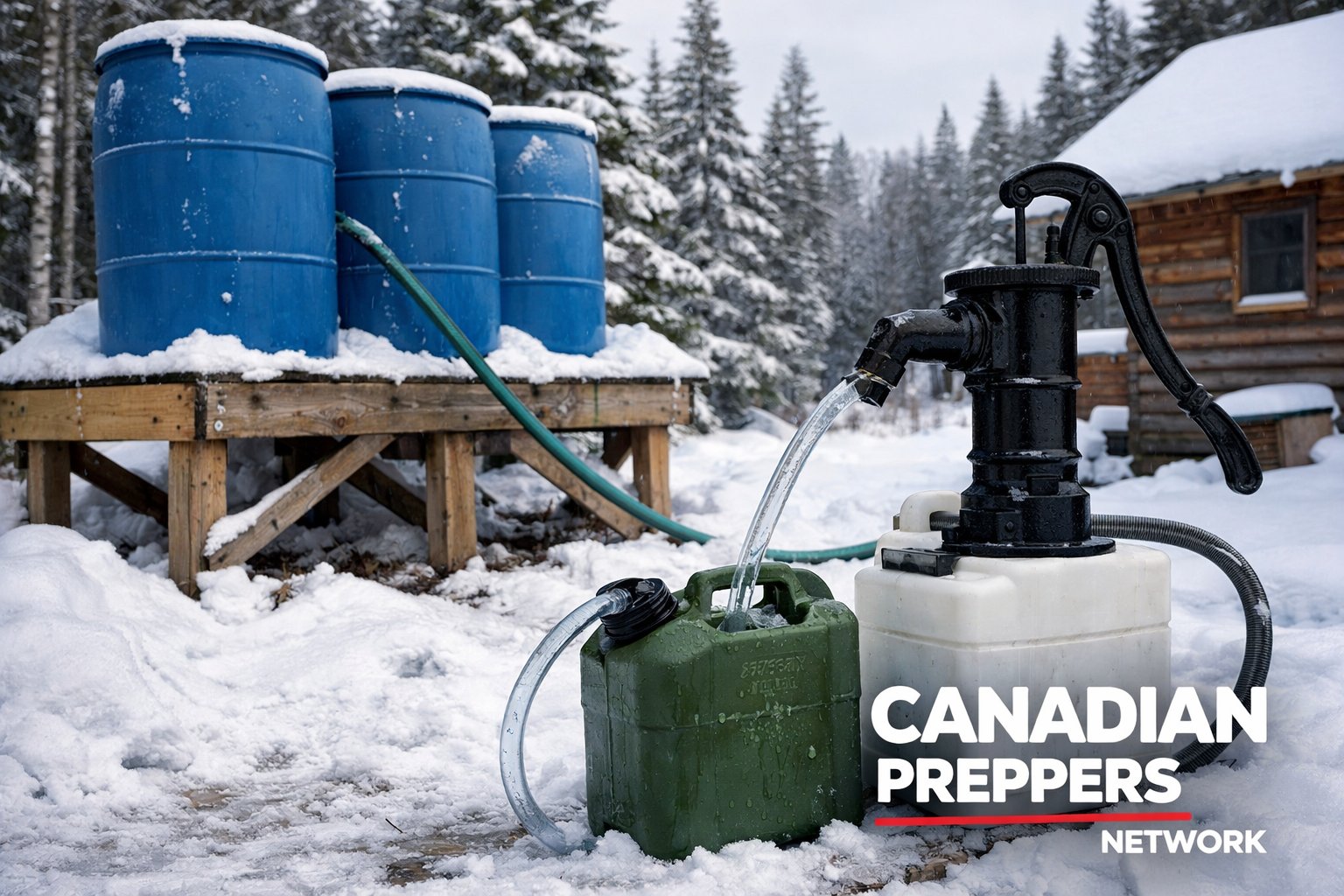
Water storage is only half the equation. The other half—the part that quietly breaks systems when things go wrong—is movement.
When the grid goes down, pressure disappears. Taps stop. Electric well pumps fall silent. And suddenly, even if you have water, you may not be able to get it where you need it.
Moving water without power isn’t complicated, but it does require forethought. The difference between a functioning system and a failed one often comes down to whether you planned for gravity, pressure, and flow before you needed them.
This is where most setups fall apart.
The Reality: Stored Water Isn’t Enough
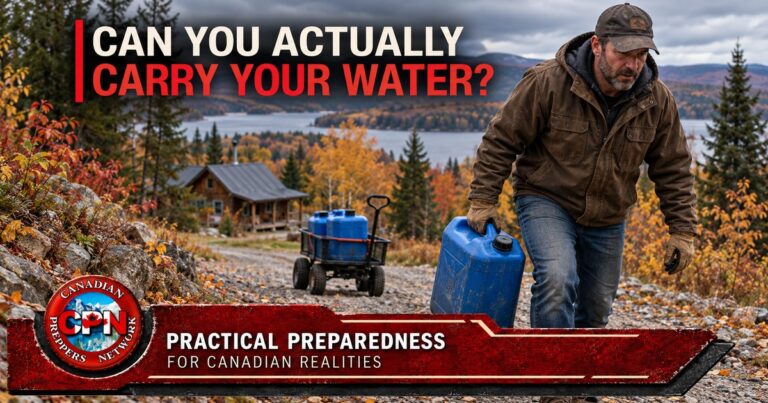
A 55-gallon drum in the basement looks reassuring—until you try to pour from it, lift it, or move it upstairs.
Water weighs over 8 pounds per gallon. That drum weighs nearly 460 pounds.
Without a way to move it efficiently, it becomes a static asset. Useful, but limited.
A proper preparedness setup treats water like a system, not a container.
Gravity Systems: The Most Reliable Option
Gravity is the only method that never fails.
If you can position water higher than where it’s needed, you’ve solved most of your problems before they begin. This is why elevated storage—whether it’s a second-floor container, a loft tank, or a simple raised platform—is so effective.
Even a few feet of elevation creates usable pressure. Not household tap pressure, but enough for filling containers, basic washing, and feeding a gravity filter.
The beauty of gravity is its simplicity. No moving parts. No maintenance. No failure point beyond the container itself.
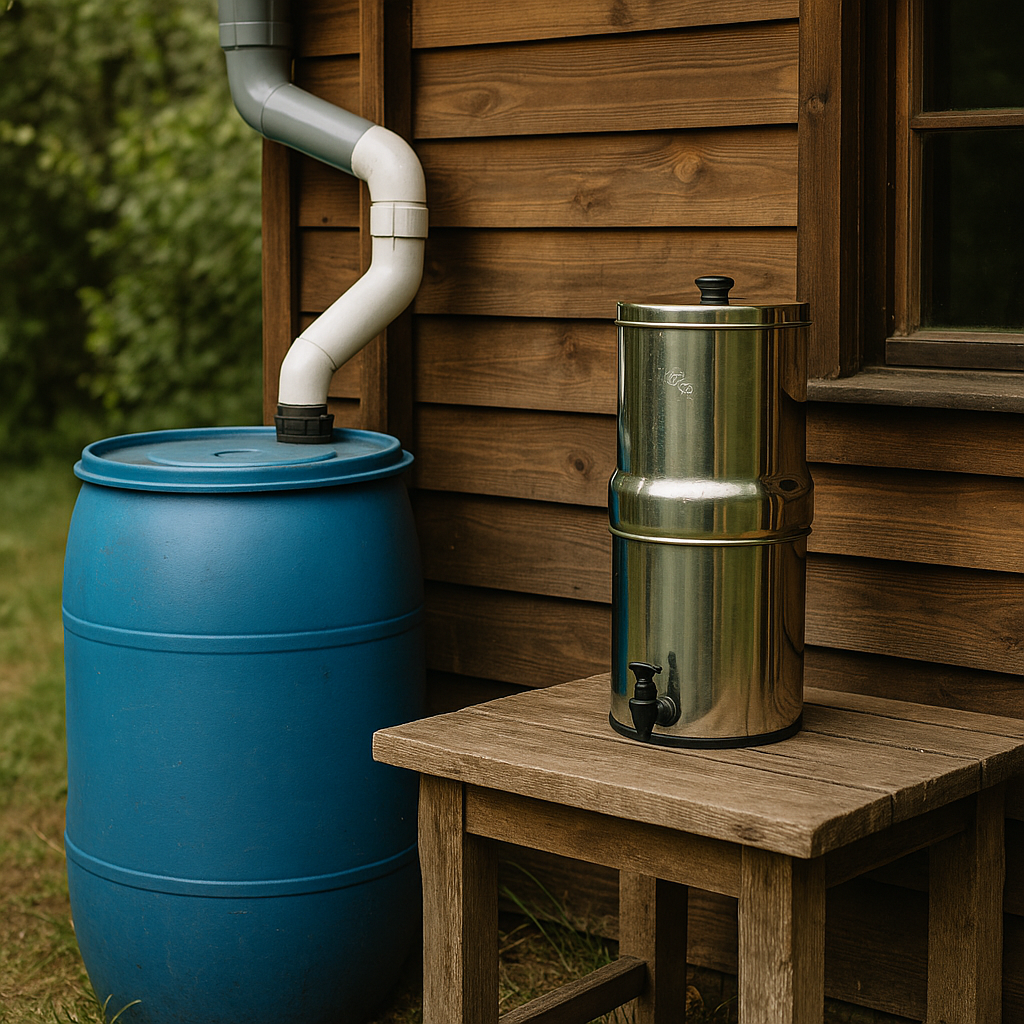
This is also where systems like gravity-fed filtration units shine. A setup using a stainless gravity system allows you to both purify and dispense water without any external power source.
A proven option in the prepper community:
https://www.amazon.ca/s?k=Big+Berkey+Gravity+Water+Filter&tag=canadianprep-20
On the CPN side, this ties directly into broader water filtration system planning outlined here:
https://canadianpreppersnetwork.com/gravity-filters-vs-ceramic-vs-hollow-fiber-vs-ultrafiltration/
The key takeaway is simple: if you can elevate it, you should.
Manual Pumps: Controlled Movement When Gravity Isn’t Enough
Gravity works best when your storage and usage points are fixed. But what happens when they aren’t?
That’s where manual pumps come in.
Hand pumps allow you to extract and move water from wells, barrels, or containers without electricity. More importantly, they give you control—something gravity alone doesn’t always provide.
For well owners, adding a backup hand pump can turn a dead well into a functioning one during an outage.
Deep well hand pump options:
https://www.amazon.ca/s?k=hand+well+pump+manual&tag=canadianprep-20
For stored water, smaller transfer pumps—like rotary hand pumps designed for barrels—make it possible to move water cleanly and efficiently without tipping or lifting heavy containers.
Barrel transfer pump options:
https://www.amazon.ca/s?k=manual+barrel+water+pump&tag=canadianprep-20
This is less about convenience and more about sustainability. You can only lift and pour so many times before fatigue becomes a real issue.
A pump turns a one-time effort into a repeatable system.
Siphons: The Overlooked Workhorse
Siphons are rarely talked about in preparedness circles, which is surprising given how effective they are.
A siphon uses gravity and atmospheric pressure to move water from one container to another—as long as the destination is lower than the source.
No power. No moving parts. Just a hose and a bit of technique.
Once started, a siphon will continue flowing on its own. This makes it ideal for:
- Draining large containers
- Transferring water between barrels
- Moving water from storage to filtration systems
A simple food-grade siphon hose works well:
https://www.amazon.ca/s?k=food+grade+siphon+hose&tag=canadianprep-20
For easier starts (especially in cold weather):
https://www.amazon.ca/s?k=TERA+PUMP+TRFA01&tag=canadianprep-20
Siphons excel in quiet efficiency. They do the work while you focus elsewhere.
Where Most Systems Fail
The failure isn’t usually a lack of water—it’s friction in the process.
Containers that are too heavy to move.
No elevation for gravity feed.
No way to extract water without opening and contaminating the source.
Improvised methods that work once, then get abandoned.
This is where contamination creeps in. Every time you open a container, dip a cup, or pour manually, you increase the risk.
Closed systems with controlled flow—spigots, pumps, siphons—reduce that risk significantly.
Building a Layered Water Movement System
A resilient setup doesn’t rely on just one method. It combines them.
At a minimum, a well-prepared household should have:
- An elevated gravity-fed container for daily use
- A manual pump for extraction and controlled transfer
- A siphon hose for bulk movement between containers
Each method covers the weaknesses of the others.
Gravity is effortless but fixed.
Pumps are controlled but require effort.
Siphons are efficient but dependent on positioning.
Together, they form a complete system.
Final Thought: Flow Is Capability
Preparedness often focuses on storage—how much you have.
But in a real disruption, capability is defined by flow—how easily you can access, move, and use what you’ve stored.
Water that can’t be moved is only partially useful.
Water that flows where you need it, when you need it, without power—that’s resilience.


One Comment