Canada’s power grid is under growing strain. Winter peak demand continues to rise as more homes rely on electric heat, heat pumps, and EV charging, while aging infrastructure struggles to keep pace with increasingly volatile weather. For most households, outages are still viewed as short-term inconveniences. For prepared Canadians, they are stress tests that expose weak links in heating, water, food storage, and communications.
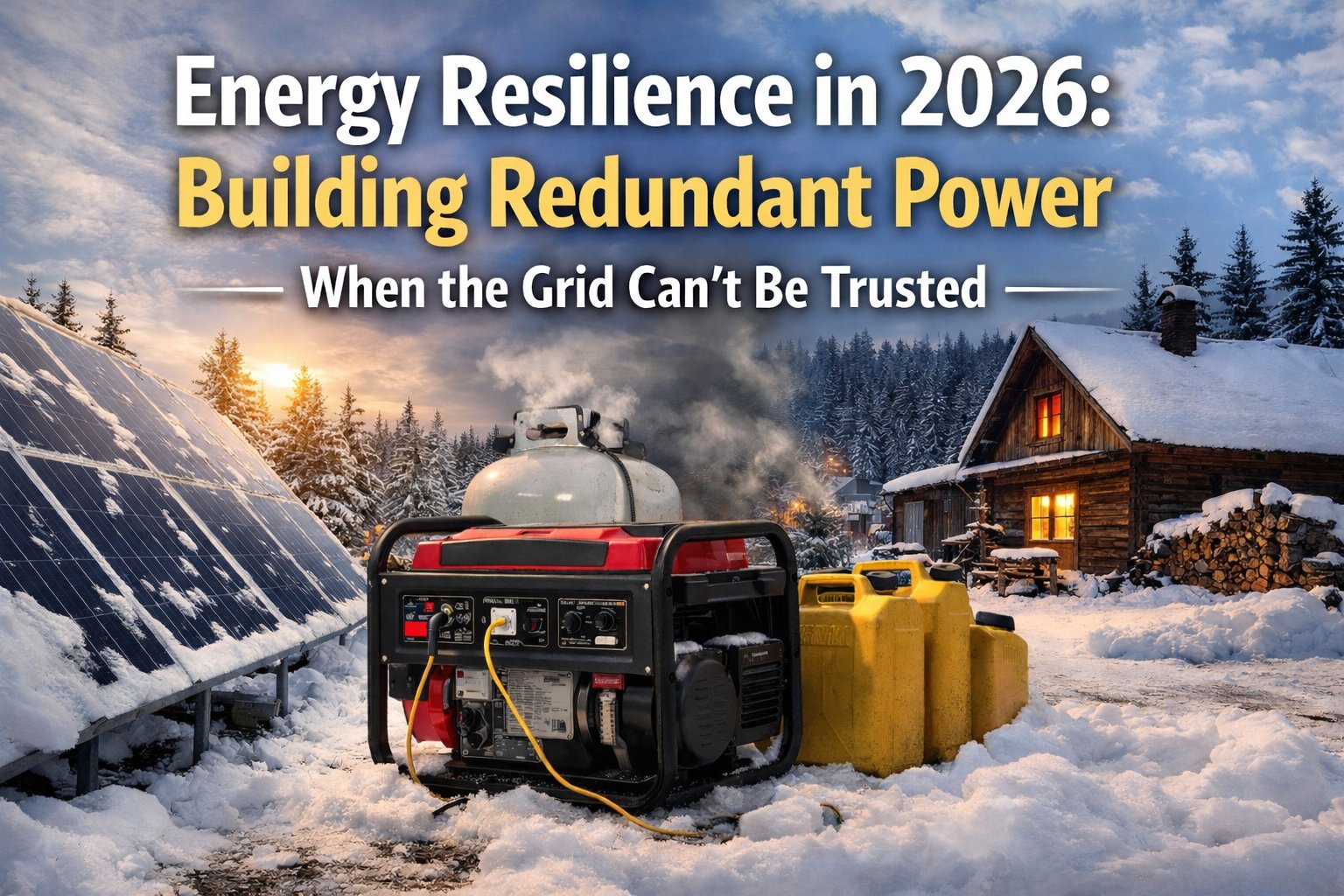
Energy resilience is no longer about owning a single generator. It is about redundancy, fuel diversity, and realistic load planning that works in Canadian winter conditions.
Why Energy Fails First in a Grid-Down Event
When the grid drops, systems fail in sequence. Furnaces stop because the blower has no power. Well pumps go silent. Municipal water pressure degrades. Cellular networks fall back to limited battery reserves. Even homes with wood heat often depend on electric fans, controls, or ignition systems.
This cascading failure is why energy sits at the centre of preparedness. If you want a deeper look at winter-specific power risks, see
Off-Grid Emergency Power Sources During Winter for Preppers
https://canadianpreppersnetwork.com/off-grid-emergency-power-sources-during-winter-for-preppers/
Understanding What You Actually Need to Power
One of the most common prepper mistakes is trying to power the entire home instead of identifying critical loads.
In most Canadian households, critical loads include well pumps, furnace or boiler controls, refrigeration, essential lighting, and communications equipment. Comfort loads—entertainment systems, countertop appliances, and space heaters—consume large amounts of energy for little survival value.
A resilient plan assumes load shedding, cycling systems instead of running everything at once. This approach dramatically extends fuel and battery life during prolonged outages.
Fuel-Based Power in Canadian Conditions
Gasoline & Dual-Fuel Generators
Portable generators remain common because they are accessible and flexible. Dual-fuel models add resilience by allowing propane use when gasoline is scarce. Their weaknesses—cold starts, carburetor icing, and fuel degradation—are amplified in winter.
For a direct comparison between generator types, see
Solar Generators vs. Gas Generators: A Prepper’s Power Showdown
https://canadianpreppersnetwork.com/solar-generators-vs-gas-generators-a-preppers-power-showdown/
Using a fuel stabilizer like STA-BIL Storage Fuel Stabilizer helps extend gasoline shelf life:
https://www.amazon.ca/dp/B000CCMUCM?tag=canadpreppn01a-20
Propane Systems
Propane stores indefinitely and burns clean, but cold weather reduces tank pressure. Small tanks struggle first, while larger tanks with proper regulators perform better. Propane is reliable but should be treated as finite winter fuel, not a limitless solution.
Diesel for Long-Term Resilience
Diesel remains the most robust long-duration option. Engines are efficient and durable, and fuel consumption is predictable. Cold-weather gelling is manageable with winter blends and additives such as
https://www.amazon.ca/dp/B000CCMU8S?tag=canadpreppn01a-20
Solar Power in a Canadian Winter: Misunderstood but Valuable
Solar is often dismissed in Canada, usually by people who have never optimized a winter system. Proper panel angles and snow-shedding designs still produce meaningful power even during short days.
Solar’s value is not running heavy loads—it is fuel reduction. Even modest winter production can keep batteries charged for lighting, radios, and controls, allowing generators to run less often.
For real-world Canadian data, read
How Solar Power Actually Performs in a Canadian Winter
https://canadianpreppersnetwork.com/how-solar-power-actually-performs-in-a-canadian-winter/
Batteries & Power Stations: Silent Force Multipliers
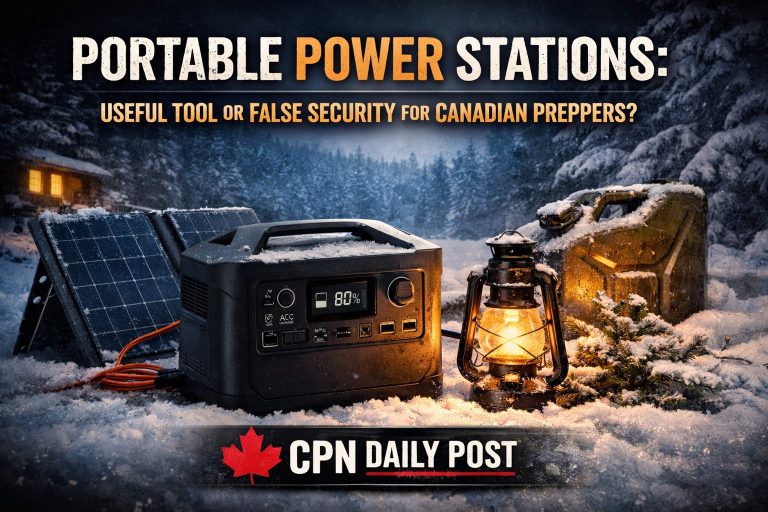
Battery banks and portable power stations provide instant, silent power for communications, medical devices, and overnight loads. Cold reduces performance, and lithium batteries must be protected from freezing during charging.
They work best as force multipliers, extending generator fuel rather than replacing it. A proven mid-range option is
https://www.amazon.ca/dp/B083KBKJ8Q?tag=canadpreppn01a-20
The Layered Energy Model That Actually Works
Energy resilience comes from layers, not wattage.
A realistic Canadian setup includes:
- Solar and batteries for daily low-draw needs
- A generator for high loads and winter backup
- Manual systems such as wood heat and gravity-fed water
Each layer compensates for the weaknesses of the others. Fuel diversity matters as much as capacity.
Common Energy Mistakes Preppers Still Make
Many failures occur before an outage begins. Generators are oversized without fuel planning. Systems are never tested in real winter conditions. Extension cords replace proper transfer switches. Maintenance is ignored.
For seasonal upkeep guidance, see
Maintaining Alternative Power Systems in Winter
https://canadianpreppersnetwork.com/maintaining-alternative-power-systems-in-winter/
Practical Steps to Improve Energy Readiness This Month
Start with an energy audit. Identify true critical loads. Test systems during cold weather. Track real fuel consumption instead of guessing. Incremental improvements—better fuel storage, smarter load management, an additional power layer—compound quickly.
Energy planning also overlaps directly with heating resilience. For that connection, see
Shelter and Heat Fail Faster Than Anything Else: Winter Readiness for Canadian Homes
https://canadianpreppersnetwork.com/shelter-and-heat-fail-faster-than-anything-else-winter-readiness-for-canadian-homes/
Energy Is the Backbone of Every Other Prep
Food storage fails when freezers warm. Water access fails when pumps stop. Communications fail when batteries die. Energy is the system that keeps every other prep functional.
Tomorrow we’ll build on this foundation with
Communications Under Winter Stress: Staying Informed When the Lines Go Quiet
https://canadianpreppersnetwork.com/communications-under-winter-stress-staying-informed-when-the-lines-go-quiet/
📘 Featured Resource
Acres of Preparedness provides long-term, Canadian-focused planning for off-grid energy, food, and infrastructure:
https://www.amazon.ca/dp/B0C1J4JQ5B?tag=canadpreppn01a-20