
Homestead Tools Canada: Complete Buying Guide
Homesteading is not a lifestyle aesthetic.
It is a skill system.
A serious homestead has to produce, repair, preserve, move, store, build, mend, sharpen, clean, and adapt. That matters during normal times, but it matters even more when supply chains slow down, power becomes unreliable, fuel gets expensive, and help is not coming quickly.
For Canadian preppers, homestead skills are not just about gardening. They are about keeping a household functional when modern convenience gets thin. A rural property, retreat, cabin, small farm, or even a serious suburban lot needs tools that do not depend entirely on electricity, apps, subscriptions, or disposable convenience.
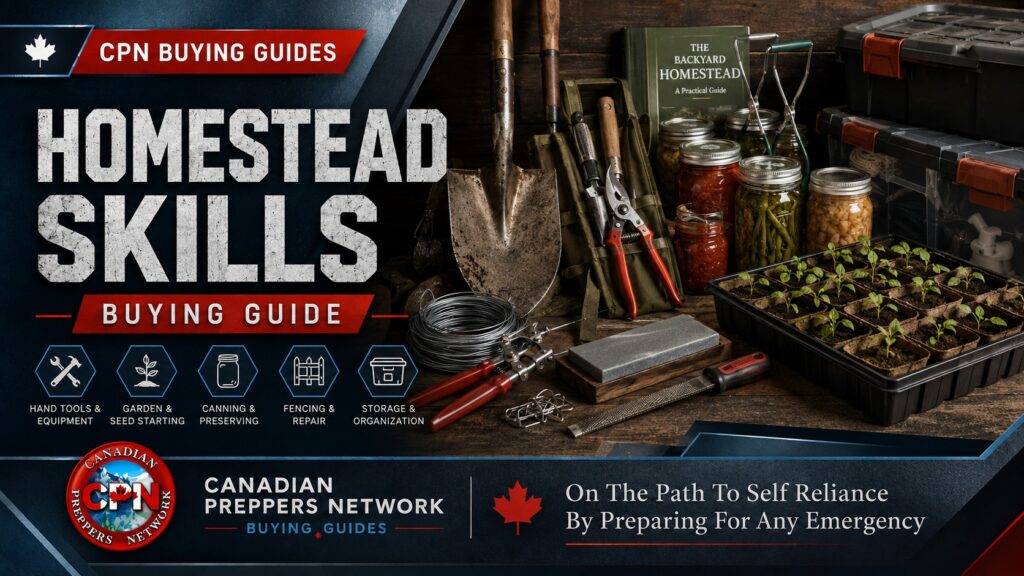
This buying guide focuses on practical homestead supplies: hand tools, garden tools, repair kits, sharpening equipment, seed starting supplies, fencing repair, food preservation support, storage, manual backups, and basic infrastructure items that help a household keep working when systems fail.
Start Here: Core Homestead Skill Supplies
If you are building a homestead tool system from scratch, start with the supplies that help you grow, repair, preserve, and maintain.
These categories build the foundation: food production, maintenance, repair, preservation, storage, and manual capability.
Hand Tools: The Backbone of Homestead Repair
A homestead without hand tools is dependent on other people.
Power tools are useful, but hand tools are the fallback when batteries are dead, inverters fail, generators are reserved for higher priorities, or repairs need to happen in bad weather away from the house.
Start with the basics: hammer, screwdrivers, pliers, adjustable wrenches, socket set, handsaw, hacksaw, files, clamps, tape measure, utility knives, pry bar, level, chisels, and a good tool bag or chest. Then build around the property: fencing tools, plumbing tools, electrical testers, wood repair supplies, and spare hardware.
The goal is not to buy every tool at once. The goal is to stop being helpless when something breaks.
Garden Tools and Food Production
Food production begins with soil, tools, and repetition.
A prepper garden does not run on enthusiasm alone. It needs digging tools, cutting tools, watering tools, seed starting supplies, soil amendments, pest control basics, harvest containers, and storage space.
For long-term grid-down planning, manual garden tools matter. A battery-powered tool is helpful until the battery dies. A strong shovel, hoe, rake, fork, broadfork, pruning shears, wheelbarrow, and hand trowel keep working as long as people do.
Canadian gardens also need seasonal planning. Seed starting trays, row covers, frost protection, plant labels, and durable watering cans can help stretch short growing seasons and protect early plants.
Seed Starting and Season Extension
In Canada, timing matters.
A short growing season means many crops need to be started indoors or protected early in the season. Seed starting trays, humidity domes, plant labels, soil blocks, seedling heat mats where power is available, and grow lights can all help. For grid-down planning, also keep non-electric options in mind: cold frames, row covers, cloches, greenhouse plastic, and saved seed.
Seed starting is not just about buying trays. It is about creating a repeatable system so you are not dependent on garden centres every spring.
A serious household should store seeds properly, label them clearly, rotate them, and learn which crops can be saved from year to year.
Pruning, Cutting, and Woodlot Maintenance
A homestead constantly needs cutting tools.
Pruning trees, clearing brush, processing small firewood, maintaining trails, cutting stakes, repairing fences, and managing overgrowth all require sharp tools. Chainsaws are useful, but they need fuel, oil, maintenance, files, parts, and safety gear. Manual cutting tools remain important.
Keep pruning shears, loppers, bow saws, axes, hatchets, wedges, files, and sharpening gear. A dull tool is slow, dangerous, and frustrating.
For rural properties and retreats, cutting tools are not optional. Brush grows back. Trees fall. Fences get blocked. Firewood needs processing. Trails disappear.
Sharpening and Tool Maintenance
Tools are only as useful as their edges.
Knives, axes, pruning shears, chisels, hoes, scythes, machetes, and saw chains all need maintenance. A homestead that cannot sharpen is a homestead that slowly loses capability.
Sharpening supplies should include stones, files, honing guides where useful, oil, rust prevention, replacement blades, spare handles, and a basic work surface. For grid-down use, prioritize manual sharpening equipment that does not depend on electricity.
A sharp tool saves time, reduces fatigue, and lowers the chance of sloppy accidents.
Fencing, Gates, and Boundary Repair
Fences fail at the worst times.
Wind, snow load, falling branches, livestock pressure, wildlife, rot, rust, and vehicle damage can all create sudden repair jobs. A homestead needs fencing repair supplies on hand before animals are loose or a garden is exposed.
Keep fencing pliers, fence staples, wire, tensioners, gate hardware, zip ties, T-post clips, repair sleeves, gloves, and a post driver where appropriate. Even if you do not keep livestock now, fencing repair supplies are useful for gardens, gates, temporary barriers, compost areas, fuel storage areas, and retreat boundaries.
This is one of the least glamorous but most practical homestead categories.
Food Preservation Support
Growing food is only half the job.
If you cannot preserve it, you are just racing spoilage.
Food preservation support belongs in a homestead skills guide because gardening, livestock, foraging, canning, dehydrating, fermenting, root cellaring, and freezer management all overlap. Some items were covered in the Food Storage Supplies guide, but homestead households need practical working supplies too.
Keep canning tools, jars, lids, labels, dehydrator trays, fermentation weights, food-safe buckets, freezer containers, and storage notebooks. For long-term grid-down planning, remember that freezers are vulnerable without power. Canning, dehydrating, fermenting, and dry storage provide more durable options.
Manual Kitchen and Processing Tools
A homestead kitchen should not be helpless without power.
Manual tools matter for processing food, preserving harvests, and keeping meals moving during outages. Manual grain mills, hand crank food processors, manual meat grinders, can openers, peelers, graters, mortar and pestle, hand whisks, and sturdy cutting boards all reduce dependence on electric appliances.
These tools are not just for emergencies. They can be used all year, which means the household actually learns how they work before it matters.
The best manual tools are simple, repairable, and easy to clean.
Livestock and Small Animal Basics
Even a small homestead may eventually deal with animals.
Chickens, rabbits, ducks, goats, or other small livestock require more than enthusiasm. Feeders, waterers, bedding tools, buckets, basic first aid supplies, heat protection, fencing repair, nesting boxes, record keeping, and predator-resistant storage all matter.
This guide is not a livestock manual, but the buying logic is simple: start with durable, washable, repairable supplies before animals arrive. Improvised systems can work, but they need to be safe, clean, and maintainable in bad weather.
For long-term preparedness, small livestock systems should also consider manual water hauling, secure feed storage, sanitation, and repair supplies.
Storage, Labels, and Inventory
A homestead can drown in clutter.
Seeds, tools, jars, spare parts, animal supplies, canning gear, hardware, fencing clips, fasteners, repair kits, sharpening supplies, and seasonal equipment all need a place. If you cannot find it, you do not really have it.
Use heavy-duty bins, parts organizers, labels, inventory notebooks, shelving, pegboards, and tool racks. Keep similar items together. Store repair supplies where they are used. Label containers clearly. Track consumables before they run out.
Organization is not cosmetic. It is operational.
What To Buy First
For a practical homestead skills setup, start with tools that help you maintain, repair, grow, and preserve.
Buy first:
- Hand tool set
- Garden hand tools
- Shovel or spade
- Pruning shears
- Sharpening stones
- File set
- Seed starting trays
- Plant labels
- Heavy-duty storage bins
- Canning supplies
Then expand into:
- Wheelbarrow
- Garden fork
- Bow saw
- Axe or hatchet
- Fencing pliers
- Galvanized wire
- Gate hardware
- Food dehydrator
- Manual can opener
- Manual grain mill
- Feed storage containers
- Parts organizer
- Inventory notebook
- First aid and animal care supplies
This order builds the system logically. First you gain basic repair and production capability. Then you add food preservation, fencing, cutting tools, manual processing, livestock support, and organization.
Related CPN Reading
Final Buying Advice
Homesteading is not about owning rustic-looking gear.
It is about keeping a place running.
A serious homestead needs tools that work without perfect conditions. It needs sharp edges, spare parts, storage systems, repair supplies, manual backups, and people who know how to use them.
Start small, but start with real tools.
The more your household can grow, fix, preserve, sharpen, carry, mend, and organize, the less helpless it becomes when systems fail.
Amazon Disclosure:
As an Amazon Associate, Canadian Preppers Network may earn from qualifying purchases made through links in this guide. This does not change the price you pay, but it helps support the site.