Repairing What Can No Longer Be Replaced
During the early stages of a major collapse, stored supplies carry much of the load. Spare parts come off shelves, damaged equipment is replaced with working equipment, and bins of new hardware keep repairs moving.
Eventually, those supplies begin to disappear.
The last replacement hinge is installed. The final box of specialised bolts is opened. A shovel cracks, a gate latch fails, and an essential bracket bends beyond cold repair. Ordering replacements is no longer possible because the industrial system that produced and delivered them has stopped functioning.
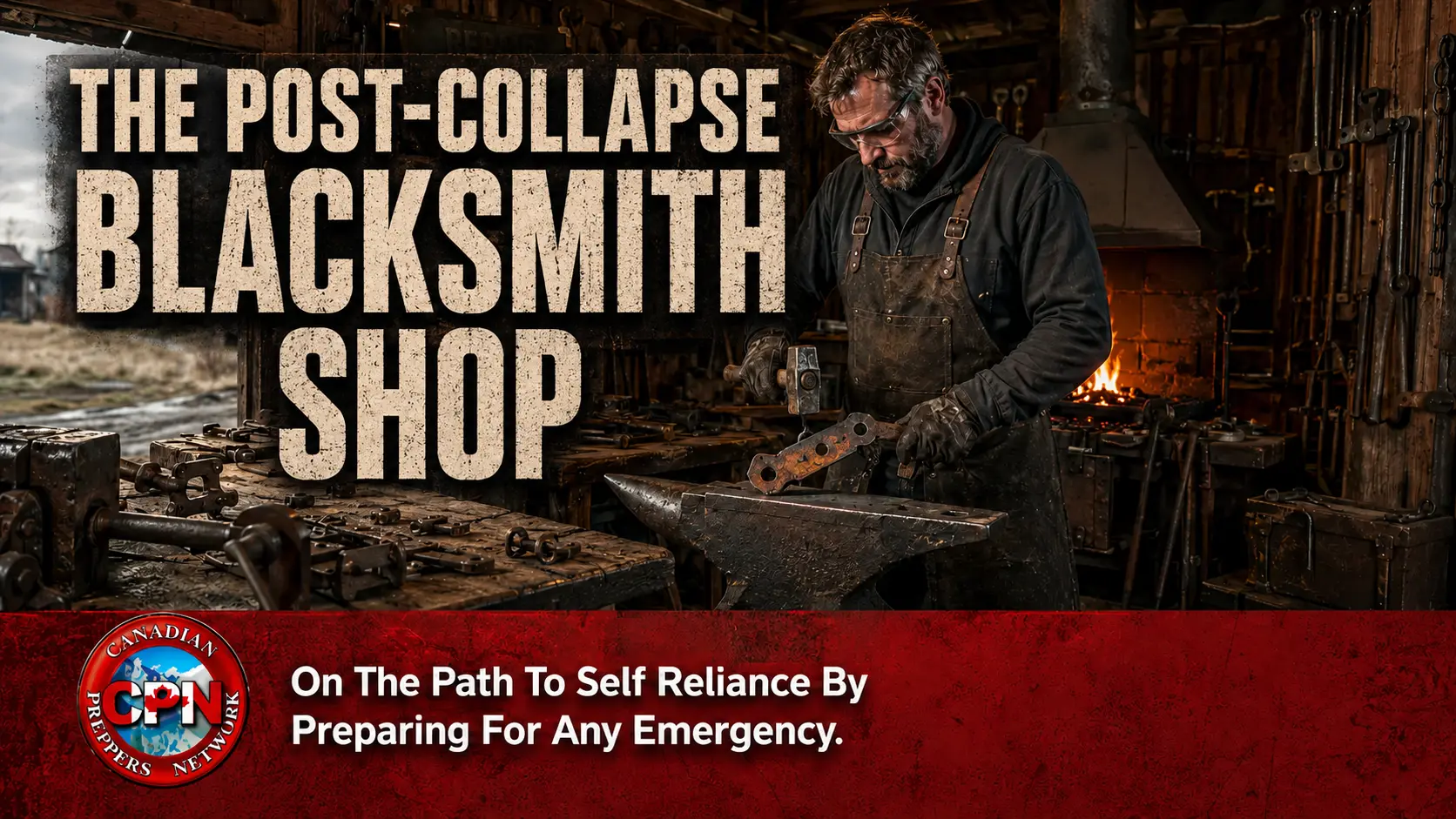
At that point, a modest blacksmith shop becomes more than a traditional craft space. It becomes part of the homestead’s essential repair infrastructure.
A Repair Shop, Not a Medieval Fantasy
Post-collapse blacksmithing is sometimes presented as complete independence from modern manufacturing. One person supposedly turns scrap metal into axes, knives, ploughs, tools and machine parts using little more than a hammer and fire.
That is not a realistic starting point.
Competent blacksmithing requires training, repeated practice, suitable materials and an understanding of how different steels behave. Producing dependable cutting tools or repairing safety-critical equipment requires considerably more knowledge than bending a decorative hook.
A more attainable—and more valuable—goal is developing enough skill and equipment to complete ordinary repairs that keep a homestead functioning.
This could include straightening damaged hardware, reforming brackets, repairing gate components, producing hooks and staples, adapting salvaged fittings, or making basic pieces of non-critical hardware. The finished work may not look impressive, but it could keep buildings, carts, animal enclosures and manually operated equipment in service.
The Real Value Is in Repairing
Manufactured goods contain an enormous amount of embedded energy. Ore was mined, metal was refined, components were machined, products were assembled, and everything was transported through a continental supply chain.
Reproducing that industrial system on an isolated homestead would be nearly impossible. Repairing its surviving products is a different matter.
A broken tool may still contain almost all the material needed to make it useful again. A damaged hinge may require only one component to be replaced. A discarded agricultural implement could provide usable steel, brackets and fittings for dozens of future repairs.
The post-collapse smith’s greatest contribution may therefore be preserving manufactured goods rather than attempting to replace modern industry.
Every successful repair stretches the remaining industrial inheritance a little further.
Scrap Metal Becomes a Strategic Resource
Not every piece of metal is interchangeable.
The steel used in a structural bracket behaves differently from the steel found in a spring, file or cutting edge. Some salvaged metals can be worked relatively predictably, while unidentified alloys may react badly to heating, cooling or repeated stress.
Paint, galvanising, plating, chemical residue and contamination create additional hazards when heated. Sealed components, pressurised parts and unidentified containers should never be casually placed in a forge or hot-work area.
That makes identification and organisation as important as collection.
A serious homestead repair inventory should separate known mild steel, springs, files, sheet metal, pipe, hinges, chain, bolts and miscellaneous hardware. Material with a known origin is generally more useful than anonymous metal recovered from questionable machinery.
The scrap pile should be treated as a materials library rather than a heap of random metal.
The Forge Is Only Part of the Workshop
Many repairs do not require heat.
A solid vice, files, hacksaws, punches, measuring tools, cold chisels and manual drills may solve a problem without the forge ever being lit. That matters when fuel is scarce, weather makes hot work unsafe, or an item can be repaired more effectively at the bench.
Grinding and welding equipment will remain extremely valuable while electricity and consumables are available. Files, hand drills and manually operated cutting tools provide another layer of capability when powered equipment becomes unreliable.
A resilient repair workshop combines several methods:
- Cold straightening and forming
- Manual cutting, drilling and filing
- Mechanical fastening with bolts, pins or rivets
- Welding while electricity and consumables remain available
- Forging when heat is genuinely required
- Woodworking when a metal component can safely be replaced with wood
The objective is not to forge every repair. It is to select the simplest dependable method while conserving fuel, materials and labour.
Fuel Must Be Treated as a Consumable
A forge is not automatically sustainable simply because it can operate without grid electricity.
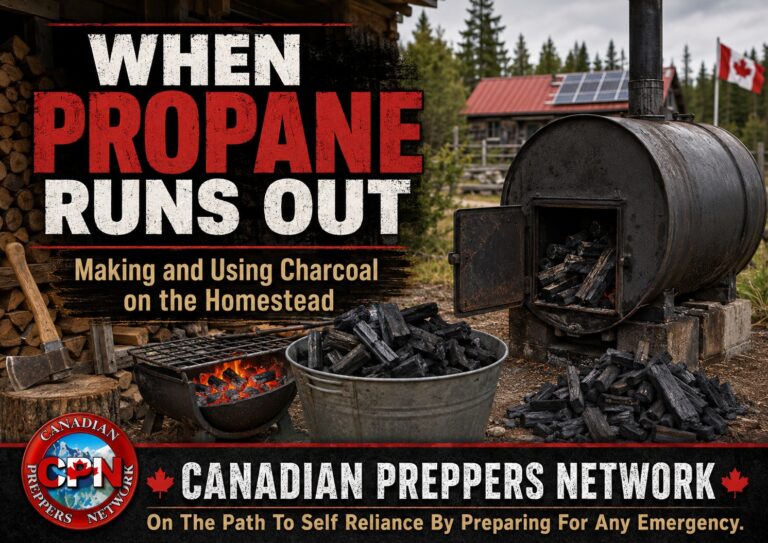
Propane is convenient and controllable, but stored cylinders eventually empty. Commercial blacksmithing coal and coke may also become difficult to obtain. Locally produced charcoal could become a renewable alternative in some circumstances, but producing and using it safely requires suitable land, appropriate wood, significant labour and experience.
Forge fuel should consequently be reserved for work that genuinely requires heat.
A settlement smith would have to collect several suitable jobs, plan each session in advance and avoid repeatedly heating and cooling the forge. Decorative work would become a low priority when essential repairs were waiting.
Under conditions of extreme scarcity, the smith’s judgement could become as important as the smith’s hammer.
Build Capability Before It Is Needed
Buying an anvil does not create a blacksmith.
The most important preparation is guided practice under normal conditions, while replacement materials, experienced instructors, emergency services and medical care remain available. An introductory course can teach workshop safety, tool control, material selection and the limits of beginner-level work.
New smiths should begin with practice stock and simple, non-critical projects. Repairs involving vehicles, lifting equipment, pressure vessels, load-bearing structures or other safety-critical systems should remain outside a beginner’s scope.
A homestead does not necessarily need every resident to become a blacksmith. It needs at least one properly trained person, several capable assistants and enough shared knowledge that the entire repair capability does not depend on one individual.
Safety Becomes More Important After a Collapse
Hot metal does not always look hot. Sparks and scale can travel beyond the immediate work area, while smoke and combustion gases can accumulate when ventilation is inadequate. Burns, eye injuries, hearing damage, fires and respiratory hazards remain serious even when professional medical care is unavailable.
Prevention becomes more important after a collapse, not less.
A forge belongs in a properly designed, ventilated and fire-resistant work area separated from fuel storage, dry vegetation, livestock and ordinary foot traffic. Appropriate eye, hearing, hand and respiratory protection must be selected for the work being performed.
Fire-extinguishing equipment and a properly stocked first-aid station should remain immediately accessible. Anyone pursuing blacksmithing should receive competent, in-person instruction from an experienced blacksmith. Books and videos can support that training, but they cannot identify every unsafe setup or correct poor technique in real time.
Download the Free Canadian Grid-Down Starter Kit
A forge cannot compensate for weak plans involving water, food, sanitation, heat, communications or household organisation.
Get the Free Grid-Down Starter Kit
Examine what happens during the first 72 hours of a major outage—and identify which household systems begin failing if the electricity does not return.
The Community Smith
Blacksmithing demonstrates why long-term preparedness eventually becomes a community project.
One household might maintain the forge. Another could collect and organise suitable scrap. A mechanically experienced neighbour might diagnose equipment failures, while someone with woodworking skills produces replacement handles, patterns and non-metal components.
The smith becomes one part of a larger repair network.
Useful work could be exchanged for food, fuel, materials or labour. More importantly, local repair capability would reduce the settlement’s dependence on a steadily shrinking stockpile of manufactured goods.
The post-collapse blacksmith shop would not recreate modern industry. It would preserve what remained of that industry while helping the community adapt to life without dependable replacement parts.
Amazon Buying Box: Blacksmithing Workshop Safety and Training
Begin with proper instruction, reference material and workshop protection. Forging equipment should be selected with an experienced blacksmith after the workspace has been assessed for ventilation, fire protection and safe operation.
- The Backyard Blacksmith reference book
- Blacksmithing and metalworking reference books
- CSA-approved safety glasses with side protection
- Workshop hearing protection
- ABC-rated workshop fire extinguisher
- Workshop first-aid kit
- Labelled metal-parts storage bins
- Steel workshop storage racks
Blacksmithing involves extreme heat, fire, fumes and impact hazards. Obtain hands-on instruction and operate a forge only in a properly ventilated, fire-resistant workspace equipped for hot work.