Building a Safe, Weather-Resistant Bush Kitchen for Long-Term Use
A temporary campfire can boil water and cook a meal. A long-term bush camp requires something better.
When the same camp will be occupied for weeks or months, the cooking area becomes one of its busiest locations. Water is heated there, food is prepared, equipment is dried and fuel is processed. Poor organization wastes firewood, attracts animals and increases the chance of burns or an uncontrolled fire.
A permanent cooking area should therefore be treated as camp infrastructure. It must be positioned carefully, protected from weather and designed so that every routine task has a dedicated place.
Choose the Location Carefully
The cooking area should be close enough to the main camp for convenience but separated from sleeping shelters, fuel storage and anything easily ignited.
Look for firm, naturally level ground with good drainage. Avoid depressions where rainwater collects and areas directly beneath dead branches. Peat, deep duff and exposed roots can allow heat to spread underground, even when the surface appears safe.
The location should also provide:
- Reasonable access to water
- Protection from prevailing winds
- A safe route from the sleeping area
- Space for food preparation and fuel storage
- Visibility around the cooking area
- Enough overhead clearance for smoke and heat
Wind protection is useful, but enclosing the fire too tightly can trap smoke or redirect sparks. Natural windbreaks should reduce exposure without preventing ventilation.
Before establishing anything permanent, confirm that fires and camping are permitted at the location. Seasonal fire bans and local restrictions still apply.
Begin With a Fire-Safe Base
A cooking fire should never be built directly on unknown ground.
Clear loose needles, leaves, grass and other combustible material from a generous area around the intended fire location. Examine the soil beneath the surface for roots, peat or buried organic material. Mineral soil, sand or gravel provides a more dependable base.
A durable fire area can be defined with suitable stone or packed mineral earth, but avoid using wet, porous or unidentified stone immediately beside intense heat. Some rocks can crack or break apart when heated.
The objective is not to build a decorative fire ring. It is to create a clearly controlled working area where heat, embers and cooking equipment remain separated from the rest of camp.
Keep water and a shovel immediately available whenever the fire is operating. Never leave it unattended.
Free Canadian Grid-Down Starter Kit
Prepare before ordinary systems become unreliable. This free guide introduces the essential planning areas of water, food, heat, lighting, communications and household preparedness.
Build for Cooking, Not Spectacle
A large fire consumes unnecessary fuel and creates more heat than most cooking tasks require. A long-term camp benefits from a smaller, controlled fire that produces a dependable bed of coals.
Different meals require different heat arrangements. Rather than constantly rebuilding the entire fire area, establish a flexible cooking space that can accommodate:
- A pot positioned over moderate heat
- A kettle kept near the edge
- A pan cooking over coals
- A protected area for maintaining a small reserve of burning fuel
- A cool surface where hot cookware can be placed safely
Stable cookware supports are essential. Pots should not balance precariously on loose rocks or burning logs. Any suspension or support system must be tested without hot food before it is placed into regular service.
Inspect wooden poles and supports before each use. Repeated heating can dry, weaken or char them.
Create a Dedicated Preparation Surface
Preparing food on the ground quickly becomes inconvenient and unsanitary.
A permanent camp should have a raised work surface for sorting ingredients, filling pots and serving meals. It should be positioned near the cooking area without interfering with movement around the fire.
The surface must be stable, easy to clean and high enough to discourage routine contamination from mud and ground debris. A washable cutting board or removable food-safe panel is more practical than preparing food directly on unfinished bush materials.
Keep raw ingredients separate from cooked food. Wash hands, cookware and preparation surfaces using treated water. Bushcraft does not eliminate the basic requirements of food hygiene.
A second small surface or designated landing area for hot cookware prevents pans and kettles from being placed where someone might accidentally touch or overturn them.
Organize the Fuel Supply
Firewood should be managed as deliberately as food.
Divide the fuel area into categories:
- Dry tinder and ignition material
- Small, dry kindling
- Cooking-sized fuel
- Larger reserve wood
- Damp wood waiting to dry
Store the driest material beneath cover and raised above wet ground. Do not place the main woodpile beside the fire. Sparks can smoulder unnoticed inside loosely stacked fuel.
A smaller working supply can be brought forward for each cooking session. This keeps the immediate area orderly and limits the amount of combustible material exposed to sparks.
Avoid processing wood while other people are preparing food or moving around the fire. Establish a separate work area a safe distance from the kitchen.
Protect Fuel From Weather
A camp can have plenty of wood and still be unable to produce a reliable cooking fire if everything is wet.
A simple roof over the reserve fuel supply can make an enormous difference. It should shed rain and snow while leaving the sides open enough for air circulation. Wood placed directly against the ground absorbs moisture, so use runners, poles or another raised base.
Arrange split surfaces so that air can move between pieces. Damp fuel can be moved closer to the cooking area for gentle drying, but it must not be piled where heat or sparks could ignite it.
Maintain more dry fuel than the next meal requires. Several days of rain can overwhelm a camp that depends entirely upon daily gathering.
Add Weather Protection
Cooking becomes difficult when rain falls directly into the fire or wind blows smoke across the work area.
A properly positioned overhead cover can keep the preparation area usable, but it must remain well above and away from flame, heat and sparks. Ordinary tent fabric and plastic tarps can melt, ignite or release harmful fumes when exposed to excessive heat.
The safest arrangement is often to shelter the preparation and eating areas while leaving the actual fire under open sky. Where a purpose-made fire-resistant shelter is used, follow its clearances and instructions exactly.
Drainage matters as much as overhead protection. Direct roof runoff away from the fire, woodpile and walking surfaces. A roof that creates a muddy trench through the kitchen has only moved the problem.
Establish a Clean Side and a Dirty Side
A busy camp kitchen works better when its workflow is organized.
One side should be reserved for clean cookware, treated water and prepared food. The other can handle dirty dishes, scraps and equipment waiting to be washed. This reduces the chance that cleaned items will be placed back onto contaminated surfaces.
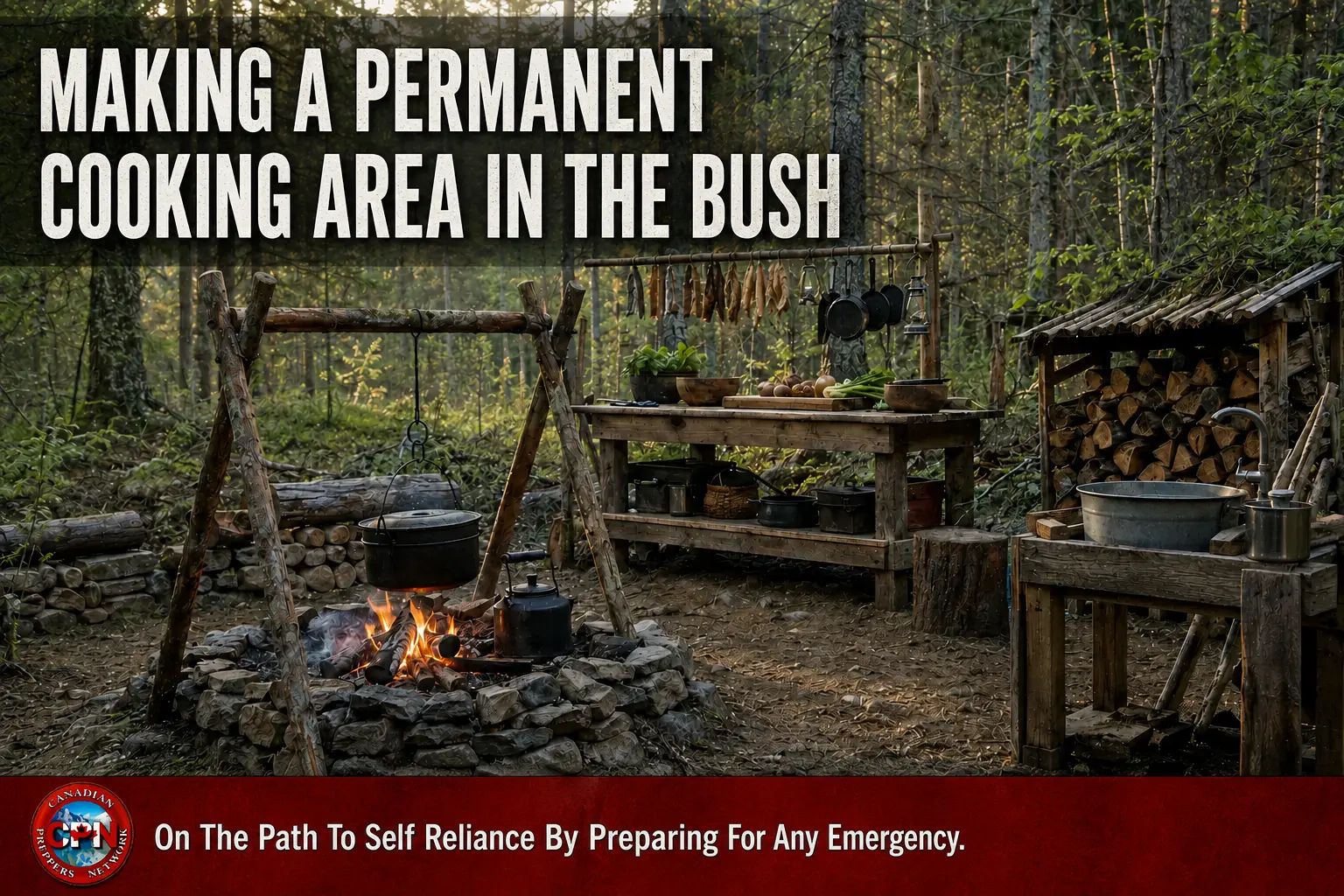
Useful permanent stations include:
- Treated-water storage
- Food-preparation surface
- Cooking area
- Hot-cookware landing area
- Dishwashing station
- Drying rack
- Fuel supply
- Waste collection point
They do not need to be elaborate. Their value comes from consistency: everyone using the camp knows where things belong.
Build a Drying Rack
A rack near—but not directly over—the cooking area can hold washed cookware, utensils and damp cloths. It may also provide a place for equipment that needs gentle drying.
The rack must not extend into flame or spark paths. Items made from plastic, synthetic fabric or other heat-sensitive materials should remain well away from the fire.
Inspect lashings and joints regularly. Heat, moisture and repeated use gradually loosen bushcraft structures, even when they were originally built well.
Control Food Odours and Scraps
A permanent kitchen advertises the presence of food.
Do not store food in the cooking area overnight. Keep supplies in suitable animal-resistant containers and follow the storage practices appropriate to local wildlife. Cooking grease, dishwater and food scraps must also be managed carefully.
Leaving scraps around camp teaches animals to associate people with food. Small animals can damage bags and containers, while larger wildlife can make the entire campsite unsafe.
Keep the cooking area clean, collect dropped food promptly and avoid pouring greasy water beside camp. The correct disposal method depends upon the location and applicable regulations.
Plan for Night Use
The route between the sleeping area and kitchen should remain clear of guy lines, loose firewood, tools and low branches.
Use controlled lighting that illuminates working surfaces without destroying everyone’s night vision. A headlamp is useful, but a fixed low-level camp light can reduce shadows and allow people to see where hot cookware and obstacles are located.
Maintain a strict rule that the fire area is never treated as a shortcut. People should approach it through a predictable, unobstructed route.
Shut the Kitchen Down Properly
A permanent cooking area still requires a complete shutdown after every use.
Remove food, secure waste and return equipment to its designated location. Extinguish the fire completely, then check for remaining heat according to local fire-safety guidance. Inspect the surrounding ground for embers and windblown sparks.
Before leaving the camp unattended, confirm that:
- No heat remains in the fire area
- Fuel has been returned to safe storage
- Food and scented items are secured
- Cookware has been cleaned
- Waste has been removed or properly contained
- Weather protection remains secure
- Nothing can blow into the former fire area
Permanent does not mean continuously burning. A cooking fire should exist only while someone is actively managing it.
Make the Kitchen Improve With Use
The best bush camps develop gradually.
Begin with a safe fire location, a preparation surface and protected fuel. Add drainage, storage, lighting and drying capacity as repeated use reveals what is actually needed. Avoid building complicated structures merely because they look traditional.
A well-planned bush kitchen reduces wasted movement, conserves fuel and makes sanitation easier. More importantly, it turns one of the camp’s greatest hazards into an orderly, controlled workspace.
After a long-term breakdown, that discipline would matter every day. Meals would still need to be prepared in rain, snow and darkness—and the cooking area would need to keep functioning without becoming the reason the rest of the camp was lost.
Bush Kitchen Buying Box
Equip a long-term bush kitchen with durable gear for food preparation, fire management and cleanup.
- Cast-iron Dutch oven
- Stainless-steel camp kettle
- Adjustable campfire cooking tripod
- Heavy-duty leather fire gloves
- Folding food-preparation table
- Stainless-steel cookware set
- Collapsible wash basins
- Animal-resistant food container
- Rechargeable camp lantern
- Fire-resistant ground mat
As an Amazon Associate, Canadian Preppers Network earns from qualifying purchases.