Due to a website error, this article from Sept.11, 2026 was not published. Please excuse the error.
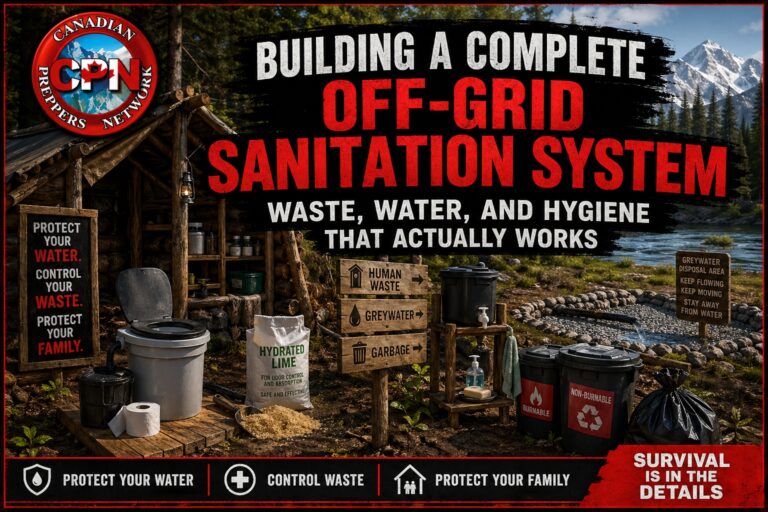
A household sanitation plan for containing waste, protecting clean water and preventing illness when the taps stop working.
The water has stopped, but the toilet still flushes once.
That first flush creates a dangerous illusion. The bowl empties, the household continues its normal routine and nobody immediately recognizes that the sanitation system has already failed.
FREE CANADIAN PREPAREDNESS DOWNLOAD
Canadian Grid-Down Starter Kit
Use this printable first-72-hours checklist to test your household’s water, sanitation, food, power, communications and operating routines before a short outage becomes a prolonged emergency.
Within hours, dirty dishes accumulate. Hands are washed less thoroughly. Toilets fill. Waste containers begin to smell. Clean water is consumed for tasks that could have used rainwater, melted snow or another non-potable supply.
After several days, sanitation can become a greater threat than thirst.
A household may possess enough drinking water to survive a week while having no plan for human waste, handwashing, laundry, food preparation, rubbish or illness. The result is a steady transfer of contamination from the toilet area to hands, door handles, cooking surfaces and stored food.
Seven days without running water requires more than an emergency bucket. It requires a controlled household sanitation system.
Assume the Outage Will Last a Week
Do not wait until the toilet is unusable before creating a backup system.
As soon as a prolonged outage becomes likely, establish separate water reserves for:
- Drinking
- Cooking
- Handwashing
- Surface cleaning
- Personal hygiene
- Toilet flushing, when practical
- Pets or livestock
Potable water should never be casually consumed for flushing or general cleaning. Label drinking water clearly and place it under the control of one responsible person.
Water from rain barrels, melted snow, a water heater, an untreated surface source or a questionable well may be useful for flushing and cleaning, but it should not be assumed safe for drinking or food preparation.
Stop Using the Toilet Before It Becomes a Problem
A toilet connected to a functioning municipal sewer may sometimes be flushed manually by pouring water into the bowl. That does not mean it will remain safe to use.
A power failure can disable pumping stations. Flooding can overwhelm sewer systems. A private septic system may stop working if its pump requires electricity. Damaged plumbing can allow sewage to back up into the building.
Watch for drains gurgling, water rising in lower fixtures, sewage odours, slow drainage or wastewater appearing in a basement drain, shower or bathtub. At the first sign of a backup, stop flushing.
Close toilet lids and isolate affected rooms. If sewage begins entering the building, keep people and animals away from the contaminated area. Do not continue adding water to a system that cannot carry it away.
Build a Controlled Emergency Toilet
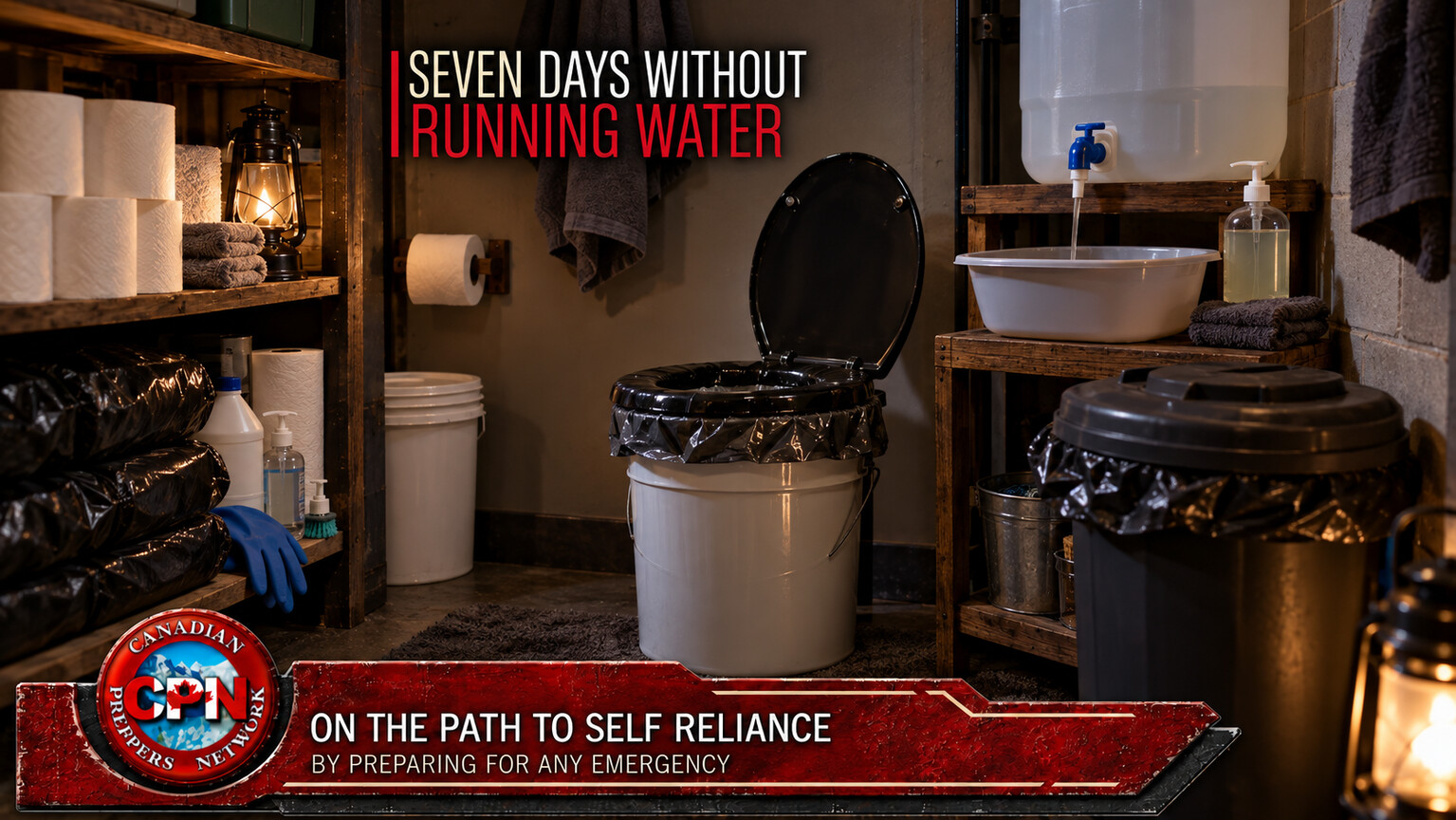
A basic emergency toilet can be made from a sturdy five-gallon bucket fitted with a proper toilet seat or a tightly secured improvised seat.
Line the bucket with heavy-duty bags. Use two liners when the available bags are thin or easily punctured. Place a small amount of absorbent material in the bottom.
Suitable dry cover materials include commercial waste-gelling material, unscented clumping cat litter, fine wood shavings, sawdust, shredded paper or another dry carbon-rich material.
Add enough cover material after each use to reduce moisture, odour and insects. Keep the bucket covered whenever it is not being used.
Place the toilet in a private, ventilated area away from food storage and preparation. Keep toilet paper, gloves, waste bags, disinfecting supplies and a dedicated handwashing station beside it. Replace and secure the liner before it becomes too heavy to move safely.
CANADIAN PREPAREDNESS TRAINING
Prepper Radio Canada
Build practical emergency communications skills with the Canadian Basic Amateur Radio Course for Preppers.
Separate Liquid and Solid Waste When Possible
Urine creates most of the volume in an emergency toilet. Separating it from solid waste reduces odour, conserves absorbent material and makes the waste container easier to handle.
The disposal method will depend on the property, season, local conditions and the nature of the emergency. Waste should never be dumped near a well, surface-water source, garden, food-storage area or route used by other people.
Do not bury waste casually in frozen soil, saturated ground or locations with a high water table. If normal rubbish collection or municipal sanitation service is expected to return, securely contained waste may need to be stored temporarily in durable lidded containers protected from animals and rain.
Create a Dirty Zone and a Clean Zone
The dirty zone includes the emergency toilet, waste containers, used cleaning materials and any area contaminated by sewage, vomit or diarrhoea.
The clean zone includes food preparation, stored drinking water, clean dishes, medical supplies and sleeping areas.
Nothing should move from the dirty zone into the clean zone without being cleaned or contained. Use dedicated footwear when working around waste. Keep brushes, cloths and gloves assigned to the toilet area and never use them in the kitchen.
Handwashing Is the Priority
When water is limited, handwashing must be deliberate rather than eliminated.
Create a low-flow station using a container with a spigot positioned over a catch basin. A controlled stream uses far less water than pouring from an open container.
Wash after using or servicing the emergency toilet, handling rubbish, cleaning bodily fluids, touching raw food, handling animals, returning from outside or providing first aid. Wash again before preparing or eating food.
Soap and mechanical scrubbing remain important. Hand sanitizer can supplement the system when hands are not visibly dirty, but it does not replace proper washing after contact with human waste.
Use a Three-Stage Cleaning System
Trying to disinfect a visibly dirty surface wastes disinfectant.
- Remove solid contamination.
- Wash the surface with soap or detergent.
- Apply an appropriate disinfectant according to its label.
Follow the product’s contact-time and ventilation instructions. Never mix bleach with ammonia, vinegar, acids, toilet cleaners or other chemicals.
Clean toilet seats, bucket lids, door handles, water-container taps, handwashing controls, rubbish-container lids and shared tools on a fixed schedule.
SUPPORT INDEPENDENT CANADIAN PREPAREDNESS
CPN Gold Membership
Support Canadian Preppers Network and receive access to member resources, the preserved CD3WD collection and monthly intelligence briefings.
Protect the Kitchen
Reduce the number of dishes used. Assign one cup, bowl and utensil set to each person. Prepare simple meals that require little water and create minimal waste.
Keep uncooked food away from the emergency toilet and waste-storage area. If water is too limited to clean a cutting board safely, change the meal plan. Ready-to-eat foods and single-pot meals may be a better use of resources than maintaining normal kitchen habits.
Contain food scraps quickly. In warm conditions, open organic waste attracts flies and produces odour within hours.
Control Rubbish, Odour and Pests
Separate human waste, food-contaminated waste, dry rubbish, recyclable containers and sharp or hazardous material. Do not allow everything to accumulate in one leaking bag.
Use rigid containers with tight lids where rodents, raccoons, bears or dogs could reach the storage location. Persistent odour indicates that containment or moisture control needs improvement. Air freshener does not correct a failing waste system.
Isolate Illness Immediately
One person with vomiting or diarrhoea can overwhelm a household sanitation plan.
Assign the sick person a separate toilet container if supplies allow. Provide separate towels, dishes and bedding. Increase cleaning of shared surfaces and restrict the person from preparing food.
The caregiver should use disposable gloves when contact with bodily fluids is possible and wash thoroughly after removing them. Severe dehydration, confusion, persistent vomiting, blood in stool, breathing difficulty or rapid decline requires medical attention when care remains accessible.
The Seven-Day Operating Plan
Day One: Establish Control
Inventory water, soap, bags, absorbent material, gloves and cleaning products. Stop unnecessary flushing. Build the emergency toilet and establish dirty and clean zones.
Day Two: Measure Consumption
Record how much water is used for drinking, cooking, washing and cleaning. Correct wasteful habits before the reserve becomes critically low.
Day Three: Inspect Containment
Check every waste bag and storage container for leaks, insects, odour and excessive weight.
Day Four: Reduce Workload
Simplify meals, reduce dishes and suspend non-essential cleaning. Preserve water and labour for handwashing, food safety and toilet maintenance.
Day Five: Prepare for Illness
Set aside a separate toilet liner, basin, gloves, drinking container and bedding for a sick person.
Day Six: Recalculate
Count remaining potable and utility water. Review fuel, waste-storage capacity and absorbent material. Decide what must change if the outage lasts another week.
Day Seven: Reset the System
Deep-clean the toilet area, replace worn equipment and reorganize supplies. Treat the end of the first week as the beginning of the second until services are proven reliable.
Build the Sanitation Kit
Store two sturdy buckets, a fitted toilet seat, heavy-duty bags, absorbent material, lidded waste containers, soap, sanitizer, gloves, eye protection, cleaning cloths, brushes, disinfectant, toilet paper, household-specific hygiene supplies, a low-flow handwashing container, wash basins, labels and printed instructions together.
BUILD THE SEVEN-DAY SANITATION SYSTEM
Emergency Toilet, Cleaning and Waste Supplies
Bucket Toilet Seats — Convert a sturdy bucket into a stable emergency toilet.
Portable Emergency Toilets — A purpose-built option for greater comfort and accessibility.
Emergency Toilet Waste Bags — Keep durable, correctly sized liners in quantity.
Waste-Gelling Material — Helps control liquid and odour.
Water Containers With Spigots — Create a controlled low-flow handwashing station.
Heavy-Duty Nitrile Gloves — Protect hands during toilet servicing and cleanup.
Heavy-Duty Contractor Bags — Provide stronger secondary containment.
Lidded Waste Containers — Protect sealed waste from weather and animals.
Amazon Disclosure: As an Amazon Associate, Canadian Preppers Network may earn from qualifying purchases. This does not change the price you pay.
Related CPN Reading
Sanitation Preserves the Water Supply
Emergency sanitation is not simply a matter of comfort. It protects stored water, keeps food-preparation areas usable and prevents a manageable outage from becoming a household medical emergency.
Control waste before the toilet fails. Separate dirty and clean areas. Protect handwashing water. Simplify meals. Contain rubbish. Prepare for illness and inspect the system every day.
A household that manages sanitation can continue operating. A household that loses control of waste will eventually be forced to abandon an otherwise usable home.