Water is life. Without it, survival becomes a matter of days, not weeks. In Canada, we often take abundant fresh water for granted—our lakes, rivers, and groundwater seem endless. But in a crisis—whether it’s a boil water advisory, natural disaster, grid-down event, or long-term collapse—your taps may stop running, and suddenly water becomes your most precious resource. Preppers in Canada need reliable emergency water solutions, and that means going beyond bottled water in the basement.
How Much Water Do You Really Need?
Preparedness guidelines recommend at least 4 litres per person, per day for drinking and minimal hygiene. But in reality, Canadian conditions demand more:
- Winter: Melting snow is possible, but fuel and time costs add up.
- Summer heat: Hydration needs spike during work or evacuation.
- Family size: A household of four needs about 480 litres for one month—that’s a small tank, not a few cases of bottles.
Rule of thumb: Store as much as your space and budget allow.
Three Pillars of Emergency Water Security
1. Storage
Having water on hand buys you time when disaster strikes. Options include:
- Commercial Bottled Water: Convenient but bulky and short-lived. Rotate every 12–18 months.
- Home Storage Barrels & Tanks:
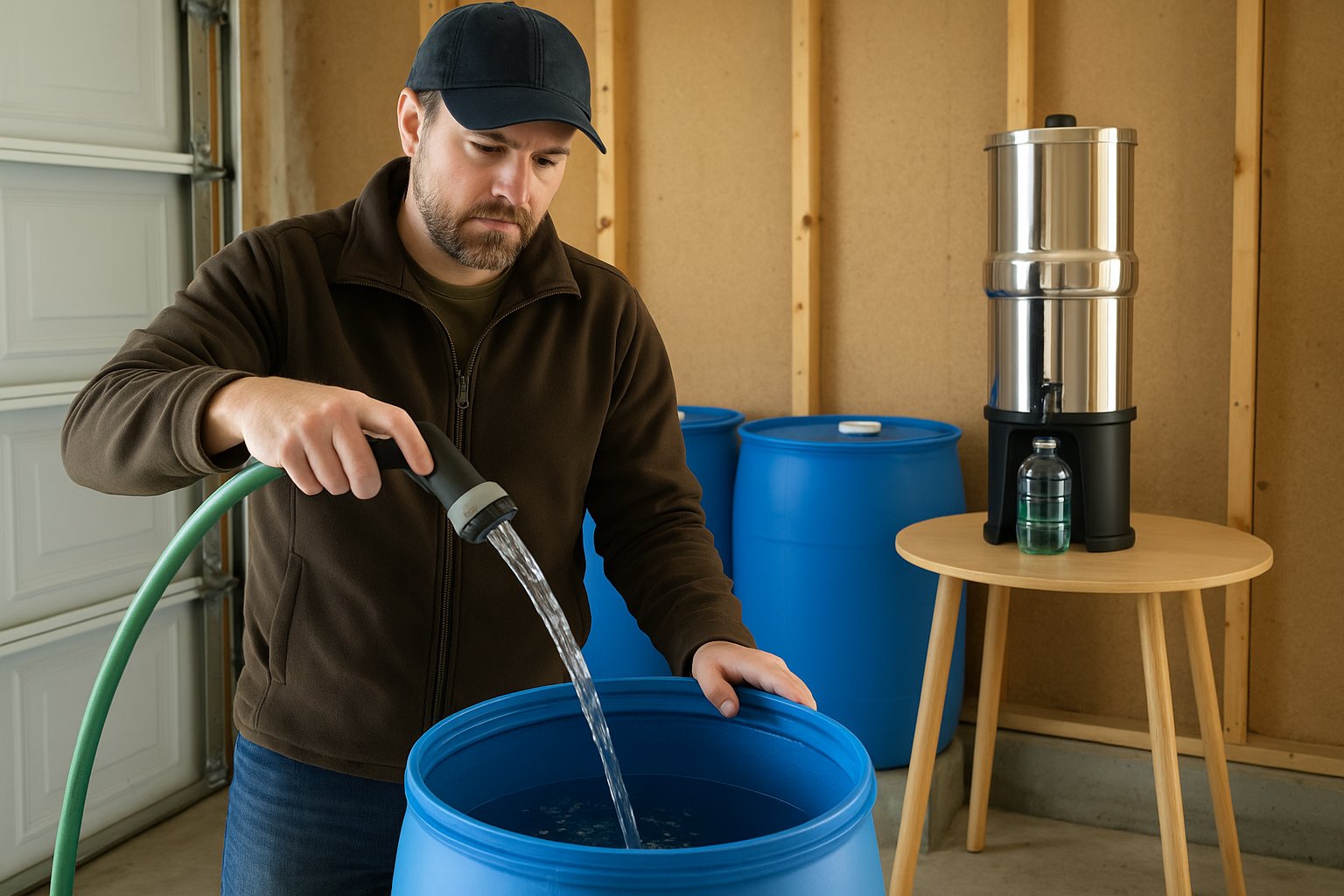
- 55-gallon (208 L) food-grade barrels with siphon pumps are a solid base.
- Stackable 20–25 L jugs are easier to move and ration.
- Keep storage in cool, dark areas to prevent algae and plastic breakdown.
- Rainwater Harvesting (Legal Variances Across Provinces): In most Canadian provinces, rain collection is permitted, but check local bylaws. Use first-flush diverters and food-grade tanks.
2. Filtration & Purification
Stored water doesn’t last forever, and natural sources carry biological risks. You’ll need multiple purification methods:
- Boiling: Brings water to a rolling boil for 1–3 minutes. Reliable but fuel-intensive.
- Filters:
- Portable straw filters (e.g., LifeStraw, Sawyer Mini) for personal use.
- Gravity-fed filters (e.g., Berkey, Alexapure) for families and long-term resilience.
- Chemical Treatment:
- Household bleach (unscented, 4–6% sodium hypochlorite). Use 8 drops per litre, let stand 30 minutes.
- Water purification tablets (chlorine dioxide or iodine-based) for bug-out kits.
- UV Purifiers: Devices like SteriPEN work quickly, but rely on batteries.
Redundancy is key: two is one, one is none.
3. Resupply
Stored water eventually runs out. Knowing how to gather more is vital:
- Surface Water: Lakes, rivers, and streams are plentiful across Canada but may be contaminated with giardia, cryptosporidium, or industrial runoff. Always filter and disinfect.
- Snow & Ice: Melt thoroughly before drinking. Never eat snow directly—it lowers core body temperature.
- Wells: Rural properties with private wells should consider hand pumps or solar-powered pump backups.
- Community Sources: During emergencies, municipalities sometimes set up bulk water distribution points—bring containers.
Special Considerations for Canadian Preppers
- Freezing: Store some water indoors in smaller containers to prevent freeze damage. Outdoor barrels should be only ¾ full to allow for ice expansion.
- Transport: For bug-outs, use collapsible water bladders, jerry cans, or even a small trailer-mounted tank.
- First Nation & Remote Communities: Many already face long-term boil water advisories. For those regions, robust home filtration systems aren’t a luxury—they’re daily survival.
Building Your Water Plan
- Short-Term: Keep a two-week supply of bottled or barrel-stored water at home.
- Medium-Term: Install rain catchment and invest in a gravity-fed filter.
- Long-Term: Secure resupply sources like wells, community taps, or nearby lakes.
- Bug-Out Readiness: Carry portable filters, purification tablets, and collapsible containers.
Conclusion
When it comes to prepping in Canada, food storage often gets more attention than water. But in any survival situation, water is the first priority. By combining storage, purification, and resupply strategies, Canadian preppers can ensure that no matter the season, disaster, or crisis, clean water remains on hand.
Your garden may wither without it, your body will fail without it, and your entire survival plan depends on it. Don’t wait until the taps run dry—secure your water now.