A spark proves very little when the wood, weather and your hands are working against you.
The lighter works. The ferro rod throws sparks. The waterproof matches are still in their package. You have checked every item on the list.
But have you actually built a fire with that kit in the rain?
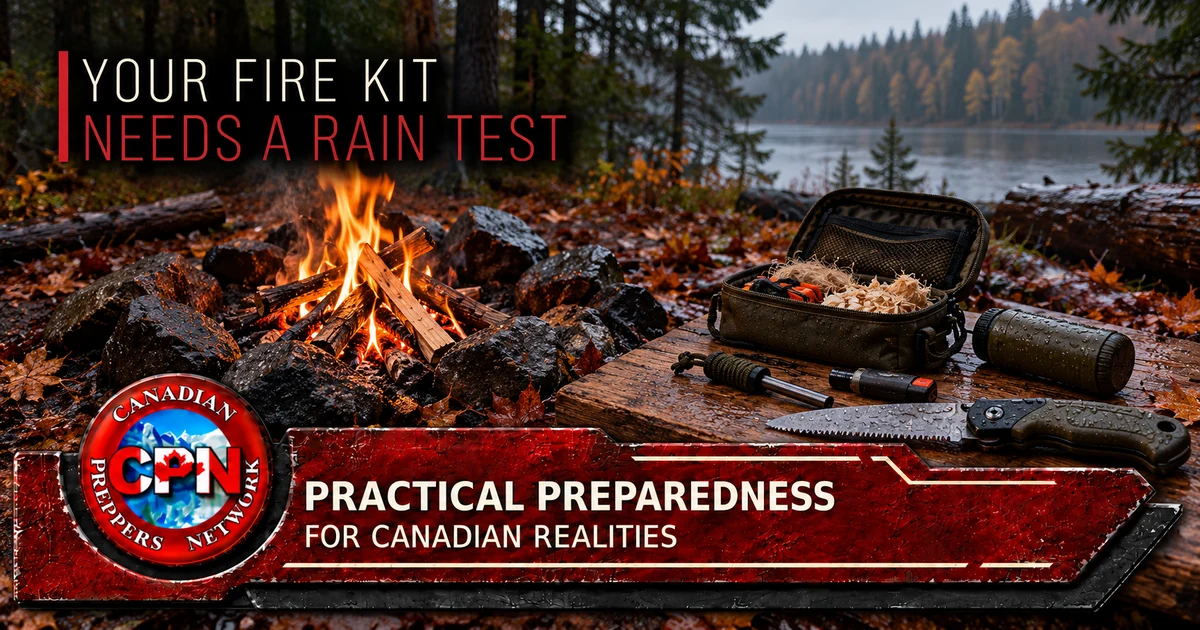
A Canadian October afternoon is a good time to discover the difference between owning fire-starting equipment and being able to use it. Wet leaves cover the ground. Exposed branches are damp. Wind pushes rain into your work area. Gloves make small tasks awkward, and daylight disappears while you are still preparing fuel.
After a serious disruption, that failure could cost more than an uncomfortable evening. Fire may be part of your plan for cooking, heating water or drying equipment. If it takes half your tinder supply to produce one brief flame, the kit needs work.
The useful test is whether your complete system can produce a controlled, sustainable fire under realistic conditions—and leave you ready to do it again tomorrow.
Test the Whole Job
Most casual fire demonstrations begin with the difficult work already done. Dry kindling sits beside the fire pit. Someone has split the wood. The tinder is open and ready. A sheltered flame catches, and everyone declares the equipment reliable.
That proves the ignition source can light prepared fuel under those conditions.
Your field test should begin with the kit packed exactly as you carry it. Include the containers, gloves, cutting tools and rain protection you would actually have available.
Then work through the entire sequence:
- Choose a suitable, permitted place to burn.
- Retrieve the kit without soaking its contents.
- Obtain and prepare usable fuel.
- Protect tinder and kindling while you work.
- Ignite the fire and build it gradually.
- Sustain it long enough to perform a useful task.
- Extinguish it completely and repack the remaining supplies.
Each step can expose a different weakness. A dependable lighter cannot compensate for tinder that got soaked while you searched for a knife.
Make the First Rain Test Easy to Stop
Practise close to home or at another permitted location where you can stop, warm up and change clothes. Use an established fire pit or suitable outdoor fire container, with extinguishing water ready.
Check current local restrictions and landowner rules. Rain is not permission to burn, and permission to have a fire does not automatically include permission to collect wood. Parks Canada’s campfire guidance, for example, explains restrictions on fire locations and fuel gathering. Check the rules for the place you intend to practise.
Choose an ordinary damp day for the first attempt. Keep your rainwear on and your clothing dry. The purpose is to test equipment and technique, not to deliberately become cold and soaked.
If conditions worsen, your hands become difficult to use or you cannot keep the fire controlled, stop the exercise. A useful drill has a clear exit.
Open the Kit Without Losing Its Dry Contents
Start by watching what happens when you unpack.
Does opening one pouch expose every piece of tinder to the rain? Can you retrieve the lighter with gloves on? Does the match container have a tiny lid that is easily dropped into wet leaves? Is your knife buried underneath the rest of the pack?
These details matter because fire preparation is a sequence of handling tasks.
Divide your tinder into separate protected portions. Keep a reserve sealed while you use the first portion. Give your backup ignition source its own protection so one leaking container does not defeat both methods.
A small working surface also helps. Put equipment somewhere visible and protected rather than scattering it around the fire pit. Close containers immediately after taking out what you need.
A kit that keeps everything dry during transport but exposes everything during use has only solved half the problem.
Prepare Fuel Before Striking a Spark
The next test is whether you can produce a progression of usable fuel.
You need material that catches readily, fine kindling that accepts that flame, and progressively larger pieces that keep the fire growing. REI’s campfire guidance distinguishes between tinder, kindling and firewood; they perform different jobs.
For a controlled first drill, use legally obtained seasoned wood with rain-wet outer surfaces. Examine it before cutting. Sound wood that is wet outside may offer a more useful interior than a rotten piece saturated throughout.
Where appropriate, split manageable pieces and prepare fine shavings from the interior. Use tools and techniques you already know. Support the work securely, keep hands clear of cutting paths and avoid making an unfamiliar knife-splitting technique part of your first wet-weather attempt.
Prepare more small fuel than you expect to need. Keep it protected while you work.
The failure to look for is the gap between the starter and the larger wood. Your tinder may burn strongly, yet accomplish little because the next available pieces are too large or too damp to catch before it is exhausted.
Find Out What Your Tinder Actually Does
Use the amount of tinder you would realistically allocate to one fire.
That might be a portion of a commercial starter, prepared cotton tinder or another material you have already tested. Keep the rest protected.
Observe the result:
- Does it ignite with your chosen method?
- Can you position it without it falling apart?
- Does it stay alight in the conditions?
- Can it ignite your prepared kindling?
- How much do you consume before the fire becomes established?
Avoid confusing a long-burning starter with a successful fire. If the starter burns out and leaves a blackened pile of wood, your system has failed at the transfer of heat from one fuel size to the next.
Change one thing and try again: finer kindling, better protection from wind, more space for airflow or a different arrangement. Record what improved the result.
That information is more useful than simply adding another packet of starters to the bag.
Use Your Gloves
Fine-motor tasks often look easy at the kitchen table.
Now try opening the tinder container, operating the lighter and striking the ferro rod while wearing the gloves you carry outdoors. Do the same with your backup method.
You may discover that a container needs a larger pull tab, a striker is awkward to grip or the lighter is difficult to operate without removing a glove.
Practise under ordinary conditions; do not deliberately chill your hands to make the exercise harder. The question is whether the equipment works with your protective clothing.
If your system depends on repeatedly removing gloves, dropping small pieces and exposing the whole kit while you struggle with one component, simplify it.
Demand More Than a Brief Flame
Once the kindling catches, build gradually. Give each increase in fuel size time to establish itself. Keep prepared wood within reach so you do not abandon a fragile fire to search for more.
Choose a practical endpoint for the drill. For example, heat a measured quantity of water in your normal outdoor pot, then keep the fire stable for another short period.
Record the water quantity, starting conditions and elapsed time. These observations let you compare later attempts; they are not universal performance standards.
A fire suitable for heating a small pot is also not proof that you can safely spend an entire wet night outdoors. Shelter, clothing and ground insulation remain essential parts of the plan. REI’s Ten Essentials guidance includes emergency shelter alongside fire equipment.
Keep flames away from tents and tarps. Do not move the experiment into a tent, vehicle or enclosed shelter because the weather becomes inconvenient.
Count What the Fire Cost
After the exercise, lay out what remains.
Count the tinder portions used, failed matches, damaged packaging and other consumables. Inspect your tools and note anything that needs drying or maintenance.
Then ask a harder question: could you repeat the job tomorrow with what is left?
During prolonged disruption, a kit that produces one fire by consuming nearly every starter has limited endurance. So does a method that requires more preparation time than you can spare while hauling water, repairing shelter and feeding the household.
Your test record can be simple:
| What to record | What it reveals |
|---|---|
| Weather and fuel condition | What you actually tested |
| Time spent preparing fuel | The labour before ignition |
| Ignition method and attempts | Whether the primary and backup work |
| Tinder consumed | How many attempts the supply supports |
| Practical task completed | Whether the fire became useful |
| Failures and corrections | What to change before the next drill |
Do not turn the exercise into a speed contest. A carefully prepared fire that works reliably is more valuable than a rushed attempt followed by repeated failures.
Repack for the Next Attempt
Dry and inspect the equipment before putting it away. Replace used consumables, damaged containers and unreliable components.
Then make the smallest changes that address the failures you observed.
Perhaps you need separate tinder portions, a more accessible lighter, a better glove-compatible container or a small saw that makes fuel preparation easier. Perhaps the equipment is adequate and you need another hour of practice preparing kindling.
Run the drill again after making your changes. Keep the conditions comparable enough to tell whether you improved the result.
Your fire kit earns its place when you can use it to complete the job. Before the next trip—or the next disruption—find out which part fails first: unpacking, fuel preparation, ignition or keeping the fire alive.
Related Reading
- Wilderness Skills in Canada — connect firecraft with shelter, navigation and field judgement.
- Fire After Three Days of Rain — examine fuel selection and preparation after prolonged wet weather.
- Wilderness Skills Buying Guide — organise equipment around the field problems it must solve.