Keeping the heat going when parts, deliveries and service calls disappear
Wood stove spare parts deserve a place beside your winter fuel reserve. Your firewood is stacked, the stove is installed, and the household has a way to stay warm without electricity.
But how long can you keep that heating system working?
During an ordinary winter, a worn gasket or damaged component means a trip to the stove dealer. A dirty chimney means booking a sweep. After a prolonged collapse, those services may disappear while the need for heat continues every day.
A wood stove is durable equipment, but it still needs maintenance. Preparing to depend on one means storing compatible wood stove spare parts, keeping suitable chimney-cleaning equipment and learning the work before a freezing house forces the issue.
Table of Contents
Identify the Appliance Before Buying Wood Stove Spare Parts
Start with the certification plate on your stove. Record the manufacturer, exact model, serial number and production information. Photograph the plate while it is still readable.
Download and print the matching operating manual, maintenance instructions and illustrated parts list. Drolet directs owners to identify replacement parts using their appliance’s model name or serial number—an important distinction when similar-looking stoves have different components.
Keep these documents with your heating supplies. Include the manual for the chimney system, which may come from a different manufacturer.
Build an inventory of your wood stove spare parts showing each item’s part number, quantity and storage location. Ask your dealer which components are worth keeping for your particular appliance if deliveries become unreliable.
Do this while someone can still answer the telephone.
Wood Stove Spare Parts: Keep the Correct Door Gasket
The seal around the loading door helps the stove control combustion. When that seal deteriorates, unwanted air can enter around the door.
Inspect it with the stove completely cold. Look for loose, damaged or badly compressed sections. Drolet recommends closing the cold stove door over a sheet of paper and checking whether the gasket grips it. Repeat around the door; one tight section does not prove the entire seal is sound. A poor seal may require adjustment or replacement.
Buy the gasket specified for your model. Matching diameter alone is insufficient: construction and density matter too. Woodheat.org’s maintenance guidance identifies both as considerations when selecting replacement gasketing.
Store the required installation materials with it. Follow the adhesive’s storage limits and curing directions, and replace ageing supplies when necessary.
Most importantly, repair an existing defect now. The spare kit should support a maintained stove rather than sit beside one already overdue for attention.
CANADIAN PREPPERS NETWORK · BOOKS
Land Alone Is Not a Retreat Plan
A retreat needs working systems for shelter, food production, utilities, security and governance. Acres of Preparedness explores the planning behind a community-scale off-grid retreat.
Connect individual preparations with the wider task of keeping a retreat functioning when outside support becomes unreliable.
Inspect Firebrick, Baffles and Internal Components
A stove’s heavy outer shell can outlast the components inside it.
Firebrick protects the firebox structure. Baffles, secondary-air components and their supports also need inspection. Their condition and arrangement affect how the appliance operates.
Use the damage criteria in your own manual. A cracked brick needs assessment, but replacement thresholds depend on the component and appliance. Avoid applying advice for a different stove simply because the parts look similar.
The Pacific Energy Neostone 1.6 manual, for example, gives specific baffle damage criteria and identifies several internal parts for periodic inspection. Those instructions belong to that model.
Consider keeping approved replacement firebricks and any model-specific components your dealer identifies as sensible reserves. For expensive parts, weigh the cost against your dependence on the stove and the availability of another safe heat source.
Label fragile wood stove spare parts and protect them from impact. Photograph internal arrangements during authorised maintenance so you have a useful reference alongside the printed diagrams.
Consider a Replacement Viewing Panel
A log striking the door can turn a routine reload into a heating emergency.
Modern wood heaters commonly use transparent ceramic material. Ordinary window glass is unsuitable. Replacement requires the correct material, dimensions, gasket arrangement and installation procedure; overtightening retaining hardware can damage the panel.
Drolet says cracked glass must be replaced before the stove is used again. Follow your appliance manufacturer’s instructions rather than planning to burn through the damage.
A properly packaged replacement panel may be a worthwhile reserve when one stove carries most of the household’s winter heating burden.
Keep its identification and installation instructions attached. Store it somewhere protected from falling tools, shifting firewood and the everyday traffic around the hearth.
Small Hardware Belongs With Your Wood Stove Spare Parts
Review the parts diagram for retaining pins, clips, door hardware and other pieces involved in routine maintenance.
Ask which items are specific to the appliance. A general workshop assortment may not contain the correct replacement.
Pacific Energy’s maintenance checklist includes baffle locking pins and brick supports, illustrating how many small components can sit behind a familiar loading door. The manufacturer also warns that continued operation with broken parts can accelerate damage elsewhere.
Keep small spares in labelled packets with their part numbers. Include the hand tools required by the maintenance instructions.
An unidentified clip at the bottom of a toolbox offers little help when the stove is cold and daylight is disappearing.
Own the Equipment to Sweep the Chimney
Your heating reserve should include the equipment needed to maintain the flue.
During a prolonged disruption, a professional sweep may be unavailable. Before that happens, have one identify the appropriate equipment and explain the cleaning procedure for your installation.
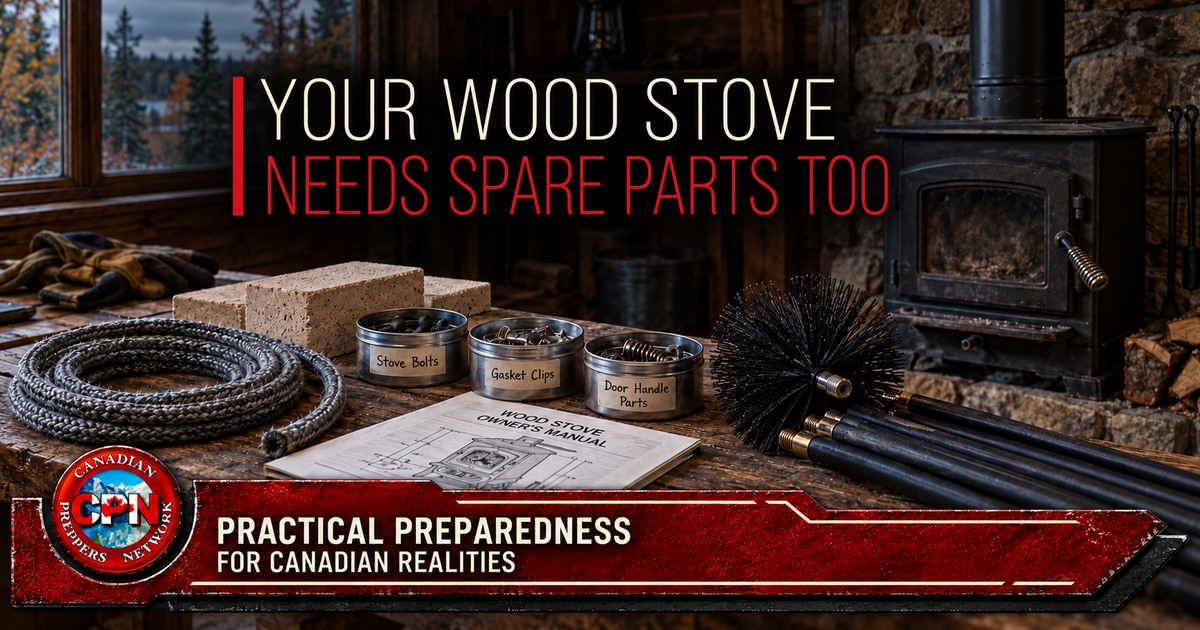
Your kit may require:
- A chimney brush matched to the flue’s dimensions and shape.
- Brush material approved by the chimney manufacturer.
- Compatible rods providing sufficient reach.
- A separate brush for connector pipe where required.
- Necessary adaptors and replacement fittings.
- Protective goggles, gloves and suitable respiratory protection.
- Dust sheets, an inspection light and an inspection mirror.
Confirm compatibility before buying. Powered rotary equipment also needs to suit the chimney system and its instructions.
Access matters just as much as the brush. Establish whether your installation permits cleaning from below and which sections need separate attention. A plan dependent on climbing an icy roof has an obvious weakness in a Canadian winter.
Do not experiment with dismantling the stove during an emergency. Pacific Energy’s instructions include precautions to prevent sweeping debris entering a baffle air-supply tube. Your appliance may have its own preparation and reassembly requirements.
SUPPORT INDEPENDENT CANADIAN PREPAREDNESS
Go Beyond the Daily Post
CPN Gold supports independent Canadian preparedness publishing and gives members access to exclusive preparedness resources and a monthly intelligence briefing covering geopolitical pressures and Canadian economic conditions.
Build your reference library while supporting the research and practical guidance behind Canadian Preppers Network.
Learn the Work While Help Is Available
Use the next professional inspection as a learning opportunity.
Have the sweep explain the accessible inspection points, cleaning access, equipment and warning signs that require professional assessment. Ask what you can reasonably maintain yourself and what needs specialist work.
Follow the inspection and cleaning schedule for your installation, adjusting attention to actual use and observed deposits as directed by its manuals. An occasional backup stove and a stove heating the house continuously face different workloads.
Record inspections, cleaning and repairs in a notebook. Include photographs where useful.
Sweeping removes deposits. It does not establish that a damaged chimney is safe.
If you suspect a chimney fire or find significant damage, stop using the system and obtain qualified assessment before returning it to service.
Organise Wood Stove Spare Parts and Cleaning Gear
Prioritise wood stove spare parts and cleaning supplies that keep the appliance serviceable.
| Supply | Confirm before purchasing |
|---|---|
| Door gasket and installation materials | Exact specification and curing requirements |
| Glass gasket | Correct profile and installation arrangement |
| Replacement firebrick | Approved material, dimensions and layout |
| Baffle and related components | Model compatibility and replacement criteria |
| Ceramic viewing panel | Manufacturer-approved specification |
| Pins, clips and hardware | Correct part numbers |
| Chimney brush and rods | Flue compatibility, reach and access |
| Connector-pipe cleaning tools | Correct size and approved method |
| Inspection and protective equipment | Suitability for the maintenance task |
General tools and cleaning accessories are straightforward purchases once you know the specifications. Critical stove components should come from a supplier that can establish exact compatibility.
Keep wood stove spare parts and maintenance supplies dry, labelled and outside the stove’s required clearances. Retain printed instructions with the kit.
Prepare for Downtime as Well as Repairs
Even a well-stocked reserve cannot cover every failure.
Plan where the household will stay warm while the stove cools, repairs take place and installation materials cure. Maintain smoke and carbon-monoxide alarms and the fire protection appropriate to your home.
Then complete a practical task this week: identify the stove, print the manuals, inspect it cold and price the first essential wood stove spare parts and sweeping tools.
A winter’s worth of firewood is valuable only while you have a serviceable system in which to burn it. When deliveries and service calls stop, the parts and skills already under your roof become part of your heating security.
If your stove needed a repair tomorrow, which missing part would leave your household waiting for heat?
FREE CANADIAN PREPAREDNESS DOWNLOAD
Stress-Test Your First 72 Hours
A dependable stove is one part of a functioning household. Get the free Canadian Grid-Down Starter Kit and examine your food, water, heat, power, sanitation and communications before a real outage exposes the gaps.
Sign up for the printable checklist and practical preparedness updates from Canadian Preppers Network.
Related Reading
- Shelter & Heat in Canada — connect heating maintenance with heat retention, fuel planning and safe shelter.
- Grid-Down Heating Options Compared — assess the strengths and limitations of backup heating systems for a Canadian winter.
BUILD YOUR WOOD-HEATING MAINTENANCE RESERVE
Parts and Tools That Keep the Heat Working
Use these Amazon.ca searches to compare maintenance supplies. Match every item to your stove and chimney instructions. Obtain model-specific glass, baffles and other critical components from a supplier that can confirm compatibility.
- Chimney brushes and sweeping rods — compare brush dimensions, bristle materials, rod connections and total reach. Confirm approval for your chimney system before purchasing.
- Wood stove gasket kits — match the specified gasket size, density and installation materials to your appliance.
- Replacement stove firebricks — check approved material and dimensions against the parts list; similar appearance does not establish compatibility.
- Telescoping inspection mirrors — improve visibility at accessible inspection points when the appliance is cold. A mirror does not replace a professional chimney assessment.
- Protective goggles and respiratory protection — select equipment suitable for the cleaning task and follow its fit, use and maintenance instructions.
Buy for your installation: check the manuals first, write down the required specifications, then compare products. Keep receipts, part numbers and printed instructions with the kit.
Amazon disclosure: As an Amazon Associate, Canadian Preppers Network earns from qualifying purchases. Purchasing through these links helps support CPN at no additional cost to you.