When supplies cannot be replaced, an unknown visitor is a threat to your household’s survival plan.
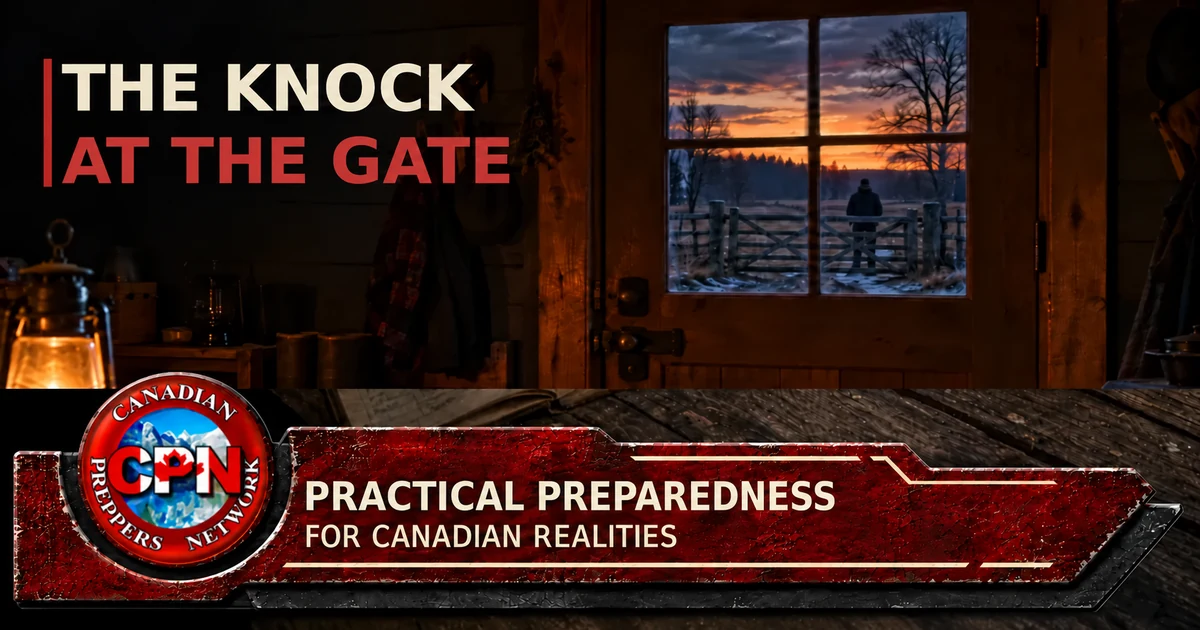
The road is quiet now. Shops have been empty for weeks. Your household is drawing water, rationing fuel and counting meals. Then someone appears at the gate asking for food.
You do not know whether they are alone. You do not know who sent them, whether they have watched your property or whether they will return with others. You know only that they have found you.
In an ordinary emergency, a small act of generosity may cost very little. In a prolonged collapse, every resource you give away comes from a finite supply that keeps your household alive. A visitor asking for help may be desperate and truthful. That does not give them a claim on your food, your shelter or access to your people.
Your response needs to be decided before the knock.
The First Answer Is No Entry
No unknown visitor comes through the gate or into the home to explain their situation. Keep a locked boundary between the visitor and your household. Speak from a position where you can observe them without exposing your occupants, supplies or routine.
One designated adult speaks. Others remain at their assigned tasks and watch for changes around the property. Do not let several household members offer conflicting answers. Do not send one person out alone to “hear them out.”
Ask only what you need to assess an immediate emergency: What happened? How many people are with you? Is anyone seriously injured? Keep the exchange brief. A long conversation reveals things about your household too: who makes decisions, how many voices can be heard and how willing you are to change your answer.
Someone who bypasses your chosen contact point, approaches another entrance or refuses to remain where you can see them has changed the situation. Stop discussing assistance. Secure your household and contact emergency services if they are still available.
Need Does Not Make a Story Verifiable
A person may say they have not eaten in days. They may be telling the truth. You have no reliable way to establish what else is true: where they came from, who is nearby, what they have already taken or what they intend to do next.
Do not build your decision around whether the visitor seems harmless. Desperation can change behaviour quickly. A person who accepts one meal may return tomorrow when the meal is gone. Others may hear where it came from. The first handout can turn an otherwise overlooked property into a known source of supplies.
That is a risk to weigh, not a reason to treat every stranger as an attacker. It is a reason to stop pretending that giving away stored food has no cost beyond the food itself.
Count the People You Are Already Responsible For
Before collapse, your pantry may have looked substantial. After several weeks, it is a number: meals remaining, water that can be treated, fuel needed to cook and heat, and medication that cannot be replaced.
Make decisions against that inventory. If your household has a 60-day food supply for four people, adding a fifth person does not create more food. Feeding visitors regularly shortens the reserve even if each serving looks small. The same arithmetic applies to treated water, sanitation supplies and firewood.
Set a firm household policy:
- No entry for unknown visitors.
- No disclosure of your inventory, water source, equipment or number of occupants.
- No promise of a future handout or a return visit.
- No sharing of supplies reserved for the household’s survival.
- No individual exceptions made by one member without the household’s agreed decision process.
You may choose to help an established neighbour with whom you already share work, information or resources. That is a different relationship from an unknown person appearing at your gate. Decide where that line falls while you still have time to discuss it.
Beware the Request That Changes Shape
A visitor may initially ask for water, then notice a shed and ask to fill a container. Another may ask to charge a phone, then request shelter until morning. Each step sounds small when considered alone. Together, they move the person closer to your resources and make refusal harder.
Keep any assistance, if your household has chosen to allow it, specific and final. You might give directions or relay information over a working radio. If there is a life-threatening injury, you may decide to contact emergency services or offer aid within your skills and from a controlled location. None of those decisions requires admitting a stranger to your living space.
Do not show someone the well, pantry, garden, generator or medicine cabinet to explain why you can or cannot help. “We cannot provide that” is a complete answer.
Do Not Advertise That Refusal Is Negotiable
A long explanation invites debate. So does “maybe later.” Use words everyone in the household can repeat:
“You cannot come onto this property. We cannot provide food or shelter. You need to leave.”
If emergency services or a confirmed aid location are operating, you can direct the person there. Do not invent a destination merely to end the conversation.
If the visitor leaves, do not assume the encounter is over. Record when they came, what they asked and whether they appeared to be alone. Tell the other adults what happened. Review entrances and stores for anything left unsecured, and remain alert for a return visit without turning every noise into a confrontation.
If the person threatens you or attempts to enter, disengage, move household members to safety and call for help if communications permit. Do not go outside to argue or pursue someone leaving the property.
The Hard Decision Belongs Before the Crisis
Most people imagine this encounter with a full pantry and functioning police response. Make the decision under the conditions this article is actually about: replacement supplies are unavailable, your household is tired and you cannot know when normal services will return.
Write down who speaks, where visitors must stop, what information may be shared and whether there are any circumstances in which supplies may leave the property. Rehearse it. A policy that exists only in one person’s head will fail when that person is asleep or away.
You can recognise another person’s suffering without surrendering your household’s security. In a prolonged collapse, the food behind your door has a purpose, and the people depending on it have names. Know your answer before someone else’s need forces you to choose at the gate.
Would every adult in your household give the same answer to a request for food, water or shelter tonight?
Related Reading
- Security and Defence in Canada: the CPN preparedness hub
- Who Gets a Place at the Retreat?
- Retreat Communications Plan: The Last Mile
Equipment only supports a rule that everyone follows. Test your contact point in daylight and after dark, then have another adult run the conversation while you listen from inside. If the plan changes depending on who answers, settle that disagreement now.