

Bazina, I asked you a while back about how you shipped this until into canada and you never answered
http://www.internationalpreppersnetwork.net/viewtopic.php?f=74&t=3225&p=62307#p62307

Keep the ideas going , and the safety issues need to be mentioned .
Sounds like the propane is not really the best choice for indoors .
BriteLyt , looks like there is a dealer maybe in Montreal ?
do you have natural gas?


If you prefer propane, I've eyeballed a sailboat heater from Dickinson Marine quite a few times. Can be fueled with either the large refillable bottles, or the little green 1-pounders.
http://dickinsonmarine.com/product_cat/propane-fireplace-heaters/
The P12000 or P9000 both look good, to me. They are designed to be run with a fairly low-watt fan circulating the air, but can be run without the fan on the lowest setting. Vented outdoors, combustion air supplied from outside. Seems like the ultimate backup heater for smallish areas.
I bought and installed a vented propane heater in my remote shack, last autumn, seems to work well. I got mine through Amazon, sold by the company "Martin" but looks like it's manufactured by "Bismar". The "MDV"-series stuff:
http://www.bismar.com/en/produits.php?cat_id=21
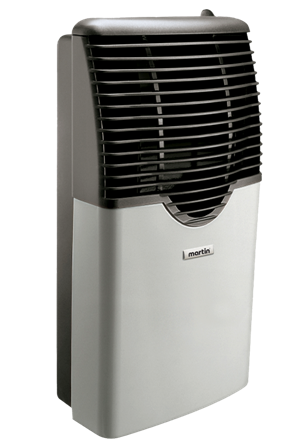
Requires no electricity, has pizeoelectric startup for the pilot light (like a gas BBQ). They are not very efficient, they just convect the heat through the upper grill; a battery-powered fan pushing air from the bottom might increase efficiency. Worked well in out in the sticks, in my small uninsulated space, requires cutting a hole through the wall for the combined air supply & exhaust pipe.
.

Ice unit Danux. For heat I have use the little buddy propane unit and it’s decent.
During ice storm of 98, I initially used a kerosene heater in the basement. That was until I got my mitts on a generator and hot wired the house. Yes I know, not safe for linesmen but out here, there was nothing happening as all the poles were down. I disconnected when they showed up 13 days later.
The kerosene unit ate very little fuel and I was extremely impressed.
Nice thing about these is even after many months into a disaster, gas, engine oils, diesel from abandoned cars, home, campers, lawn mowers, snowblowers...... can be scavenged and used.
A good means of siphoning will be handy to have!
Propane tanks will also likely be plentiful for first few months to a year. Aboned BBQ, camp trailers...

I have a kerosene heater which is great as long as kerosene is available. I find it a little expensive and it isn't easy to regulate the heat output (which is substantial).
Propane heaters are my main back-up. I have a Big Buddy and a half a dozen full 25 lb. propane battles. Added to this are two smaller Little Buddy propane heaters and a few dozen smaller propane bottles. These may be refilled from the larger bottles as required.
I make sure to leave adequate ventilation when using them in-doors. All connections are sealed with propane sealant and tested before they are left on. I utilize a carbon monoxide alarm in any room I use the heater and am careful to check for any condensation resulting from usage.
Generators can supply heat as well, but gasoline is a precious resource that I don't like to use for heat. Unless there is another reason, I keep the generators shut off. There are there if the need becomes apparent.
These supplement warm winter clothing and arctic sleeping bags for every member of the family. Centrally locating people in the same room with additional air traps over doors and windows help reduce heat loss. I've found from teaching arctic survival programs that staying together as a group aids in keeping a positive mental attitude, which is essential in any survival scenario.
None you improvise, one (or more) is luxury.
Not heat related per say but something that needs to be factored in when talking heat. This is freezing of water pipes, toilets, fridge ice makers etc. if you do need to focus on or can heat only a few rooms, one needs to know how to drain water from lines.
There’s all manner of potential disasters ranging from three days of light uncomfort to two weeks, six or god forbid even more.
Assuming it’s a power grid break down due to a hack, weather or terrorist attack, one can easily be without power for a month. Let’s assume that it ends up being a one month outage. You will not want to be repairing water lines when power/ heat does come back on.
In addition to draining as much as you can, you will want to have antifreeze put in toilets, goose necks of all sinks etc.
Let’s say pipes break and water does flood basement, your sump pump will not work. Big issue, maybe yes maybe no. Batteries with inverter to handle pump can be handy to have. If you have a very wet basement and sump pump is needed, you will want to make sure your supplies are ok and any generator panels will not be affected.
Assuming you have a location outside the home that is lower than floor in basement, you could siphon out water with garden hose to that lower point outside the home ( road ditch, neighbors property... ). Another item to have is a boat sump pump and run off car battery.
For those folks waving in an apartment or condo, remember your car is in basement and if pipes pop, your car, gas in it and Contents are fubared! I conducted a review of office tower and sprinkler lines ran right beside overhead garage door and would freeze up in no time on a minus 30 weekend. There a zillion gallons of water in an apartment sprinkler system! Something to think about as well for the apartments above yours and need to get things off the floor at a moments notice.
I realize I wandered off but all these things are associated with heat or absence of it.
Cheers