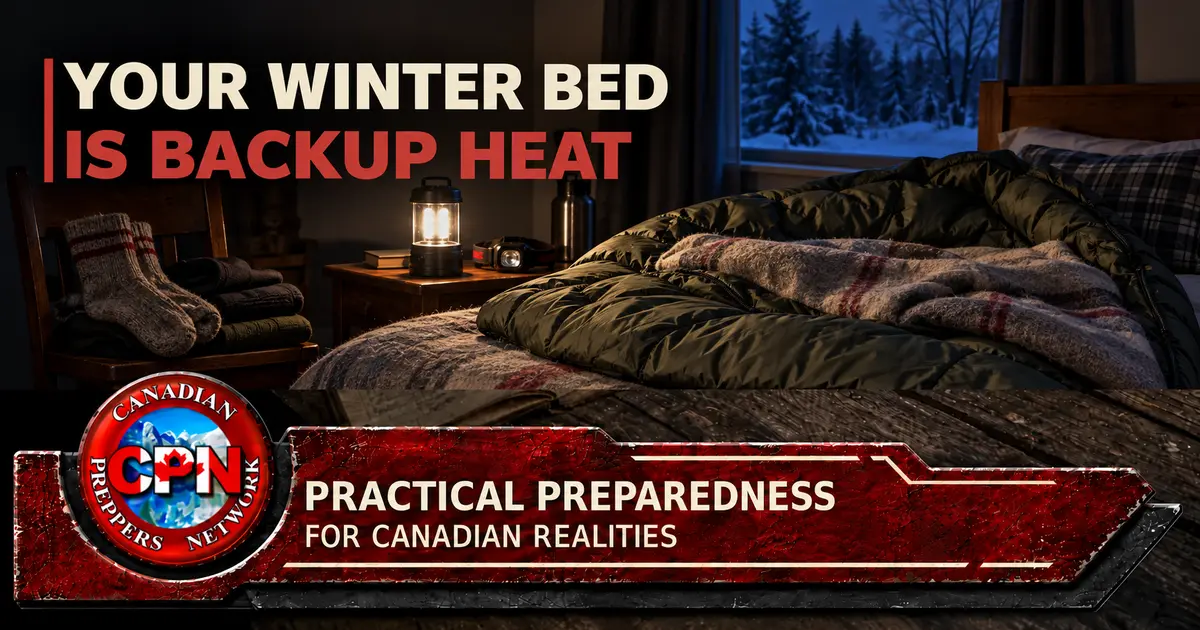
Build a sleeping system before the furnace stops
At three in the morning, the house is quiet in a way it should not be. No furnace fan. No refrigerator hum. The power has been out since supper, the temperature is still falling, and the extra blanket that seemed adequate at bedtime no longer feels like much of a plan.
You can put another log into a functioning wood stove. You can start a properly installed backup heating system. But if those options are unavailable, your next line of defence is the insulation around your body.
A winter sleeping system deserves the same attention as stored food, water and emergency lighting. It needs to fit the person, work without electricity and remain useful through more than one uncomfortable night.
Blankets and sleeping bags do not produce heat. They slow the loss of the heat you produce. That makes the complete arrangement important: what is underneath you, what surrounds you, what you are wearing, and whether everything stays dry.
Start with the bed you already own
A blackout does not automatically mean sleeping on the floor. If your normal bed is in the room you intend to occupy, begin there. You already know its comfort, and its mattress may provide a useful part of your insulation.
Inspect the arrangement rather than assuming it works. A bed beside a draughty window, against a cold exterior wall or in a room that cannot be closed off may be a poor choice once the heat stops.
If moving everyone into one room makes sense, decide how each person will sleep before the outage. Carrying a mattress down a narrow staircase by flashlight is a bad time to discover that it will not fit.
Keep clear routes to the door and bathroom. Anyone with limited mobility needs a sleeping surface they can get into and out of reliably. Floor bedding that works for one adult may leave another unable to stand without help.
Make the room usable for the people who will actually occupy it, then build their bedding systems around that layout.
Insulation underneath is part of the system
One common mistake is piling insulation above the sleeper while paying little attention to what is below.
Sleeping-bag fill loses loft under body weight. The compressed underside provides less insulation, which is why outdoor sleeping systems pair a bag with an insulating pad. Cascade Designs specifically identifies this relationship in its guidance on sleeping-pad warmth.
A thick inflatable guest mattress can feel comfortable without providing meaningful cold-weather insulation. Thickness alone tells you little about its thermal performance. Likewise, a cot gets you off the floor but exposes its underside to room air; it still needs an appropriate insulating layer.
For a floor or cot arrangement, look for a pad with a published R-value. Higher values indicate greater resistance to heat flow, although the pad still needs to suit the conditions and the sleeper. MEC’s winter-camping checklist specifies a pad with an R-value of at least four; that is an outdoor reference, not a guarantee that every indoor arrangement needs the same equipment.
An ordinary mattress, an insulated camping pad and a closed-cell foam mat are different tools. Assess what you have before buying, then address the weak point. Another blanket on top will not necessarily fix a cold sleeping surface.
Read the temperature label carefully
A sleeping bag advertised as “minus twenty” may sound reassuring, but which rating is the seller quoting?
Standardised sleeping-bag labels distinguish comfort, lower-limit and extreme ratings. Those figures serve different purposes. An extreme rating is not a target for comfortable sleep.
For a household reserve, prioritise a clearly explained comfort rating and leave room for personal variation. Someone who routinely feels cold may need more insulation than another person in the same room.
Check whether the bag has a recognised test rating or only a manufacturer’s temperature claim. Also check its length, shoulder width, hood, zipper and draught protection. A bag that compresses around the shoulders or cannot close properly is a poor fit regardless of the number on its label.
Your house temperature during a prolonged outage will depend on outdoor conditions, insulation, air leakage and any remaining heat. A sheltered bedroom and an exposed campsite are different environments. Buy for your planned conditions, with a margin, rather than automatically buying the most extreme expedition bag available.
If conditions exceed the system’s capability, you need another heat source or somewhere warmer to go.
Layer bedding without crushing it
Start with your existing winter bedding. A sound duvet, additional blankets and a suitable mattress may already offer a useful reserve. A sleeping bag can add individual protection when sharing blankets creates gaps or when bedding must move with you.
Wool blankets are versatile household equipment. They can serve as bedding or daytime wraps, and do not depend on a charger or fuel supply. Check their size and composition: a small throw and a full-sized wool blanket are different purchases.
Avoid loading so much heavy material over a down bag that its insulation is flattened. Add layers thoughtfully, keeping the loft that traps insulating air.
Do not calculate a new temperature rating by adding the numbers from two bags together. Fit, compression and draughts affect the result. Try the actual combination.
Reflective emergency blankets can have a place in a kit, but they do not supply the same cushioning and loft as substantial bedding. Making a crinkly foil sheet your entire winter sleep plan leaves important problems unresolved.
Keep one clothing set dry for sleeping
The clothes worn while hauling firewood, clearing snow or cooking may be damp even when they do not feel soaked. Bringing that moisture into bed undermines the insulation you are relying on.
Reserve a dry base layer, loose socks and a comfortable hat for each sleeper. Store them where they can be found in darkness. The Canadian Red Cross recommends changing wet clothing, using adjustable layers and avoiding clothing or footwear tight enough to impair circulation.
Do not dress so heavily that you start sweating inside the bag. Adjust the layers before overheating, and close gaps before becoming chilled.
Keep your face outside the sleeping bag. Breathing into it introduces moisture. Use the hood as intended rather than pulling the entire bag over your head.
In the morning, inspect bedding for dampness and air it when conditions permit. A system that performs well the first night may become less useful if moisture accumulates through repeated use.
Plan for the hours outside the bed
Sleeping equipment solves only part of a cold-house problem. You still have to get dressed, prepare food, use the toilet and carry out essential work.
Place slippers or footwear, an outer layer and a headlamp within reach. Keep a water bottle accessible. Avoid arranging bedding so that every bathroom trip requires climbing over someone else.
Eat regularly and maintain hydration. Cold-weather work still demands energy, and repeatedly skipping meals makes an already difficult situation harder.
An electric blanket may be comfortable while a suitable power supply lasts, but it introduces a separate dependency. Your basic bedding should remain usable when its battery is empty.
Keep portable fuel-burning equipment out of sleeping enclosures. Never bring barbecues or generators indoors, and do not improvise a bedroom heater from a camping stove. The Canadian Red Cross warns against indoor use of those devices because of carbon monoxide. Maintain working smoke and carbon-monoxide alarms, including appropriate battery backup.
Run an autumn rehearsal
Test the arrangement while normal heat and assistance remain available. You do not need to shut down the entire house or deliberately expose anyone to dangerous cold.
Choose a safely cool room, assemble the equipment you intend to use and keep the option to warm the room immediately. Record the temperature near the sleeping area rather than relying only on a thermostat elsewhere.
Ask practical questions:
- Can everyone set up their own bedding in low light?
- Does the pad stay underneath the sleeper when they turn?
- Are shoulders, hips or feet noticeably cold?
- Can the sleeping bag close without help?
- Is anyone overheating or waking in damp clothing?
- Can each person get to the bathroom safely?
Correct one problem at a time. Cold underneath calls for a different response than a gap around the neck or a bag that is too narrow.
A successful autumn trial verifies organisation, fit and performance at the conditions tested. It does not prove the same equipment will work during a much colder, longer outage.
Know when bedding is no longer enough
Do not turn an emergency into a contest over who can tolerate the cold longest.
Persistent shivering, confusion, unusual behaviour, poor coordination or altered speech can indicate a cold-related emergency. Someone who stops shivering while deteriorating has not necessarily warmed up. The Canadian Red Cross advises moving affected people out of the cold and calling 911 for severe hypothermia.
Act before the household reaches that point. Decide where you can relocate, how you will travel and what conditions will trigger the move. Set that plan around the most vulnerable occupant and the equipment actually available.
For prolonged disruption, arrange mutual support with people who have dependable heat. An individual sleeping system is useful when you move, too: it reduces what your host must supply.
Give every sleeper a complete reserve
Count complete sleeping places rather than counting blankets. Each person needs a suitable surface, insulation underneath where required, enough bedding around them, dry clothing and a way to get up safely.
Then protect that reserve. Follow the manufacturer’s storage instructions; sleeping bags should generally be stored dry and loose rather than left permanently compressed. Check inflatable pads for leaks and keep their repair supplies with them.
Tonight, lay out one complete system for every person in your household. Identify the weakest one and fix that first.
When the furnace stops, a tested winter bed gives you a useful layer of protection—and a better chance of making clear decisions after a night’s rest.
Could every person in your household sleep comfortably if the heat stopped tonight—or is one sleeping place still relying on an untested assumption?
Related Reading
- Shelter & Heat in Canada: build a complete household system
- Two Families, One Roof, No Escape: plan sleeping places and shared living space