
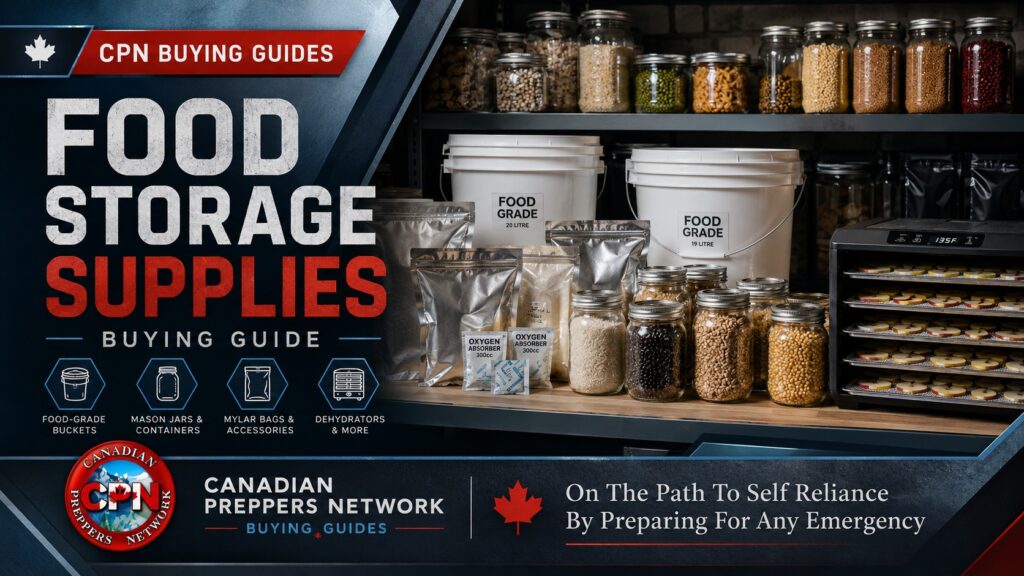
A serious food storage plan is not just about buying more food.
Rice, beans, oats, flour, pasta, canned goods, garden produce, and bulk staples only matter if they stay dry, protected, organized, and usable. A prepper pantry can look impressive and still fail if food is left in weak packaging, stored on damp concrete, exposed to pests, or forgotten because nothing is labelled or rotated.
That is where the right supplies matter.
This buying guide focuses on the equipment that helps Canadian households protect food they already buy, grow, preserve, and store. The goal is not to fill your basement with random survival products. The goal is to build a pantry system that actually works.
Start Here: Core Food Storage Supplies
If you are just beginning, start with the supplies that protect the widest range of food.
Mylar Bags and Oxygen Absorbers
These six categories form the backbone of a useful prepper pantry. They protect dry goods, improve rotation, keep food off damp floors, and make it easier to see what you actually have.
Best For Long-Term Dry Goods: Mylar Bags and Oxygen Absorbers
Mylar bags and oxygen absorbers are for dry, low-moisture staples that you want to store longer term. White rice, dry beans, lentils, oats, pasta, split peas, wheat berries, powdered milk, and dehydrated vegetables are common examples.
The mylar bag creates the barrier. The oxygen absorber removes oxygen from the sealed package. A bucket then protects the sealed bag from punctures, pests, stacking damage, and rough handling.
For beginners, smaller bags are often easier than huge five-gallon packs. They let you open food in manageable portions instead of exposing an entire bucket at once.
1-Gallon Mylar Bags and Oxygen Absorbers
5-Gallon Mylar Bags and Oxygen Absorbers
Oxygen Absorbers for Food Storage
Best For Bulk Pantry Protection: Buckets and Gamma Lids
Buckets are the hard outer shell of the system.
Once food is sealed in mylar, a food-grade bucket protects it from pests, punctures, spills, and basement damage. Standard lids are fine for long-term sealed storage. Gamma lids are better for working storage because they screw open and closed more easily.
Use gamma lids for foods you access regularly, such as rice, oats, flour, sugar, pet food, chicken feed, or other bulk pantry items.
Best For Daily Pantry Rotation: Airtight Containers
Not everything belongs in long-term storage.
A working pantry needs containers that are easy to open, close, clean, and rotate. Flour, oats, sugar, pasta, dry beans, powdered milk, baking supplies, coffee, tea, and dry mixes all benefit from airtight containers once the original packaging is opened.
This is also where a lot of waste can be prevented. Open bags attract moisture, spill easily, and invite pantry pests. Good containers make the pantry easier to use every day, not just during an emergency.
Airtight Food Storage Containers
Large Pantry Storage Containers
Best For Preserving Seasonal Food: Canning Supplies
Home canning turns garden produce, seasonal deals, bulk buys, and prepared foods into shelf-stable pantry items.
Water-bath canning is used for high-acid foods such as jams, jellies, pickles, relishes, many fruits, and properly acidified recipes. Pressure canning is required for low-acid foods such as vegetables, meat, poultry, fish, beans, soups, stews, and mixed meals.
For preparedness, pressure canning is especially valuable because it allows a household to store ready-to-use foods rather than only dry ingredients. That matters during power outages, fuel shortages, or times when cooking from scratch is harder.
Best For Reducing Waste: Food Dehydrators
A dehydrator is one of the most useful food preservation tools for a prepper pantry.
It can preserve apples, berries, onions, mushrooms, peppers, tomatoes, herbs, soup vegetables, fruit leather, and jerky. It can also turn small amounts of leftover produce into useful pantry ingredients instead of waste.
Dehydrated food is light, compact, and useful in soups, stews, rice dishes, oatmeal, bannock mixes, trail meals, and emergency cooking. For most households, a dehydrator is more affordable and easier to justify than a freeze dryer.
Stainless Steel Food Dehydrators
Best High-End Preservation Upgrade: Freeze Drying
Freeze drying is the premium option for home food preservation.
A real home freeze dryer can preserve many foods in a light, shelf-stable form. It makes sense for serious gardeners, hunters, homesteaders, bulk buyers, and households that want to store complete meals.
But a freeze dryer is a major purchase. It is not the same thing as a dehydrator. It costs more, uses more power, requires maintenance, and still needs proper packaging after every batch.
For the actual machine, Canadian readers should research Harvest Right freeze dryers through Berry Hill.
Harvest Right Freeze Dryers at Berry Hill
Amazon still makes sense for freeze-drying accessories.
Oxygen Absorbers for Food Storage
Best For Keeping the Pantry Usable: Shelving and Organization
Good shelving is preparedness gear.
Canned goods, jars, buckets, and bulk staples are heavy. Weak shelves, damp floors, crowded boxes, and unlabelled bins turn a pantry into a mess. If you cannot see what you have, you cannot rotate it properly.
Use sturdy shelving, bins, labels, and visible storage so food stays reachable and inspectable. A pantry should be easy to use before an emergency, not just impressive to look at.
What To Buy First
For a new prepper pantry, start with the items that protect the most food for the least complexity.
Buy first:
- Mylar bags and oxygen absorbers
- Food-grade buckets
- Gamma lids
- Impulse heat sealer
- Airtight pantry containers
- Heavy-duty shelving
Then expand into:
- Canning jars and lids
- Water-bath canning supplies
- Pressure canner
- Food dehydrator
- Vacuum sealer supplies
- Freeze-drying accessories
This order builds the pantry in layers. First you protect dry goods. Then you organize the working pantry. Then you add preservation methods.
Related CPN Reading
Food Procurement & Storage in Canada
How to Build a 30-Day Food Supply in Canada Without Overspending
The Food You’ll Wish You Stored But Didn’t
Long-Term Protein Storage for Canadians
A Manual Grain Mill and Why You Need One
Final Buying Advice
Do not build a pantry that only looks prepared.
Build one that stays dry, protected, organized, labelled, rotated, and usable.
Start with the storage supplies that protect what you already own. Then add food. Then add preservation tools. Then improve the system as your household actually uses it.
The goal is not to own the most gear.
The goal is to make sure the food you count on is still edible when you need it.
Amazon Disclosure:
As an Amazon Associate, Canadian Preppers Network may earn from qualifying purchases made through links in this guide. This does not change the price you pay, but it helps support the site.