Celebrating holidays after the collapse when ordinary life is gone
Thanksgiving arrives with familiar expectations: a full table, people we care about, and enough breathing room to enjoy the day. After a collapse, that same date might arrive with dwindling firewood, a pot of beans, and empty chairs nobody wants to discuss.
Would you still celebrate?
It belongs in your preparedness planning. If we prepare for years of disrupted living, we should also prepare for the birthdays, Christmases, anniversaries, and harvest celebrations that will arrive during those years. Survival cannot occupy every conversation forever.
A holiday will not restore the grid or refill the pantry. It can give a household a reason to gather, remember who they are, and look forward to something beyond tomorrow’s chores.
Keep the occasion, change the expectations
Trying to reproduce an expensive holiday with scarce resources could turn a welcome break into another problem. Preserve the parts people value most.
Ask your household what makes a particular day meaningful. The answers may be surprisingly modest: a certain spice in the kitchen, a song, a religious observance, a favourite game, or eating together without somebody rushing away.
For the wider household plan, see our Mental Resilience & Community Building hub. Make a short list of traditions worth carrying forward. Then work out how each could survive without shopping, electricity, or easy travel.
A special meal does not require a turkey
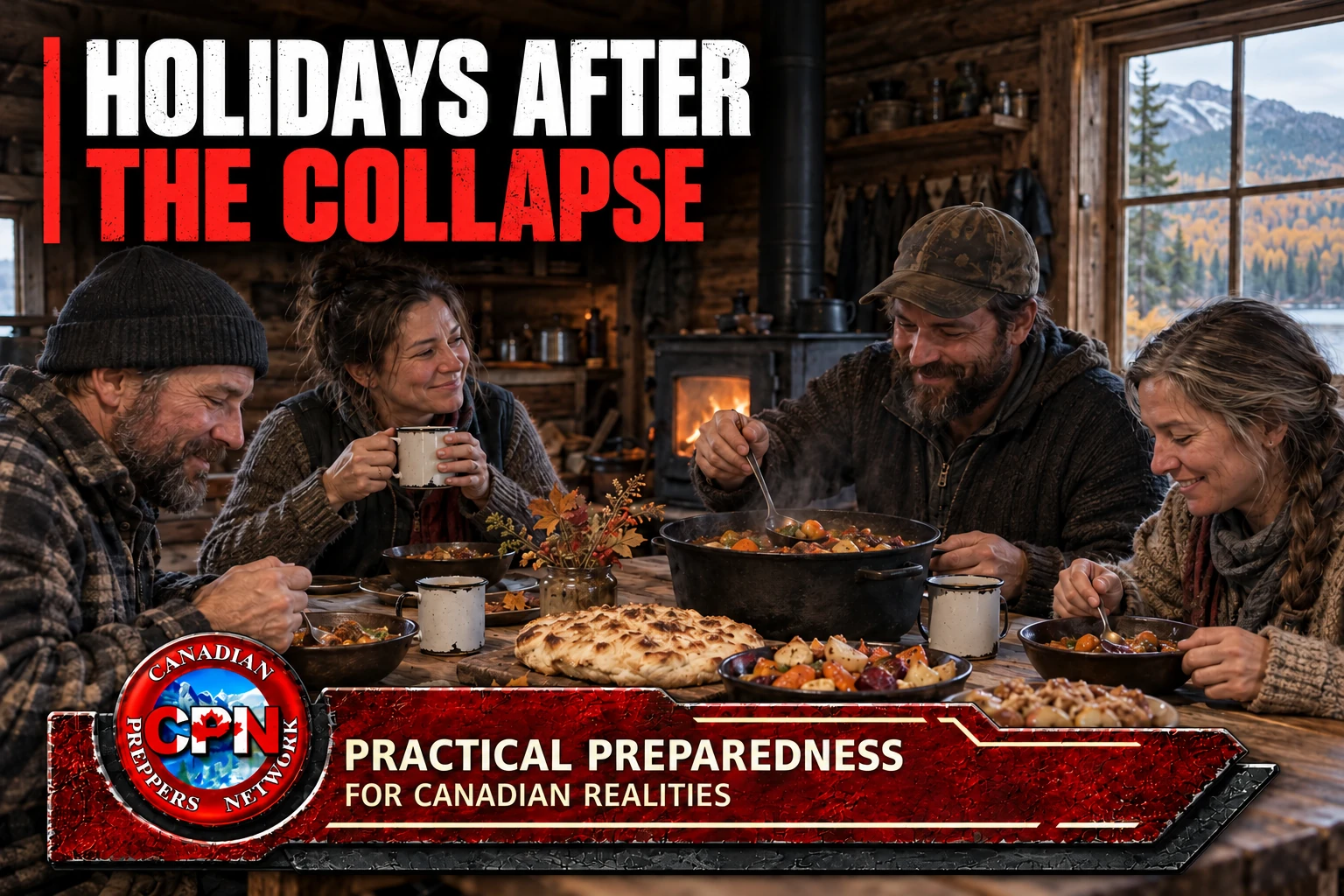
A post-collapse Thanksgiving meal might be beans with smoked meat, roasted garden vegetables, fresh bread, and a small apple dessert. Christmas dinner could be a thick stew followed by steamed pudding. A birthday might mean pancakes and a spoonful of precious jam.
The difference can be in preparation and presentation rather than portion size.
Set a proper table. Use the good serving bowl. Season the meal differently. Make bread when daily meals usually rely on plain grains. Bring out dried fruit reserved for an occasion.
Plan the cooking around the equipment and fuel you actually have. A meal requiring several burners and an oven for hours may be unrealistic. A covered pot, a skillet, and a dessert prepared ahead are easier to manage.
One workable harvest menu is:
- A bean stew with onions, carrots, herbs, and a modest amount of preserved meat.
- Skillet flatbread served warm.
- Cooked apples or rehydrated dried apples with cinnamon.
- Tea, coffee, or another familiar drink already included in household stores.
Practise that meal before an emergency using your intended cooking arrangement. Record quantities, preparation time, and fuel use. Serve manageable portions so leftovers do not become a storage problem when refrigeration is unavailable.
Budget celebration supplies before they become scarce
If every spoonful of sugar belongs to an undifferentiated emergency stockpile, using some for a holiday may trigger an argument.
Make celebration provisions part of the original food plan. Calculate a small allowance for the occasions your household observes, within the quantities you can afford and store.
That might include sugar, cocoa, baking spices, dried fruit, favourite preserves, coffee, and ingredients for a few special meals. Rotate them into ordinary use and replace them while supply chains still function.
Keep the reserve modest. It must fit alongside daily nutrition, safe water, cooking fuel, and winter heat.
For prolonged disruption, think beyond the first year’s treats. Garden fruit, herbs, nuts suited to your area, and household recipes based on your own harvest can support recurring celebrations. Imported chocolate may eventually disappear. Your ability to mark a birthday should survive its absence.
Give gifts that involve effort and attention
When shops and delivery services are gone, people can still give something meaningful.
A repaired tool, knitted mittens, a carved game piece, a sewn pouch, or a carefully prepared jar of favourite preserves can carry considerable value. So can taking over someone’s work for an afternoon, provided essential duties remain covered.
Make the gift specific to the person. Someone who spends every day tending a stove may appreciate a repaired pair of work gloves more than another decorative object.
Store useful materials now: needles, thread, yarn, fabric, suitable hand tools, and repair supplies. Learn to use them. Equipment alone does not produce a finished gift.
Avoid turning holidays into a competition over who contributed the most. People will have different abilities, health, and available time. A song or a remembered story can belong at the gathering alongside a handmade present.
Entertainment needs a plan too
A shelf of DVDs offers little when the player and power supply are unavailable.
Keep a few things people will actually use: playing cards, a cribbage board, chess or checkers, printed songbooks, and familiar books worth rereading. Musical instruments are useful if someone can play them.
Choose activities that work with the people present. A complicated game nobody understands may be less welcome than cards and conversation. Indoor space and winter daylight will also shape what is practical.
Practise entertaining yourselves without screens occasionally. Find out what works before it becomes your only option.
Leave room for grief
The first holiday after a catastrophe may be particularly difficult. Some people will be missing. Others may be present but exhausted, injured, or overwhelmed.
Give remembrance a place without requiring everyone to speak. Share a story, observe a quiet moment, say a prayer, or set aside a small keepsake.
People should be able to leave an activity, sit quietly, or decline a celebration. Forced gratitude can make a painful day harder.
A household can acknowledge loss and still share something warm to eat. Neither requires pretending the other does not exist.
Keep essential duties covered
Animals still need feeding. Heating equipment needs attention. Water must be collected. Any necessary watch or communications schedule still needs coverage.
Plan those duties before the gathering so the same person is not excluded every time. Stagger meals when required and save a proper serving for whoever is working.
Keep invitations within the number you can feed and accommodate. In a dangerous environment, consider travel conditions, daylight, noise, and whether a gathering reveals supplies to people outside your trusted circle.
Alcohol, if available, should not leave essential tasks in the hands of impaired people. Anyone responsible for security, fire, machinery, or medical care needs to remain capable.
Prepare a celebration kit for holidays after the collapse
Use durable items that earn their place throughout the year. A plain cast-iron Dutch oven can handle everyday meals and occasion cooking; a suitable skillet can make flatbread and pancakes. Check compatibility with your intended heat source.
A manual coffee grinder, reusable filter, enamel mugs, metal serving utensils, and sturdy bakeware can support familiar rituals. Cards, a cribbage set, sewing supplies, and basic woodworking tools support activities and gifts.
Choose around your existing skills and traditions. Test the equipment, maintain it, and store it where you can find it. A box of unfamiliar gadgets will not make a difficult holiday easier.
Give the year something to look forward to
Keep a paper calendar and mark the occasions that matter. Discuss the next gathering while there is still time to plan its meal, finish a gift, or learn a song.
After collapse, Thanksgiving may become a very literal acknowledgement of food brought in before winter. Christmas may be quieter. Birthdays may involve one modest gift and a shared pot of tea.
Those occasions can still belong to you.
Prepare enough to keep marking them. People who have endured months of hard work deserve more than another day that looks exactly like the last.