
Preparedness gear is everywhere.
That is part of the problem.
Anyone can fill an online cart with flashlights, filters, radios, tools, buckets, batteries, knives, gadgets, and “survival kits” that look impressive in a photo. The harder question is whether those purchases actually build a useful system.
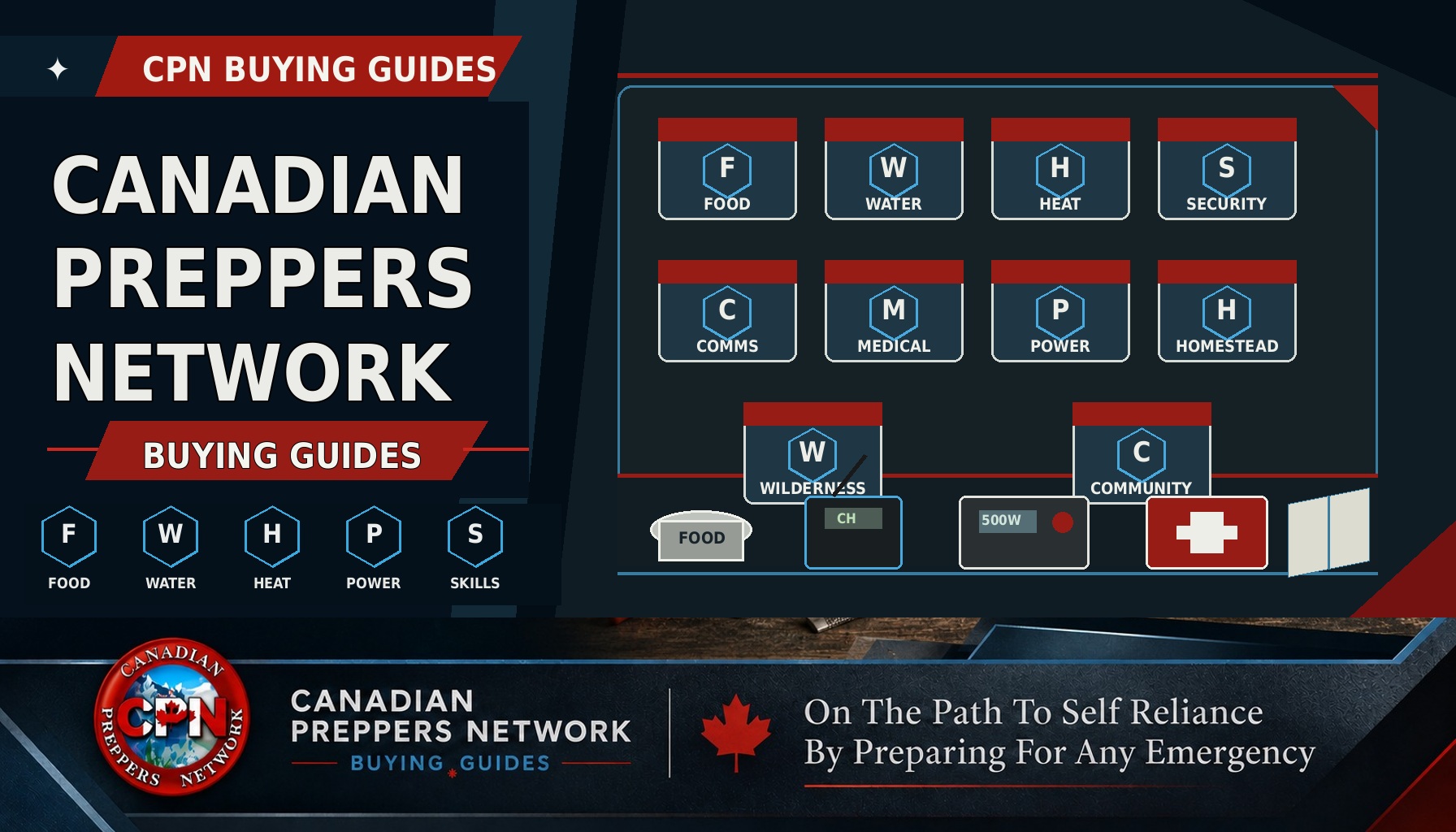
That is why Canadian Preppers Network has launched a new set of preparedness buying guides.
These guides are built for Canadian households, rural properties, cabins, retreats, homesteads, and preparedness-minded families who want practical gear without wasting money on random products that do not solve real problems.
The goal is simple: help readers understand what to buy first, what to add later, and how each item fits into a larger preparedness plan.
Why These Buying Guides Matter
Preparedness is not about owning the most gear.
It is about having the right systems in place before life gets difficult.
Food storage does not help much if you have no way to store water. A generator does not solve much if you have no fuel plan, no safe cords, and no carbon monoxide protection. Radios are useless if nobody knows the plan. Medical supplies are incomplete if they only cover minor cuts. A homestead tool shelf is weak if it depends entirely on batteries and electricity.
Each CPN Buying Guide focuses on one major preparedness category and breaks it down into practical buying priorities.
The guides are written with Canadian realities in mind: winter storms, frozen infrastructure, long rural distances, power outages, wildfire smoke, flooding, fuel concerns, supply chain stress, and the possibility that help may not arrive quickly.
The Full CPN Buying Guide Series
The buying guide hub brings all of the major categories together in one place:
Canadian Preppers Network Buying Guides
https://canadianpreppersnetwork.com/canadian-preppers-network-buying-guides/
From there, readers can move into the individual guides:
Food Storage Supplies Buying Guide
https://canadianpreppersnetwork.com/food-storage-supplies-buying-guide-canada/
Water Collection and Purification Buying Guide
https://canadianpreppersnetwork.com/water-collection-purification-buying-guide-canada/
Shelter and Heat Buying Guide
https://canadianpreppersnetwork.com/shelter-heat-buying-guide-canada/
Security and Defence Buying Guide
https://canadianpreppersnetwork.com/security-defence-buying-guide-canada/
Communications Buying Guide
https://canadianpreppersnetwork.com/communications-buying-guide-canada/
Medical and First Aid Buying Guide
https://canadianpreppersnetwork.com/medical-first-aid-buying-guide-canada/
Energy Production and Blackout Power Buying Guide
https://canadianpreppersnetwork.com/energy-production-blackout-power-buying-guide-canada/
Homestead Skills Buying Guide
https://canadianpreppersnetwork.com/homestead-skills-buying-guide-canada/
Wilderness Skills Buying Guide
https://canadianpreppersnetwork.com/wilderness-skills-buying-guide-canada/
Mental Resilience and Community Building Buying Guide
https://canadianpreppersnetwork.com/mental-resilience-community-buying-guide-canada/
What Makes These Guides Different
These are not generic shopping lists.
Each guide explains what the gear is for, why it matters, how it fits into a preparedness system, and what should come first. The guides also include manual and low-tech options wherever they make sense, because long-term preparedness cannot depend only on electronics.
A digital thermometer is useful. A non-digital backup still matters.
A power station is useful. Manual tools still matter.
A GPS is useful. Paper maps and a compass still matter.
A freezer is useful. Canning, dehydration, and shelf-stable storage still matter.
The same principle runs through every guide: modern gear is helpful, but a serious preparedness system should not be helpless when batteries die, screens break, fuel runs low, or the grid stays down longer than expected.
Start Where You Are Weakest
The best way to use the buying guides is not to buy everything at once.
Start with the weakest part of your current preparedness setup.
If your pantry is decent but your water plan is thin, start with the water guide. If you have food and water but no blackout plan, start with the energy guide. If you have gear but no way to treat injuries, start with the medical guide. If you have supplies but no way to organize people, routines, communication, or morale, start with the mental resilience and community guide.
Preparedness works best when it is built in layers.
A Practical Next Step
Pick one guide today.
Read it from top to bottom.
Then choose one practical upgrade you can make this week: better water containers, a USB-powered battery charger, a first aid kit upgrade, a non-digital thermometer, a proper flashlight system, a manual can opener, a communications plan, or a better way to organize stored supplies.
Small improvements add up.
Random gear piles create clutter.
Preparedness systems create options.
Start here:
Canadian Preppers Network Buying Guides
https://canadianpreppersnetwork.com/canadian-preppers-network-buying-guides/
Amazon Disclosure:
As an Amazon Associate, Canadian Preppers Network may earn from qualifying purchases made through links in these guides. This does not change the price you pay, but it helps support the site.
