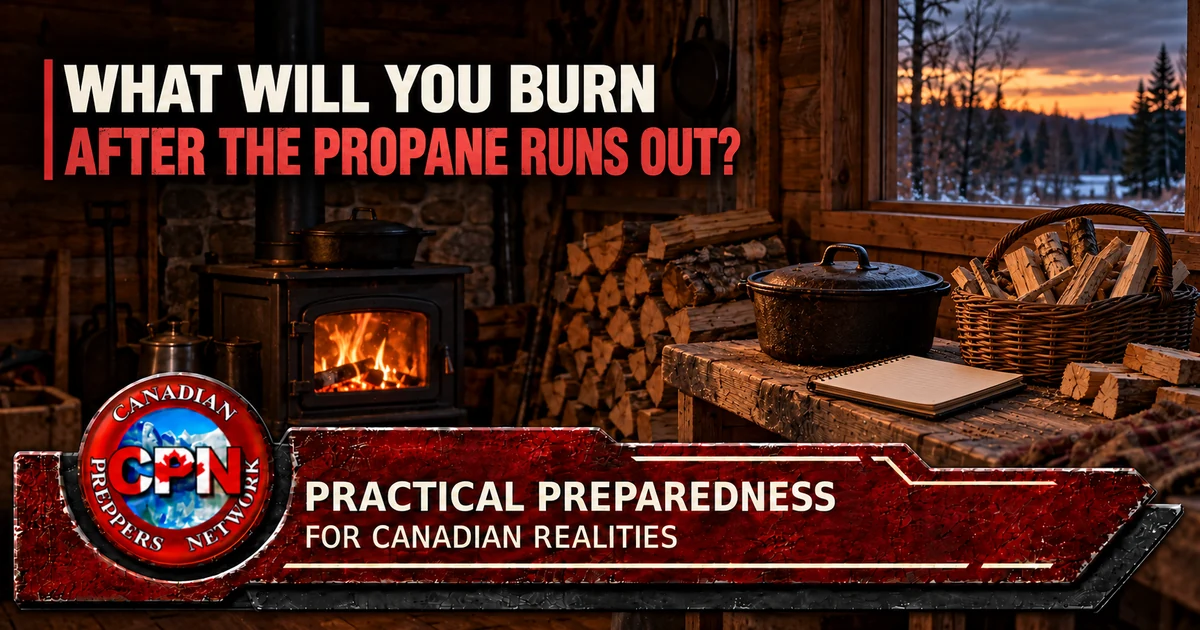
A cooking plan needs a second fuel before the first one is gone.
A propane stove can make a power outage feel manageable. The lights are out, but you can still boil water and put supper on the table. The harder question comes later: if cylinders cannot be refilled, what takes over?
A second stove that uses the same propane supply is not a second plan. Neither is a wood stove you have not installed, a charcoal grill you cannot safely use where you live, or a pantry full of dry food that needs hours of cooking. The useful plan is a sequence: conserve your easiest fuel, move suitable jobs to another heat source, and change the meals before cooking becomes a daily fuel crisis.
First, Find Out What the Propane Actually Does
“Enough propane for a month” means little without a record of how you use it. A household heating water for drinks and warming ready-to-eat meals has a different demand from one simmering dry beans, cooking three hot meals and heating washing water every day.
Before an outage, cook a few ordinary days’ meals on your backup setup. Record:
- The fuel used and the meals prepared.
- Every separate pot of water heated.
- How long the burner ran, including food preparation and cleanup.
- Which dishes required a long simmer.
- Whether the equipment worked reliably in the weather and location where you would actually use it.
Repeat the exercise in cold, windy weather if that is part of your Canadian winter plan. There is no honest universal “meals per cylinder” figure: the stove, cookware, wind, menu and amount of water all change the result. Your own test gives you a starting number you can improve.
Do not count propane reserved for an essential heater, refrigerator or other appliance as cooking fuel. Write down which supply belongs to which job. A tank cannot serve two plans after it is empty.
Make the Fuel Last Before Switching Sources
The first transition is from long cooking to short cooking. Use ready-to-eat preserved meals, quick-cooking grains and foods that need only reheating when fuel is scarce. Soak appropriate dry foods before cooking; prepare larger batches when safe storage and prompt consumption are possible. Put a lid on the pot and heat only the water you need.
A retained-heat cooker can continue cooking certain foods after a pot has been heated, but it is a method to practise, not a promise that every recipe will finish safely or on time. Follow established food-safety practices, especially with meat and other foods that require thorough cooking.
The pantry needs the same examination as the stove. If most of your stored food needs prolonged boiling, your food reserve contains a hidden fuel bill. Plan some complete meals that can be eaten cold, some that need a brief reheat, and some that justify a longer cooking session. Save the labour-heavy meals for times when the fuel supply supports them.
Go Beyond the Daily Post
CPN Gold supports independent Canadian preparedness publishing and provides access to exclusive resources and a deeper monthly intelligence briefing.
Choose a Second Source That Can Do the Job
A second fuel is useful only if you have the appliance, a safe place to operate it, and a way to replenish the fuel.
| Heat source | Where it may fit | What can defeat the plan |
|---|---|---|
| Properly installed wood cookstove or suitable wood stove | Regular cooking alongside winter heating | No seasoned wood, poor draft, unsuitable cooking surface, damaged chimney or constant tending |
| Outdoor wood-burning cooker | Boiling water and cooking where a safe outdoor work area is available | Wet fuel, wind, fire restrictions, smoke and the labour of gathering wood |
| Outdoor charcoal cooker | Controlled cooking with stored or locally produced fuel | Finite supply, charcoal-making labour, outdoor-only operation and the risk of bringing embers indoors |
| Solar cooker | Some daytime cooking when conditions and the menu suit it | Cloud, short winter days and no dependable evening heat |
| Existing natural-gas cooking appliance | Short outages where gas service continues and the appliance works without grid power | Service loss or model-specific ignition and operating limits |
This is a set of conditional choices, not a shopping list. An apartment household with no suitable outdoor cooking space cannot simply adopt the rural household’s wood-and-charcoal plan. A rural household surrounded by trees still needs permission to harvest, tools to process wood, drying time and a safe stove.
Producing charcoal requires wood, space, skill and work. It is not an effortless replacement for a full propane cylinder. A wood stove used for cooking must be suitable for that purpose and properly installed and maintained.
Draw a Firm Line Around Indoor Cooking
Desperation makes unsafe arrangements look reasonable. A barbecue in a garage with the door open, a charcoal cooker beside an open window, or a camping stove on the kitchen counter is not an indoor backup kitchen.
Federal power-outage guidance says outdoor fuel-burning cooking equipment, including barbecues, camping stoves and portable burners, must not be used indoors. Health Canada’s portable-butane guidance also says those stoves must not be used in confined spaces. Carbon monoxide has no reliable smell or visible warning. Keep working smoke and carbon-monoxide alarms in the household; alarms are protection against a failure, not permission to bring outdoor equipment inside.
An installed indoor appliance is a different category from an outdoor cooker carried into a room. Use each appliance only as designed and maintained. If your location has no safe way to burn a second fuel, change the food plan toward meals requiring little or no heat, and identify another suitable place to cook before an emergency.
Keep Practical References on Hand
The CPN Supply Shop carries preparedness books and CPN merchandise. Purchases help support the articles and guides published by Canadian Preppers Network.
The Woodpile Has Its Own Countdown
Wood may be locally available, but usable cooking fuel does not appear at the stove by itself. Someone must obtain it, cut it, split it, dry it, store it and carry it. That work competes with hauling water, repairing shelter and every other job in a long disruption.
Keep seasoned, stove-sized fuel protected and accessible. Keep tools and spare parts that you know how to use. Decide who can process wood if the usual person is ill or injured. A heap of fresh logs is future fuel; it should not be counted as tonight’s supper.
Local fire rules also matter. Restrictions can affect outdoor cooking methods, and conditions can change. An indoor, properly installed system and an outdoor fire are subject to different requirements; check the rules for your location before building an outdoor fuel plan.
Write the Transition Down
Make a one-page fuel plan with three stages:
- Stored-fuel stage: Which meals and essential hot-water tasks deserve propane? What measurable reserve triggers conservation?
- Mixed-fuel stage: Which safe cooking jobs move to wood, charcoal or another available source? Who sets up, tends and cleans that equipment?
- Resupply-failure stage: What can you still cook when manufactured fuel is gone? Which foods can be eaten without cooking? How will you obtain and process the remaining fuel?
Then run one day of meals using the second stage. Measure the fuel and the work. Change the menu or equipment where the test fails.
Propane is valuable because it is clean, controllable and ready when you need it. Use those advantages deliberately. The point of a second fuel is to keep feeding the household after the convenient one becomes scarce—not to discover, over an empty cylinder, that every “backup” still depends on a delivery truck.
Which cooking task would consume your stored fuel fastest: meals, drinking water or washing water?
Free Canadian Grid-Down Starter Kit
Use the printable first-72-hours checklist to find weak points in your household’s food, water, heat, power and operating routines before a real outage does.
Related Reading
- Energy Production in Canada — plan fuel and power as parts of the same household system.
- Cooking When the Grid Is Gone — build meals around fuel, water, tools and time.
- Making and Using Charcoal on the Homestead — examine the work behind one possible replacement fuel.
Cooking-Fuel Planning Equipment
These tools support a tested cooking plan. Choose equipment suited to your appliance and where it can be operated safely.
- Firewood moisture meters for checking split wood before it goes into an approved stove.
- Lidded cast-iron Dutch ovens for suitable stove and outdoor cooking setups.
- Thermal cookers for practising retained-heat recipes.
- Heavy-duty manual can openers for meals that need little or no cooking fuel.
- Battery-operated carbon-monoxide alarms for household protection.
- Home fire extinguishers for an appropriate cooking-area fire-safety plan.
As an Amazon Associate, Canadian Preppers Network may earn from qualifying purchases at no additional cost to you.