How to Gather, Melt, and Purify Snow Safely After a Storm
A major snowfall doesn’t just create hazards—it delivers one of the largest short-term water windfalls of the year. While most households see buried driveways and frozen pipes, prepared households see hundreds of litres of raw water already on site.
Used correctly, snowfall becomes an asset.
This article shows how to safely turn fresh snow into drinking and utility water during winter disruptions—using methods that work in real Canadian conditions.
Why Snowfall Is a Strategic Water Opportunity
Unlike lakes or rivers:
- Snow is already at your doorstep
- It doesn’t require travel or exposure
- It can be harvested quietly
- It stores naturally until processed
One good storm can supply weeks of household water if handled properly.
This approach pairs well with long-term storage strategies already covered in
Off-Grid Water Storage for Canadian Climates
https://canadianpreppersnetwork.com/off-grid-water-storage-for-canadian-climates/
Step 1: Smart Snow Collection (Clean In = Clean Out)
Not all snow is suitable for drinking.
Best Snow to Collect
- Fresh snowfall within 12–24 hours
- Snow collected below the surface layer
- Clean yards, decks, or open ground
Snow to Avoid
- Roadside and driveway snow (salt & fuel)
- Roof runoff (grit, shingles, bird waste)
- Windblown crusted snow
Use food-grade buckets or bins and lightly compact snow as you gather—it melts faster.
This complements the winter water discipline discussed in
Dealing With Heavy Snowfall When Grid Down
https://canadianpreppersnetwork.com/dealing-with-heavy-snowfalls-when-grid-down/
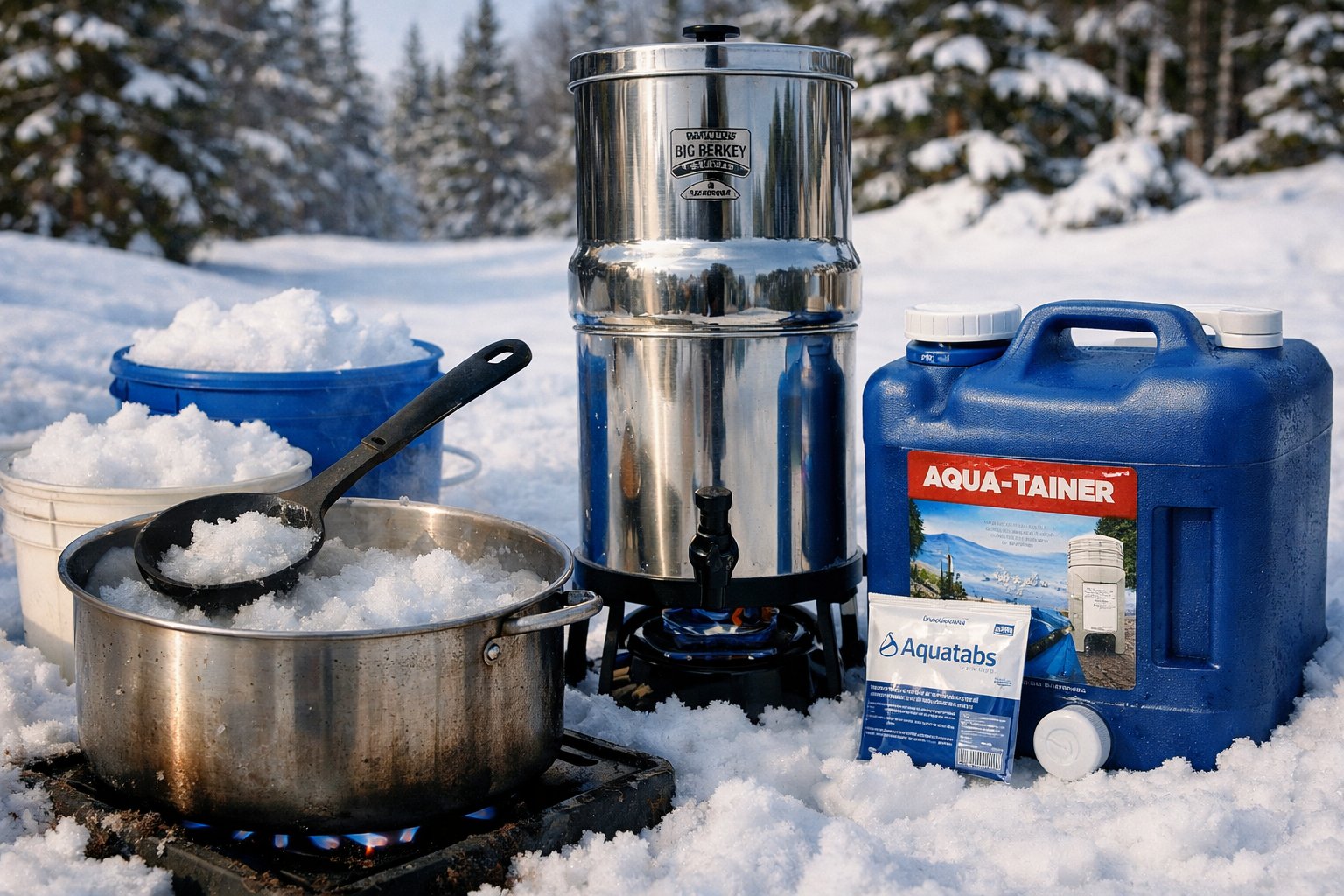
Step 2: Fuel-Efficient Snow Melting
Snow is mostly air. Expect roughly 10 litres of snow to yield 1 litre of water.
Best Practices
- Start with a small amount of liquid water in the pot
- Add snow gradually
- Keep the lid on to retain heat
- Use a wood stove top when available
Never eat snow directly—it accelerates dehydration and hypothermia.
Step 3: Filter All Snowmelt (Always)
Snow captures airborne contaminants during its fall and while sitting exposed. Melting concentrates those contaminants.
A gravity system like the Big Berkey Water Filter System works well off-grid and in winter conditions:
https://www.amazon.ca/dp/B00CYG1UPK
Allow snowmelt to warm slightly before filtering to protect filter elements and improve flow.
Step 4: Purify for Redundancy
Filtration alone does not reliably address viruses.
Chemical purification is ideal in cold weather:
- No fuel required
- Lightweight
- Long shelf life
Aquatabs Water Purification Tablets remain reliable during winter use:
https://www.amazon.ca/dp/B001949TKS
Filter first. Treat second.
Step 5: Store Snow-Derived Water Correctly
Once treated, snowmelt should be handled like any potable supply:
- Opaque, food-grade containers
- Stored indoors to prevent freezing
- Rotated before long-term reserves
Reliance Aqua-Tainer (26 L) containers are ideal for winter rotation:
https://www.amazon.ca/dp/B000QSMWRK
Snowmelt for Non-Drinking Uses
Snowmelt is excellent for:
- Hand washing
- Dish cleaning
- Laundry soaking
- Toilet flushing
Using snowmelt for hygiene preserves your treated drinking water—an approach reinforced in
Winter Grid-Down Sanitation Challenges
https://canadianpreppersnetwork.com/winter-grid-down-sanitation-challenges/
Snow as a Temporary Sanitation Advantage
Cold temperatures slow bacterial growth. When managed properly:
- Snow buffers odour from waste storage
- Frozen ground delays decomposition
- Time is gained until spring disposal
This is a short-term advantage, not a permanent solution—covered further in
Homestead Waste Management Basics
https://canadianpreppersnetwork.com/homestead-waste-management-basics/
Late-Winter Snowfalls: The Best Harvest Window
Late winter storms are ideal:
- Fewer biological contaminants than spring runoff
- Lower temperatures slow spoilage
- High household water demand
This is the season to refill reserves and stress-test your water systems before thaw.
Final Thought
Snowfall isn’t a setback—it’s a resource delivery.
Prepared households don’t just endure winter storms.
They harvest them.
If you can gather, melt, filter, and store snow safely, winter becomes one of your strongest water seasons—not your weakest.