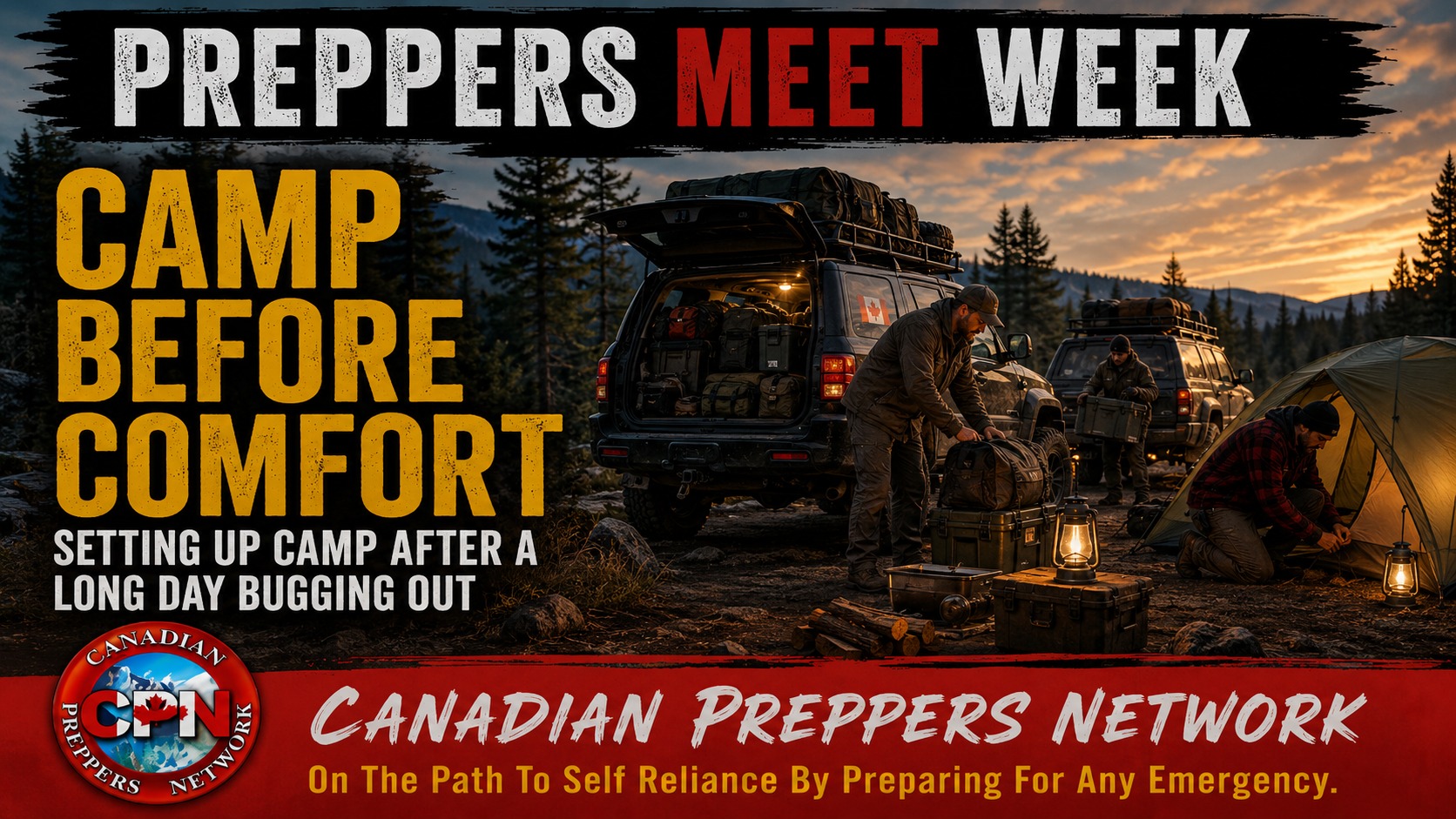
Setting Up a Safe, Functional Camp When You Arrive Tired, Hungry and Running Out of Daylight
After hours on the road, the temptation is to stop the vehicle, pull out a chair and declare the journey over. In a real bug-out, however, reaching a destination is only half the job.
Before darkness, bad weather or exhaustion takes over, a tired group must turn an unfamiliar patch of ground into a safe and functional camp. Shelter must be established, water secured, cooking organized, equipment checked and people assessed—all while everyone is hungry, stiff and ready to stop working.
That is what makes camp setup such an important preparedness skill.
A plan that works when everyone is rested in the backyard may fall apart after a stressful day of detours, poor roads, radio traffic, fuel concerns and repeated loading and unloading. Your camp setup procedure must still work when nobody has the energy to improvise.
Stop Before You Unload
One of the most common mistakes is opening every vehicle and scattering equipment before deciding whether the location is actually suitable.
When the convoy or family arrives, leave the gear packed for a few minutes. Walk the immediate area and look for problems that may not be obvious from the driver’s seat.
Check the ground for drainage. A flat patch of grass may become a shallow pond during heavy rain. Look uphill for channels, depressions or exposed soil showing where water has flowed before.
Look above you as well as around you. Dead branches, damaged trees and unstable overhead material can turn a convenient campsite into a dangerous one. Consider wind exposure, nearby slopes, insect activity, animal signs and how close the site is to roads, trails or other people.
Vehicle access also matters. A site may be easy to enter in dry daylight and nearly impossible to leave after rain or during darkness. Avoid parking every vehicle nose-first into a confined space. Whenever practical, position vehicles so they can leave without complicated turning or rearranging.
In a serious emergency, a camp is not simply where you sleep. It is a temporary position that may need to be abandoned quickly.
Confirm the Site Before Building the Camp
Before unloading, gather the group for a short briefing. Confirm where shelters will go, where vehicles will remain, where cooking will take place and which areas should remain clear.
This does not need to become a lengthy committee meeting. A tired group benefits from simple decisions made early.
One person should coordinate setup. That person does not need to perform every task, but someone must see the whole picture. Otherwise, three people begin assembling the same tent while nobody establishes lighting, checks the children or determines where the water containers should go.
A useful camp layout separates sleeping, cooking, sanitation, equipment storage and vehicle movement. The exact arrangement will depend on the site, but the principle remains the same: activities that create smoke, food smells, waste or traffic should not be crowded directly against sleeping areas.
Leave clear walking routes through camp. Once darkness arrives, poorly placed ropes, tools, bins and equipment become trip hazards. A functional camp should remain understandable even to someone moving through it with a dim light.
Assign Jobs Immediately
After a long travel day, people naturally drift toward the jobs they find easiest. Someone starts unpacking food. Another rearranges a backpack. Someone else disappears into a tent that is not yet properly secured.
Assigned responsibilities prevent that.
One person or team can establish shelter. Another can handle lighting and communications. Someone can check water, begin a simple meal and establish sanitation. Another person can inspect vehicles, pets and vulnerable group members.
Job assignments should reflect ability rather than pride. The strongest person may be better used moving heavy equipment, while someone with less physical energy can inventory supplies, prepare radios or organize the sleeping area.
Children can also be given useful, age-appropriate jobs. Collecting tent pegs, organizing bedding, carrying empty water containers or placing lights helps keep them involved and reduces confusion.
The objective is not to create a military camp. It is to prevent fatigue from turning setup into a disorganized pile of half-finished tasks.
Shelter Comes Before Comfort
Unless someone needs immediate medical attention, shelter should be one of the first priorities.
Weather can change quickly, and darkness makes every shelter problem more difficult. Tent poles become harder to identify, anchor points disappear and small repairs become frustrating when handled by flashlight.
Begin with the shelter needed by the most vulnerable members of the group. Children, older adults, injured people and anyone affected by cold, heat or illness should have somewhere protected to rest as soon as possible.
Do not stop when the tent is merely standing. Secure it properly. Use the available anchor points, check the direction of doors and vents, and confirm that rain will not flow beneath the floor. Place bedding and sleep systems inside before moisture settles or condensation begins.
If tarps are part of the system, use them deliberately. A tarp may provide a dry work area, protect the camp entrance or create a sheltered cooking area where appropriate. It should not be stretched so low or poorly that it collects water or creates another obstacle in the dark.
A good shelter setup protects more than sleeping bags. It creates a place where the group can warm up, treat injuries, organize equipment and recover from the day.
Establish Light Before You Need It
Waiting until dark to find lanterns is a reliable way to discover that batteries are dead, charging cables are missing or the light is buried beneath everything else.
Lighting equipment should be packed where it can be reached early. Set up the minimum lighting needed for safe movement before daylight disappears.
Use light carefully. Bright illumination may make camp easier to manage, but it can also advertise the group’s location over a considerable distance. In normal campground conditions, this may not matter. During a serious disruption, light discipline could become important.
Place low-level lighting near shelter entrances, sanitation routes and work areas rather than flooding the entire site. Headlamps allow people to work with both hands, but users should avoid shining them directly into other people’s eyes.
Every person should know where a light is located before going to sleep. Finding one should not require searching through an unfamiliar tent during an emergency.
Check Water Before Preparing Food
People arriving after a long journey are often more dehydrated than they realize. Drivers may deliberately drink less to avoid stops, while heat, stress and physical work continue to increase water needs.
Confirm the group’s water supply early. Determine what is immediately drinkable, what must be treated and what must be conserved.
Keep drinking water separate from water intended for washing or cleaning. Clearly marked containers help prevent confusion, especially when everyone is tired.
If the camp depends on a nearby source, do not assume clear water is safe. Treatment and filtration procedures should already be part of the group’s plan. The first evening is not the time to discover that a filter is missing a component or that nobody remembers how to use it.
Give people water before they become focused on cooking. A simple drink and small snack can improve patience, concentration and physical performance during the final stages of setup.
Sanitation Cannot Wait Until Morning
Sanitation is easy to postpone because it feels less urgent than shelter or food. That usually results in people wandering away from camp after dark with no agreed location, no lighting and no system for waste.
Establish a sanitation area before it is needed.
It should be located away from sleeping and food preparation areas and positioned so runoff will not carry waste toward camp or water. The exact setup may involve campground facilities, a portable toilet or another appropriate emergency system.
Everyone should know where it is, how it will be used and what supplies are available. Toilet paper, hand-cleaning supplies, waste bags and lighting should be accessible.
Hand hygiene becomes especially important in a temporary camp. A group can tolerate limited comfort far better than an outbreak of stomach illness.
Pet waste also requires a plan. Animals should not be allowed to roam through food preparation or sleeping areas, and waste should be dealt with promptly.
Make the First Meal Easy
The first meal after arrival is not the time to unpack an elaborate field kitchen.
A tired group needs something warm, quick and familiar. Meals that require only hot water, a single pot or minimal cleanup are ideal for the first night. Freeze-dried meals, canned food, soup, stew or another prepared option may be far more practical than beginning with ingredients that require extensive preparation.
The first meal should already be near the top of the food container. If dinner is buried under several days of supplies, the packing system has failed.
Cooking equipment should also be ready to use without emptying the entire vehicle. Fuel, stove, ignition method, pot, utensils and a fire extinguisher or other appropriate safety equipment should be stored together.
Keep cooking away from tents, fuel containers, dry vegetation and vehicle exhaust. Never use equipment that produces dangerous fumes inside a closed shelter.
Food preparation is also an opportunity to check the group. People who are unusually quiet, confused, irritable or unsteady may be dealing with exhaustion, dehydration, low blood sugar or another developing problem.
Inspect People Before Inspecting Gear
Vehicles and equipment matter, but people should be checked first.
Ask about headaches, dizziness, nausea, pain, numbness, blisters and any injuries that occurred during travel. Minor problems become larger when ignored overnight.
Check children, older adults and anyone with an existing medical condition. Confirm that needed medication is accessible rather than buried in a vehicle.
Pets should be offered water and checked for paw injuries, overheating, cold stress, ticks or other problems. A dog that travelled quietly for hours may still need time to settle before it eats or sleeps.
Once people are stable, inspect the vehicles and critical equipment. Look for loose straps, shifted loads, damaged tyres, leaks and anything that must be corrected before the next movement.
Do not postpone every problem until morning. A slow leak, unsecured load or damaged cable may become harder to manage after a cold night or early departure.
Build the Camp for a Fast Departure
A temporary camp should not become a yard sale.
Only unpack what is needed for the night. Keep reserve equipment organized in vehicles or sealed containers. Avoid spreading important supplies among multiple shelters where they may be forgotten.
Keys should remain in an agreed location. Radios, maps, footwear, outer clothing and essential personal equipment should be accessible. Nobody should need to search for boots while the group is trying to leave.
Consider how the camp would be packed in a hurry. Which equipment can be abandoned if necessary? What must leave with the group? Which vehicle carries the medical supplies, water and communications gear?
A simple overnight camp should be easier to break down than it was to establish.
Set an Overnight Routine
Before people disappear into their shelters, conduct one final check.
Confirm the weather outlook if information is available. Review the morning departure time and identify who is responsible for waking the group.
Radios and phones should be charged or placed on power banks. Secure food, waste and scented items appropriately for the area. Confirm that cooking equipment is off and that ignition sources are controlled.
In a normal campground, an overnight routine may be as simple as locking vehicles and confirming where everyone is sleeping. During a more serious emergency, the group may decide that one person should remain alert while others rest.
Any watch system must account for fatigue. Someone who drove all day and then built camp may not be capable of remaining attentive for several more hours. Rotate responsibilities fairly and prioritize meaningful rest.
Exhausted people make poor decisions. Sleep is not a luxury when the group may need to travel again the following day.
Practise This at Preppers Meet
The trip to Preppers Meet provides an excellent opportunity to test a real camp setup after a genuine travel day.
Rather than treating arrival as the end of the exercise, attendees can use it to evaluate how well their system works when the vehicle is fully loaded and everyone is tired.
Start a timer before opening the vehicle.
How long does it take to establish shelter, lighting, water and a cooking area? Is the first-night food accessible? Are tent pegs buried beneath supplies? Can the group find headlamps without unloading half the vehicle?
Pay attention to the order in which equipment was packed. Gear needed immediately upon arrival should be among the easiest items to reach. Equipment intended for later in the weekend can be stored deeper.
Preppers Meet also offers an opportunity to observe other camp systems. A neighbour may have a faster shelter method, a better lighting arrangement or a more efficient way to organize water and cooking equipment.
The goal is not to compete over who owns the most gear. It is to discover which systems continue working after a long journey.
Take notes once camp is established. Identify what was forgotten, what was difficult to reach and what was carried but never needed. Those lessons can improve both future camping trips and a real bug-out plan.
A Good Camp Reduces Tomorrow’s Problems
A well-organized camp does more than provide a place to sleep.
It protects the group from weather, reduces injuries, preserves food and water, supports hygiene and prepares everyone for the next day. It also creates calm after a stressful journey.
A poor camp does the opposite. Equipment disappears, people become colder and more tired, meals take too long and the next departure begins in confusion.
That is why camp must come before comfort.
The chair can wait. The long conversation can wait. Even the full meal can wait for a few minutes.
First assess the site. Establish shelter. Set up light, water and sanitation. Check the people. Organize for the night and prepare for the morning.
Reaching the destination ends the drive.
It does not end the bug-out.