By late January in Canada, winter stops being dramatic and starts being grinding. The storms blur together. Daylight is scarce. Plans get delayed. Even well-prepared households begin to feel stretched — not because they lack supplies, but because endurance is being tested.
This is the point in the season where preparedness quietly shifts from stockpiles and equipment to psychological resilience and social cohesion. Food, heat, and power keep you alive — but mindset and community determine whether people remain functional, cooperative, and capable of making good decisions over time.
Mental resilience is not about positivity. It’s about stability under prolonged stress.
Winter as a Long-Duration Stressor
Most preparedness planning focuses on acute emergencies: a storm, an outage, a sudden disruption. Canadian winters rarely work that way. They are cumulative. One weather event rolls into the next. Roads stay bad. Power flickers. News cycles reinforce uncertainty. Isolation increases.
Over time, this constant low-grade stress degrades judgment. People rush decisions, overreact to minor problems, or mentally disengage altogether. This is why experienced preppers treat winter as a long-duration scenario, not a series of isolated events.
This concept is explored in several CPN articles on winter readiness, including:
- Winter Grid-Down Survival in Canada
https://canadianpreppersnetwork.com/winter-grid-down-survival-canada/ - Coping With Extreme Cold Without Power
https://canadianpreppersnetwork.com/dealing-with-extreme-cold-grid-down/
These pieces focus on physical survival — but mental endurance is what allows those plans to be executed correctly.
Why Community Is a Force Multiplier in Winter
Isolation feels safer on paper. In practice, it is fragile.
Winter magnifies risk. Slips become injuries. Illness lingers longer. Fatigue accumulates. A single point of failure — one sick adult, one damaged vehicle, one emotional breakdown — can destabilize an otherwise solid household.
Small, trusted communities distribute risk:
- Labour is shared
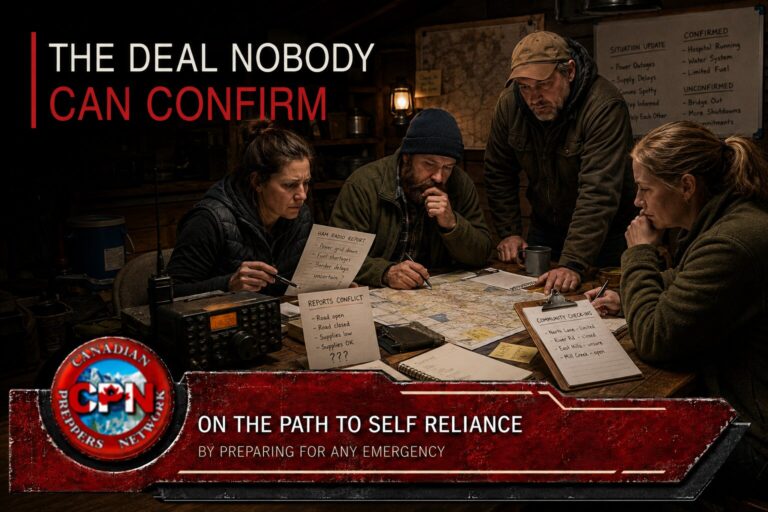
- Information travels faster
- Emotional load is reduced
- Skills overlap instead of bottlenecking
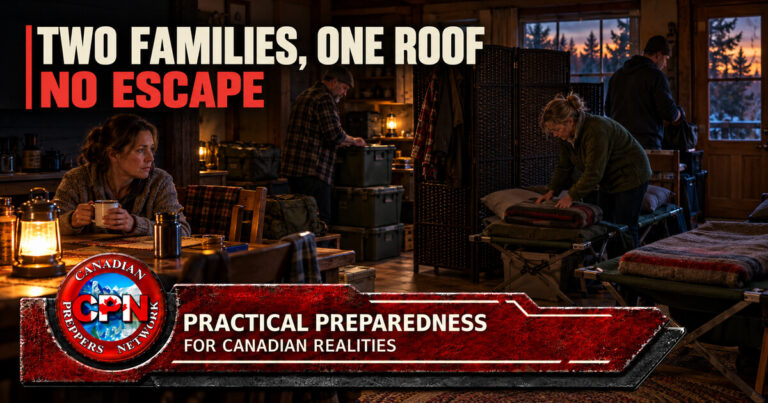
This doesn’t require a formal group or retreat. In many Ontario communities, resilience begins with two or three neighbouring households agreeing to check in after storms, share situational updates, or coordinate tasks like snow removal and firewood processing.
Long-term community-centric preparedness is a core theme in Acres of Preparedness: Planning the Last Safe Place, which documents how people — not supplies — form the foundation of durable survival systems.
(Available on Amazon.ca: https://www.amazon.ca/dp/B0F44GV789?tag=canadpreppn01a-20)
Routine: The Hidden Anchor of Mental Resilience
When the external world becomes unpredictable, routine creates psychological safety.
This is especially important during winter grid instability or prolonged bad weather. Even simple, flexible schedules help prevent mental drift:
- Fixed meal times
- Morning equipment checks
- Evening planning or review sessions
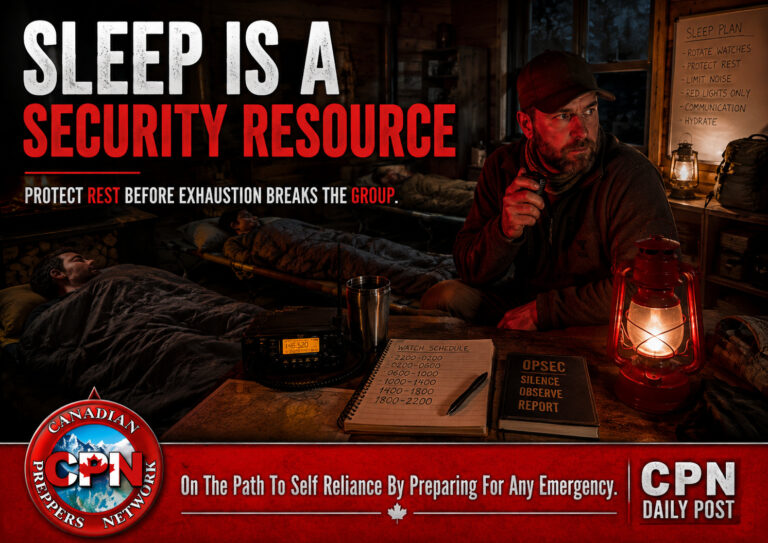
- Regular sleep and wake cycles
Routines reduce decision fatigue. They give structure to days that would otherwise blur together. Communities that maintain rhythm stay calmer and more cooperative under stress.
This is why many seasoned preppers intentionally avoid “waiting it out.” Instead, they stay busy with purposeful, repeatable tasks — even when nothing appears urgent.
Morale Is a Resource — Treat It Like One
Morale is often dismissed as a luxury. In reality, it is a finite resource that must be managed just like fuel or food.
During winter, morale erodes quietly:
- Cold reduces patience
- Darkness affects mood
- Isolation amplifies small frustrations
Simple countermeasures matter:
- Warm lighting instead of harsh overhead LEDs
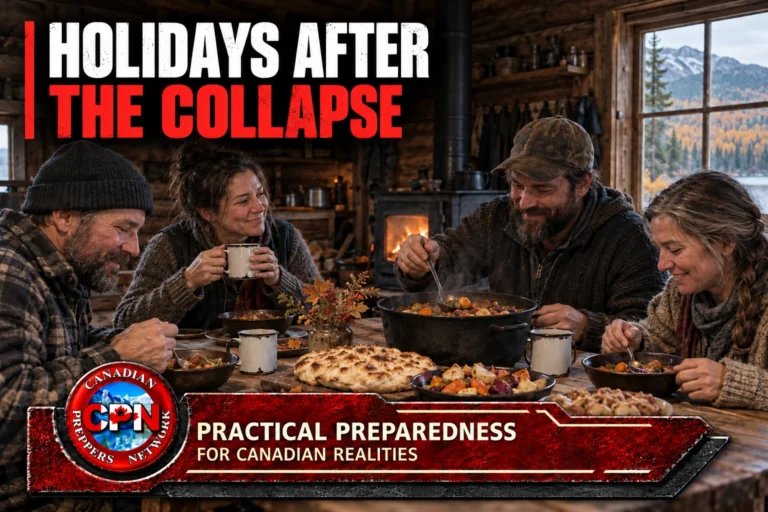
- Shared meals eaten together, not separately
- Music or talk radio during repetitive chores
A reliable emergency radio with lighting, such as the Midland ER310 Emergency Weather Radio (Amazon.ca: https://www.amazon.ca/dp/B01M2UOVF9?tag=canadpreppn01a-20), serves more than a practical purpose. It restores connection and situational awareness, which directly reduces anxiety when networks go down.
Informal Leadership Under Stress
In winter emergencies, leadership rarely comes from titles. It comes from behaviour.
People gravitate toward those who:
- Stay calm when others escalate
- Communicate clearly without exaggeration
- Break problems into manageable steps
- Maintain consistency day after day
This type of leadership is especially critical in multi-family homes, rural properties, or retreat-style setups common across Central Ontario.
Strong leaders don’t dominate — they stabilize. They prevent panic, reduce conflict, and keep momentum moving forward even when conditions are unpleasant and repetitive.
Managing Conflict in Close Quarters
Cabin fever is not a cliché — it’s a predictable outcome of confinement, stress, and fatigue.
Prepared households and groups plan for interpersonal strain before it becomes destructive:
- Clear expectations about responsibilities
- Rotating tasks so no one feels trapped in a role
- Designated quiet time or private space, even if limited
Ignoring conflict doesn’t preserve harmony — it accelerates breakdown. Addressing small tensions early is a core component of winter resilience.
For larger groups, this ties directly into planning guidance covered in:
- Building Survival Group Alliances
https://canadianpreppersnetwork.com/building-survival-group-alliances/
Purposeful Work Prevents Mental Collapse
Idle time amplifies anxiety. Purpose absorbs it.
Winter offers no shortage of productive, non-urgent tasks:
- Inventory checks and resupply planning
- Equipment maintenance and repair
- Skills refreshers and tabletop scenarios
- Documentation of lessons learned from recent storms
Writing plans down matters. A durable option like the Rite in the Rain All-Weather Notebook (Amazon.ca: https://www.amazon.ca/dp/B000J09CO6?tag=canadpreppn01a-20) allows planning, journaling, and tracking even when power and devices are unreliable.
Purpose keeps people forward-focused instead of trapped in rumination.
Looking Forward Without Escaping Reality
Mental resilience is not denial. It’s the ability to acknowledge hardship while still planning ahead.
This is the time of year when resilient households:
- Plan spring gardens
- Review seed inventories
- Assign future labour roles
- Discuss improvements based on winter lessons
Forward planning creates hope rooted in action, not fantasy. It reinforces the understanding that winter is temporary — but preparation is continuous.
Final Thought
Winter doesn’t usually break people through catastrophe. It wears them down through duration.
Those who come out strongest are not the most heavily equipped — they are the ones who stayed connected, maintained structure, and protected morale as deliberately as they protected food and heat.
Mental resilience and community are not secondary pillars of preparedness.
They are the framework that keeps everything else standing when winter refuses to let go.