For preppers, hunting isn’t just a pastime—it’s a skill tied directly to survival. Whether you’re putting meat on the table today or preparing for a grid-down scenario, knowing how to safely harvest wild game is essential. But with that comes a critical responsibility: identifying signs of disease before you feed your family.
In a crisis, access to medical help may be limited, and food contamination could have serious consequences. This guide will help you recognize disease in wild game so you can avoid contaminated meat, protect your health, and maintain ethical harvesting practices.
1. Know What a Healthy Animal Looks Like Before You Pull the Trigger
In a survival situation, your first defense against diseased meat is observation. Take time to study the animal before taking a shot:
- Is it acting strangely? Look for stumbling, drooling, excessive aggression, or lack of fear toward humans.
- Does it appear underweight or have patchy fur? These are red flags for chronic illness or parasites.
- Does it isolate itself from the herd or move sluggishly? That could indicate neurological disease or weakness.
If an animal doesn’t behave or look right, don’t shoot it. Wasting a bullet is better than risking your health.
2. Field Dress With Awareness: What to Look For in the Carcass
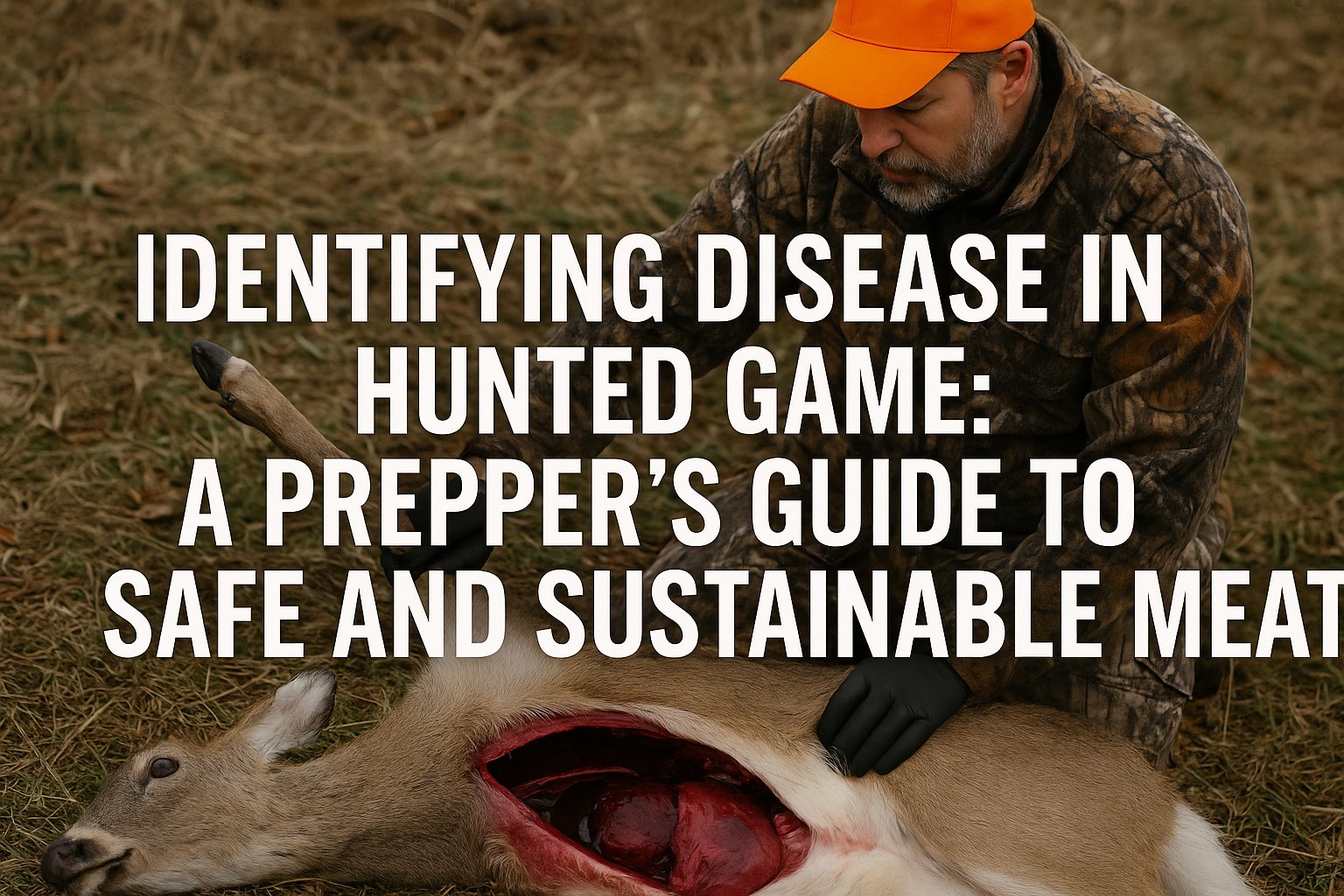
Once you’ve made the kill, field dressing becomes your inspection process. This is where you confirm whether the meat is safe for consumption or should be discarded.
Check the exterior:
- Open sores, tumors, hair loss, or unusual growths
- Abnormal smells that don’t match typical game scent
- Foam, discharge, or blood from the mouth, nose, or eyes
Examine the internals:
- Liver and lungs: Look for white spots, abscesses, or unusual color
- Heart and kidneys: Should be firm and clean, not pale or full of cysts
- Meat: Watch for worms, grubs, or discoloration in muscle tissue
- Fluids: Any green, milky, or excessive fluid inside the body cavity is a major warning sign
Always carry nitrile gloves, a good field knife, and a trash bag in your kit for proper handling and waste disposal.
3. Be Aware of Local Wildlife Diseases Preppers Should Know
Diseases can vary by region, but here are several major ones that preppers across North America should be prepared for:
Chronic Wasting Disease (CWD)
- Affects deer, elk, moose. No cure, fatal to animals.
- Look for weight loss, drooling, vacant stare, and staggering.
- Avoid consuming brain, spinal tissue, or lymph nodes.
Tularemia
- Common in rabbits and rodents.
- Causes white spots on liver/spleen; highly infectious to humans through cuts or inhalation.
- Burn or bury infected carcasses well away from camp.
Trichinosis
- Found in bears, wild pigs, and other carnivores.
- Microscopic parasites in muscle tissue.
- Cook meat to 165°F (74°C) minimum—especially important if power outages impact refrigeration.
Bovine Tuberculosis
- Seen in deer and elk, causes lung lesions and swollen lymph nodes.
- Can transmit to humans via handling or improperly cooked meat.
Being able to identify these diseases isn’t just for today’s hunt—it’s future-proofing your food supply when the grocery stores are no longer an option.
4. Practice Clean, Controlled Meat Processing
Cleanliness is survival. During a crisis, infection from handling wild game could be just as dangerous as the disease itself. Follow these rules every time:
- Always wear gloves when dressing or butchering.
- Use dedicated knives for field work and clean them with alcohol or bleach when possible.
- Avoid cutting into intestines or stomach—this contaminates the meat and tools.
- Cook all game meat thoroughly and never eat it rare, especially if you don’t have modern refrigeration.
5. Trust Your Instincts—If It Looks Off, Leave It
In a long-term survival scenario, you may be tempted to keep meat from a questionable animal. Don’t. Eating tainted meat could cause illness that takes you out of commission—or worse. Your health is more valuable than a few pounds of meat.
Take notes or pictures of suspicious carcasses and mark the area to avoid spreading disease or returning during a future hunt.
Final Word for Preppers
Being able to identify and avoid diseased game is as vital to your preparedness as marksmanship or food storage. In a post-collapse world, you may not have a vet, butcher, or doctor to consult. It’s up to you to make the call—and make it right.
So be smart, be safe, and stay vigilant.
Healthy game is sustainable game. And sustainable game means long-term survival.