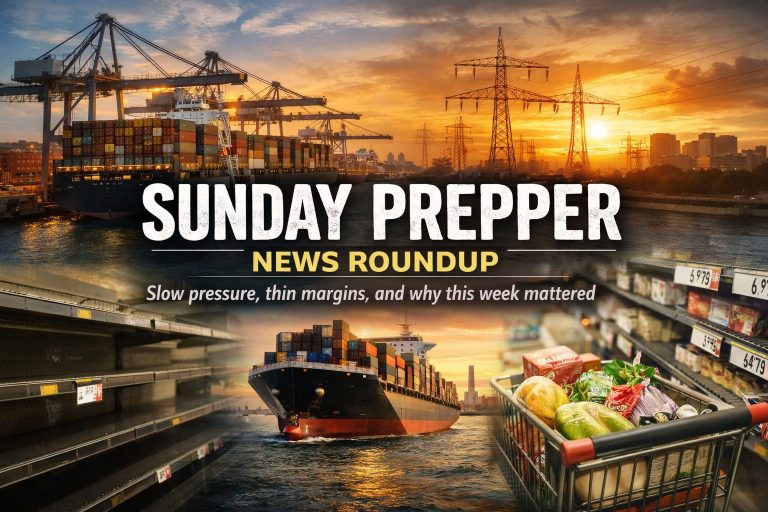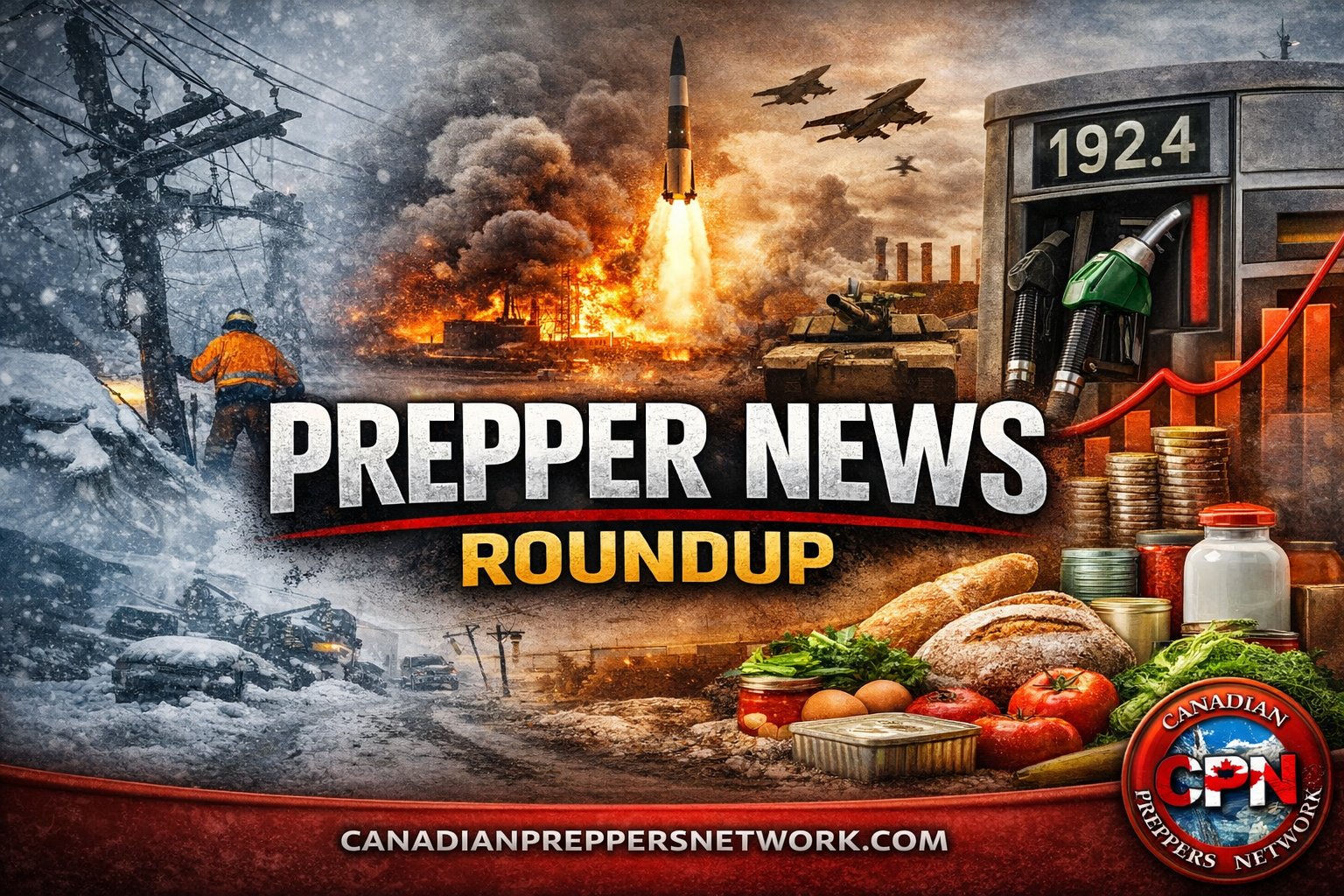
This past week did not deliver a single defining crisis. Instead, it revealed something far more important for those paying attention: multiple systems under pressure at the same time. Weather, energy, food, and global stability are all being tested—not collapsing, but straining. And that distinction matters, because strain is what precedes failure.
In mid-March, a powerful blizzard swept across large portions of North America, including Quebec and Ontario. Hundreds of thousands of Hydro-Québec customers lost power at the height of the storm. Roads were shut down, transport slowed, and emergency services were stretched thin. None of this is new in Canada. What is changing is how much disruption these events now cause relative to what infrastructure can comfortably handle.
Recovery windows are widening. Power is not restored as quickly in all regions, and supply chains take longer to stabilize. For households without backup heat, stored water, or alternative cooking methods, even a short outage becomes a serious problem within hours. These storms are no longer rare events—they are becoming part of the baseline environment.
At the same time, a far more serious example of infrastructure fragility unfolded abroad. The 2026 Cuban energy crisis resulted in widespread power failure, leaving millions without electricity. Driven by fuel shortages and systemic weakness, the collapse demonstrated how quickly a modern grid can fail when pressure exceeds capacity. Canada’s infrastructure is stronger, but the dependency model is the same. When power fails, everything else follows—water systems, communications, fuel distribution, and retail.
But the most important development this week—the one driving many of the others—is the escalating conflict involving Iran.
What began as targeted strikes has now evolved into a sustained, multi-theatre war involving the United States, Israel, and Iran. Air campaigns have expanded, missile infrastructure has been targeted, and retaliatory strikes have increased in scale. Iran has responded with missile and drone attacks across the region, targeting bases, infrastructure, and shipping routes.
The conflict is no longer contained.
There are now credible concerns about further escalation, including potential ground operations. At the same time, Iran has signaled that continued attacks on its infrastructure could trigger broader retaliation, particularly against energy systems in the region.
The critical point is not the battlefield itself. It is where the war intersects with global systems.
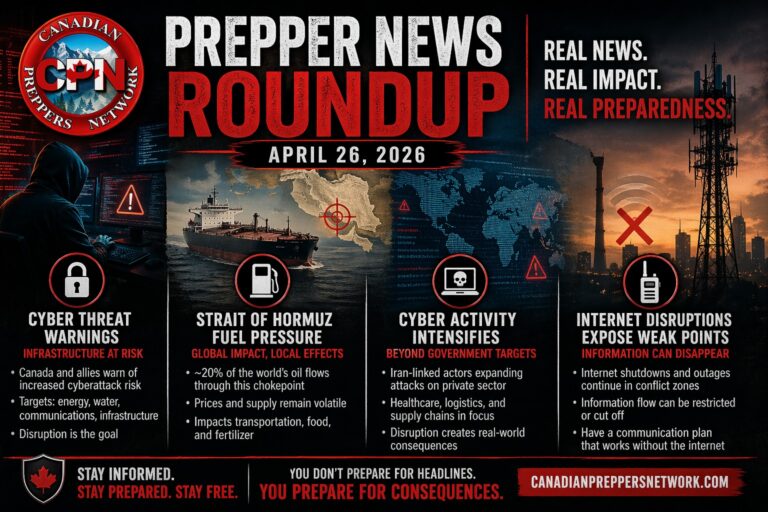
Roughly one-fifth of the world’s oil supply passes through the Strait of Hormuz—a narrow and vulnerable corridor that sits directly within the conflict zone. Any disruption there immediately affects global energy markets. We are already seeing the early stages of that impact. Oil prices have surged, and the effects are beginning to move through the system.
Fuel costs are rising again, and that change does not stay isolated. Fuel is the base layer of the modern economy. When it increases, transportation costs follow. When transportation costs rise, food prices respond. Manufacturing, shipping, and retail all adjust upward in sequence.
This is how a distant war becomes a domestic problem.
Canada does not need to be directly involved to feel the consequences. The exposure is built into the system. Increased fuel costs, tightening supply chains, and rising food prices are all downstream effects of instability in global energy corridors.
Food affordability is already under pressure. Despite claims of cooling inflation, Canadian households continue to spend more on groceries year over year. Staples, fresh produce, and protein sources remain elevated in price, driven by transportation costs, weather disruptions, and global instability. There are no widespread shortages yet, but affordability is tightening. That is often the first stage—when access becomes limited not by availability, but by cost.
At the same time, preparedness is quietly returning to the mainstream mindset. Not through panic, but through behaviour. More households are building deeper food reserves, investing in backup energy, and reconsidering their reliance on centralized systems. This shift is not driven by a single event. It is a response to a pattern that is becoming increasingly difficult to ignore.
Within preparedness circles, the conversation is also evolving. The focus is moving away from simple stockpiling toward redundancy and resilience. It is no longer just about how much you have, but how many ways you can access it. Distributed storage, backup systems, and layered planning are becoming standard thinking.
What stands out this week is not a single headline, but the alignment of multiple pressures.
Weather events are testing infrastructure.
War is destabilizing energy supply.
Fuel costs are rising.
Food affordability is tightening.
And examples of system failure are becoming more visible globally.
None of this points to immediate collapse. But it does point to a system operating with less margin for error than before.
Preparedness, in this context, is not about reacting to a single crisis. It is about recognizing that the systems you depend on are being pushed harder, more often, and with less capacity to absorb disruption.
That is where small, personal adjustments begin to matter.
Because when systems are under strain, resilience shifts from institutional to individual.