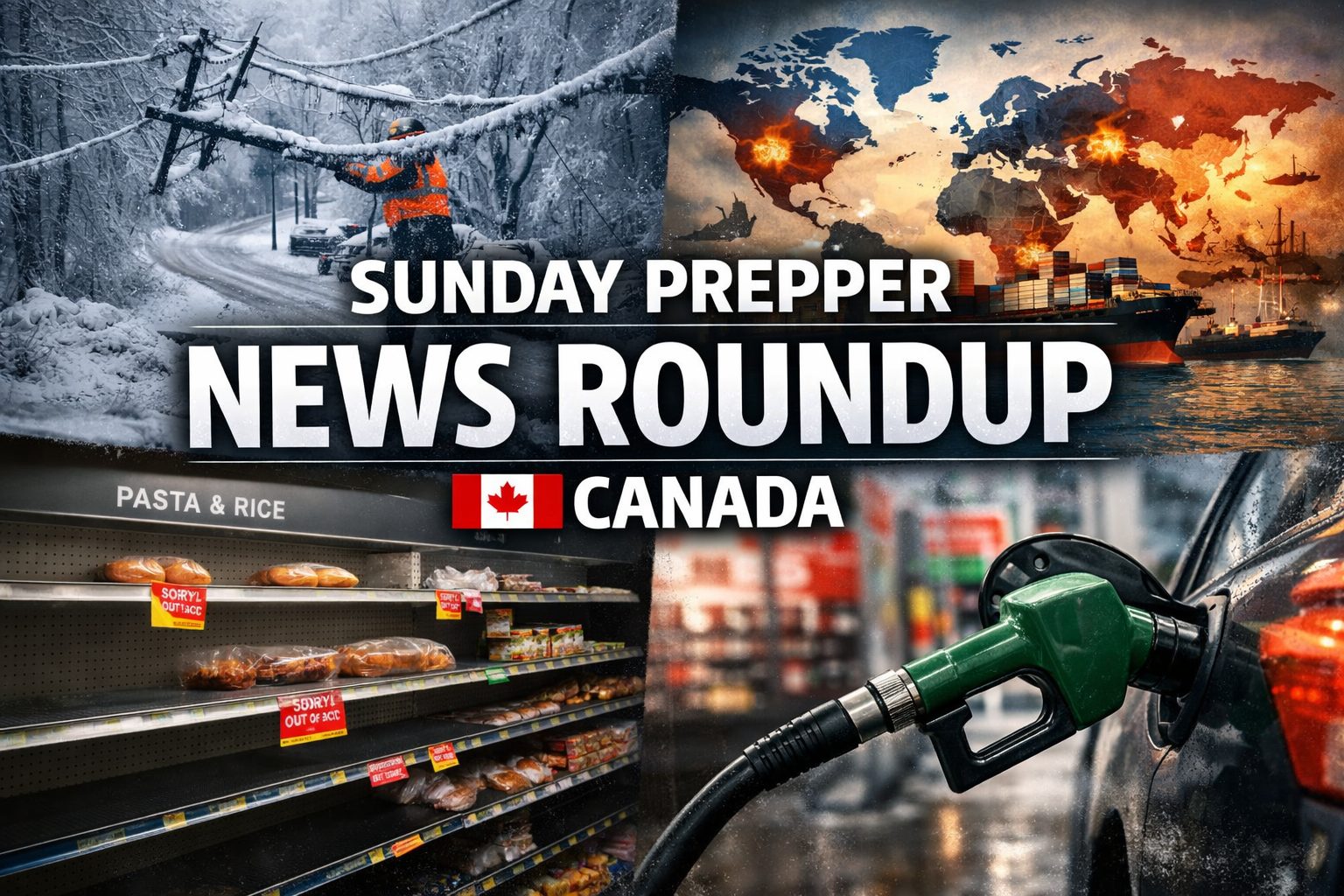
Winter Stress, Trade Tensions, and the Quiet Signals Preppers Watch
Week in Review
This past week delivered a familiar pattern for those paying attention: weather stress at home, geopolitical pressure abroad, and supply-chain fragility quietly linking the two. Nothing collapsed—but plenty creaked. For Canadian preppers, these are the weeks that matter most, because they reveal where systems bend before they break.
Below is a consolidated look at what actually happened, why it matters, and how it should inform preparedness thinking going forward.
❄️ Canada: Winter Weather Meets Fragile Infrastructure
Power Outages & Storm Impacts
Multiple winter systems moved through Eastern and Atlantic Canada this week, bringing heavy snow, ice, and wind. Nova Scotia alone saw well over 100,000 customers without power at peak, with outages stretching into secondary days in some areas. School closures, road shutdowns, and emergency warnings were issued across several provinces.
This wasn’t an extreme, once-in-a-generation storm. That’s the point.
Prepper signal:
Canada’s grid continues to struggle with routine winter stress. Repeated short outages are more destabilizing than a single long one—freezers thaw slightly, batteries get drained, fuel reserves get tapped, and people get complacent.
If your winter outage plan assumes “it’ll only be a few hours,” this week was a reminder that hours stack into days very quickly.
🛒 Food & Fuel: Small Disruptions, Clear Warnings
Weather-related transport delays led to temporary grocery gaps, particularly in rural and Atlantic regions. Nothing dramatic—yet. But staples were thinner on shelves, and restocking lagged behind expectations in some areas.
Fuel logistics also faced localized strain due to road conditions and increased demand for heating oil, propane, and gasoline generators.
Prepper signal:
Canada still runs on just-in-time logistics, especially in winter. Even short disruptions expose how little buffer exists between “normal” and “empty.”
This reinforces the value of:
- Deep pantry rotation
- Fuel stored before storms
- Redundant cooking and heating options
🌎 Geopolitics: Pressure Is Rising, Not Easing
While winter tested systems at home, geopolitical tensions escalated abroad, with clear implications for Canada.
🇺🇸 U.S.–Canada Trade Friction Escalates
This week saw renewed U.S. threats of severe tariffs against Canada, framed around trade alignment with China and broader economic nationalism. While some rhetoric may be posturing, the tone matters: trade policy is increasingly being used as a weapon, not a tool of cooperation.
For Canada—deeply dependent on exports—this is not abstract.
Prepper signal:
Tariffs and trade disputes don’t just hit corporations. They show up as:
- Higher prices
- Fewer choices
- Delayed availability of goods
- Job instability in export-dependent regions
Economic pressure often arrives before physical shortages.
🛢️ Energy, Alberta, and Political Fracture Narratives
International commentary and media analysis this week highlighted growing foreign interest in Canadian internal divisions, particularly around energy-rich regions like Alberta. While talk of destabilization is often exaggerated, the attention itself is revealing.
Energy remains strategic leverage—and Canada’s unity, energy exports, and regulatory environment are all under scrutiny.
Prepper signal:
When outside powers focus on resources and internal fractures, it’s a reminder that energy security is national security. Expect continued volatility in pricing, policy, and infrastructure investment.
✈️ Global Industry Warning Signs
Major multinational manufacturers—particularly in aerospace and heavy industry—issued warnings about ongoing geopolitical risk, trade damage, and supply uncertainty. These aren’t alarmists; they’re risk managers.
When global firms plan for disruption, it usually means disruption is already underway.
Prepper signal:
Industries tied to high-tech manufacturing, transportation, and defense sit upstream of civilian supply chains. Stress there eventually flows downstream—to electronics, vehicles, spare parts, and even medical equipment.
🌐 Global Conflict & Supply Chain Fragmentation
Across multiple regions, analysts continue to flag:
- Fragmentation of global trade blocs
- Sanctions and counter-sanctions
- Strategic stockpiling of resources
- Increased shipping risk and insurance costs
None of this makes headlines daily—but it reshapes availability over time.
Prepper signal:
Supply chains aren’t breaking all at once—they’re becoming slower, more expensive, and less reliable. That’s the environment where preparedness quietly pays off.
🧠 What This Week Tells Us
This week didn’t deliver a singular crisis. Instead, it showed converging pressures:
- Winter weather stressing infrastructure
- Trade uncertainty raising economic risk
- Energy and supply chains under geopolitical strain
- Systems functioning—but with less margin for error
That’s the prepper sweet spot for action.
🧭 Final Prepper Takeaways
- Winter outages are now baseline, not exceptional
Treat power loss as routine, not rare. - Economic shocks often precede physical shortages
Watch prices and availability as early indicators. - Energy independence matters more every year
Heating, fuel, and power resilience should be layered. - Geopolitics isn’t “out there” anymore
It directly affects what shows up—or doesn’t—on Canadian shelves.
Preparedness isn’t about fear. It’s about seeing patterns early and acting calmly while options still exist.
If you’re looking to deepen practical readiness, Gold Membership includes access to the CD3WD library—hundreds of real-world manuals on food, energy, security, and self-reliance that were written for times exactly like this.
Stay warm. Stay aware. We’ll be back tomorrow.