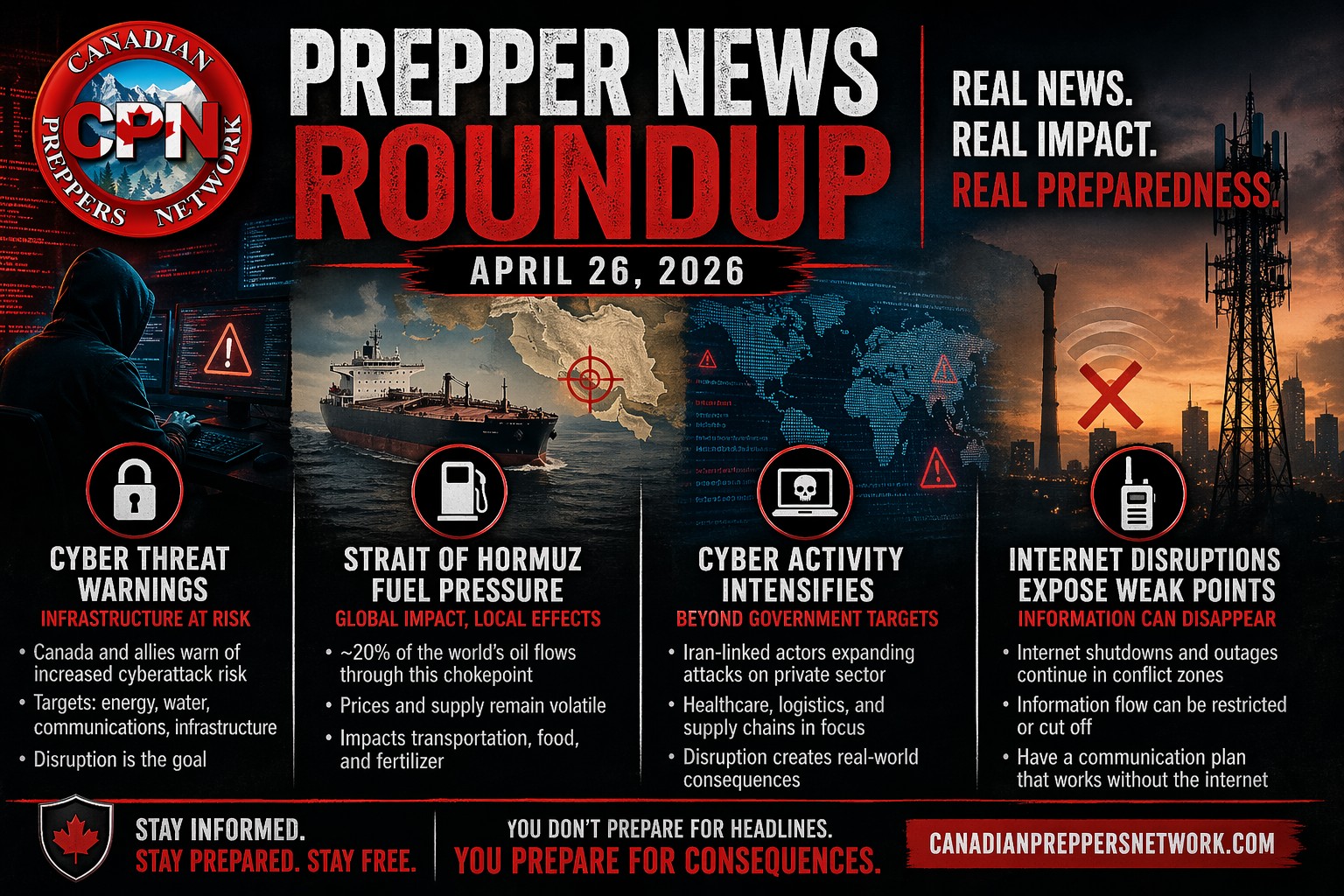
Fuel Pressure, Cyber Threats, and the Fragility of Modern Systems
Another week, another set of reminders that the systems we rely on aren’t as stable as they appear.
Nothing here is theoretical. These are real-world signals—some subtle, some not—that point to where pressure is building.
Here’s what actually matters.
Cyber Threat Warnings Expand Across Western Infrastructure
What Happened
Canadian and allied agencies are warning of increased cyberattack risk tied to escalating tensions involving Iran. Critical infrastructure—including energy, water, and communications systems—has been identified as potential targets.
Why It Matters
This isn’t about data theft or inconvenience. This is about disruption.
Cyberattacks targeting infrastructure don’t need to destroy systems—they only need to interrupt them. Power outages, compromised water systems, and communication breakdowns are all within reach of modern cyber capabilities.
Prepper Takeaway
If your plan depends entirely on systems staying online, it isn’t a plan. Redundancy—especially for power, water, and communication—is no longer optional.
Strait of Hormuz Tension Keeps Fuel Markets Unstable
What Happened
Ongoing instability around the Strait of Hormuz continues to threaten a major global oil chokepoint. Even without full disruption, the risk alone is driving volatility in fuel pricing and supply expectations.
Why It Matters
Roughly a fifth of the world’s oil passes through this corridor. When that flow is threatened, everything downstream feels it—transportation, food distribution, and industrial production.
You don’t need a shutdown to feel the effects. Uncertainty alone is enough to move prices and strain logistics.
Prepper Takeaway
Fuel isn’t just a cost—it’s a dependency. The more your daily life relies on consistent access to it, the more exposed you are when things tighten.
Cyber Activity Intensifies Beyond Government Targets
What Happened
Iran-linked cyber groups and affiliated actors are expanding activity beyond state targets, increasingly probing private-sector systems, healthcare, and logistics networks.
Why It Matters
This widens the field.
Disruption doesn’t have to come through government infrastructure. It can hit supply chains, services, and private systems that people rely on every day.
The result is the same: interruptions, delays, and uncertainty.
Prepper Takeaway
Digital systems are efficient—but fragile. Maintain offline backups where possible, and don’t assume access to services will always be immediate or reliable.
Internet Disruptions Highlight Communication Vulnerabilities
What Happened
Ongoing internet disruptions and shutdowns in conflict zones continue to demonstrate how quickly communication networks can be restricted or taken offline.
Why It Matters
Modern communication is heavily centralized.
When networks go down—whether through conflict, policy, or technical failure—information flow stops. Coordination becomes difficult. Misinformation fills the gap.
Most people have no alternative.
Prepper Takeaway
If your only communication plan is your phone, you don’t have a communication plan. Redundancy matters—especially systems that don’t rely on centralized infrastructure.
The Pattern Is the Story
None of these developments exist in isolation.
Fuel instability.
Cyber threats.
Communication vulnerabilities.
These are interconnected pressures on the same systems.
They don’t need to fail all at once to create problems. They just need to degrade.
And that’s what we’re seeing.
Final Thought
You don’t prepare for headlines.
You prepare for the consequences that follow them.