Why tampons are a poor choice for gunshot wounds, and what serious bleeding kits should actually contain
Preparedness circles have a bad habit of keeping certain myths alive long after they should have been buried. One of the worst is the idea that tampons belong in a trauma kit because they can be used as an emergency plug for a bullet wound.
It sounds clever. It sounds compact. It sounds like the kind of improvised trick people repeat around campfires, gun counters, and online forums. Unfortunately, it is also bad advice.
A tampon is designed for menstrual absorption. A trauma dressing is designed to help control severe bleeding through pressure, packing, clotting support, or compression. Those are not the same job. In a serious bleeding emergency, the goal is not to soak up blood. The goal is to stop blood loss by applying the right kind of pressure in the right place, using tools meant for that purpose.
That difference matters.
Canadian preppers are often practical people. We like dual-use gear, improvised solutions, and simple tools that work without batteries. There is nothing wrong with that mindset. The problem begins when “improvised” becomes an excuse to carry the wrong item instead of the right one. A tampon may look like a small, sterile plug, but that does not make it a trauma dressing. In a real emergency, false confidence can be more dangerous than having no gear at all.
This is where medical preparedness has to grow up.
We have talked before about why remote first aid training should be a priority for Canadian preppers. Gear matters, but training decides whether that gear becomes useful or just comforting clutter. The tampon myth is a perfect example. It gives people the feeling that they have solved a trauma problem without giving them the tools, practice, or decision-making ability to actually manage one.
Severe bleeding is not controlled by absorbency. It is controlled by pressure.
That single sentence should change the way a prepper looks at a trauma kit.
A roll of gauze is not useful because it can hold blood. It is useful because it can be packed and compressed in a way that helps create pressure where bleeding is occurring. A pressure dressing is not useful because it looks tactical. It is useful because it helps maintain firm pressure when hands need to be freed for other work. A tourniquet is not useful because it looks dramatic. It is useful because, when properly applied to the right kind of limb bleeding by someone who knows what they are doing, it can stop blood flow long enough for the injured person to have a fighting chance.
A tampon does none of those jobs well.
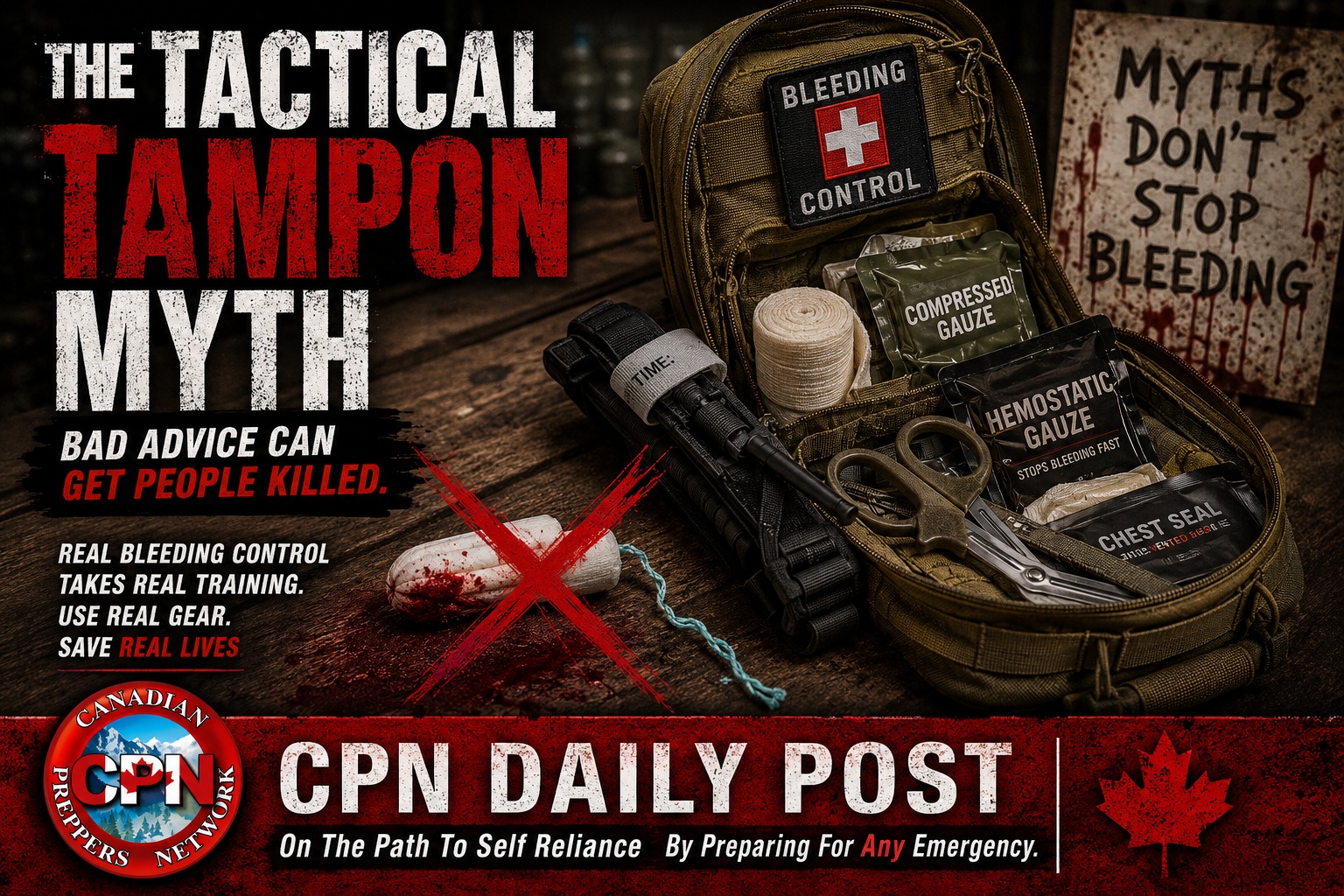
It is small. It expands in a limited way. It is shaped for a very specific purpose. It does not provide broad, firm, controlled wound packing. It does not maintain external pressure. It is not a replacement for compressed gauze, hemostatic gauze, a pressure bandage, or a tourniquet. Worse, because it absorbs blood, it can create the illusion that something useful is happening while serious bleeding continues.
That is the heart of the problem. Bad medical myths do not just fail. They waste time.
In a normal emergency, that delay may cost minutes. In a remote location, hunting camp, retreat, storm cleanup, workshop accident, or long-term grid-down setting, that delay may cost much more. The farther you are from professional help, the less room you have for fantasy medicine.
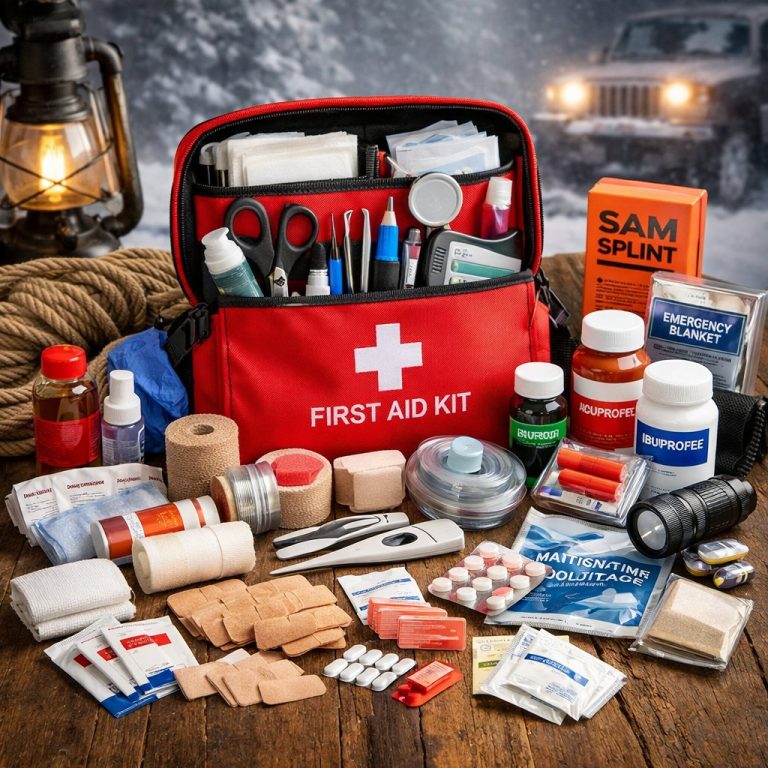
A proper preparedness medical system starts with ordinary first aid and builds upward. Bandages, antiseptic, gloves, tape, splints, burn dressings, medications, and documentation all matter. But severe bleeding requires its own category. It should not be mixed in with adhesive bandages, tweezers, and cold packs like just another small injury.
A trauma kit should be clearly marked, easy to reach, and built around actual bleeding-control tools.
That means quality tourniquets from reputable sources, not knockoff junk. It means compressed gauze. It means hemostatic gauze where appropriate and where the user is trained. It means pressure dressings. It means trauma shears, gloves, emergency blankets, and a pouch or case that can be grabbed under stress. It may also mean chest seals in a kit intended for serious remote or violent-injury scenarios, but again, those require training and a clear understanding of what they are for.
The point is not to pretend every prepper is a medic. The point is to stop pretending that a household first aid kit and a trauma kit are the same thing.
They are not.
A household first aid kit deals with common injuries and illnesses: cuts, burns, sprains, headaches, stomach issues, allergies, minor infections, and day-to-day medical needs. A trauma kit deals with immediate life threats where waiting passively is not an option. That does not mean panic. It means having the right supplies, knowing their limits, and getting proper training before you need them.
The Medical & First Aid in Canada hub lays out the bigger framework: training, supplies, documentation, prescriptions, sanitation, evacuation planning, and delayed-response realities. Bleeding control belongs inside that framework. It is not a stand-alone trick. It is part of a complete medical readiness system.
That is also why the tampon myth keeps surviving. It appeals to the wrong part of the prepper brain.
It feels clever. It feels cheap. It feels like secret knowledge. It feels like something the average person would not think of. But real preparedness is not about secret tricks. It is about boring competence. Take the course. Buy the right supplies. Open the package. Practise with training versions. Label the kit. Teach the household where it is. Replace expired items. Review the plan.
There is no romance in that, but it works.
Another problem with myths like this is that they encourage people to build kits around scenarios instead of functions. A person hears “gunshot wound” and starts thinking about one dramatic injury. A better approach is to think in categories: severe limb bleeding, severe bleeding in a place where a tourniquet cannot be used, shock prevention, communication, evacuation, and documentation. Once you think that way, the supply list changes.
You stop asking, “What household object could I shove into a wound?”
You start asking, “What tool is designed to control this kind of bleeding, and have I trained with it?”
That is a much better question.
For Canadian preppers, this matters beyond the obvious self-defence conversation. Severe bleeding can come from chainsaws, axes, farm equipment, workshop tools, vehicle crashes, glass, storm debris, hunting accidents, and remote travel. A trauma kit is not just a tactical accessory. It is rural safety gear. It is homestead safety gear. It is workshop safety gear. It is winter-road safety gear. It is something that belongs anywhere help may be delayed.
This is why proper supplies should be staged where serious injuries could happen. A trauma kit locked in the house is not much help beside the woodpile. A tourniquet buried at the bottom of a camping bin is not much help in the truck. A pressure dressing in a range bag does nothing for a chainsaw injury at the back of the property. Place supplies where risk exists.
That may mean one kit in the house, one in the vehicle, one in the workshop, and one in the range or hunting bag. Groups and retreats should go further and standardize their kits so people are not searching through five different pouch layouts during an emergency.
Just as importantly, do not hide the serious supplies from the rest of the household. Everyone should know where the trauma kit is. Everyone should know that it is not for scraped knees and blisters. Everyone should know who has training. In a group setting, medical roles should be assigned before anything happens, not argued over during the emergency.
The tampon myth also highlights a wider problem with prepper medical advice: people often confuse “sterile” with “appropriate.”
Sterility matters, but it is not enough. A sterile item can still be the wrong tool. A sterile cotton ball is not a pressure dressing. A sterile bandage is not a tourniquet. A sterile tampon is not wound-packing gauze. In real medical preparedness, the shape, material, function, and method of use all matter.
That does not mean improvisation has no place. In a true last-resort situation, people may use whatever clean material they have to apply pressure until better help or better supplies are available. But that is not an argument for stocking poor substitutes on purpose. Improvisation is what you do when your plan fails. It should not be the plan.
A serious prepper should be willing to say, “That sounded clever, but it is wrong.”
That is how a group gets better.
It is also how we separate practical preparedness from internet folklore. The goal is not to win an argument online. The goal is to keep people alive, functional, and calm when the situation is already bad enough. Myths make people feel prepared. Systems make them prepared.
So keep tampons where they belong: in hygiene supplies.
They absolutely have a place in a preparedness inventory. Feminine hygiene products are often forgotten in emergency planning, especially in mixed households, retreats, camps, and community shelters. They should be stocked, rotated, and treated as essential comfort and sanitation items. But they are not trauma dressings, and they should not be packed or promoted as gunshot wound supplies.
Build the trauma kit with trauma supplies.
Train with those supplies.
Then make sure the people around you know where they are and when to use them.
That is the difference between preparedness and myth collecting.
Buying Box: Build a Real Bleeding-Control Kit
Disclosure: As an Amazon Associate, Canadian Preppers Network may earn from qualifying purchases.
Start with proper training, then build the kit around proven tools:
Bleeding Control Kits
https://www.amazon.ca/s?k=bleeding+control+kit&tag=canadianprep-20
Quality Tourniquets
https://www.amazon.ca/s?k=CAT+tourniquet&tag=canadianprep-20
Hemostatic Gauze
https://www.amazon.ca/s?k=hemostatic+gauze&tag=canadianprep-20
Compressed Gauze
https://www.amazon.ca/s?k=compressed+gauze&tag=canadianprep-20
Emergency Pressure Dressings
https://www.amazon.ca/s?k=Israeli+bandage+pressure+dressing&tag=canadianprep-20
Trauma Shears and Nitrile Gloves
https://www.amazon.ca/s?k=trauma+shears+nitrile+gloves&tag=canadianprep-20
Chest Seals
https://www.amazon.ca/s?k=vented+chest+seal&tag=canadianprep-20
For a broader medical supply framework, see the CPN Medical and First Aid Buying Guide.
The final takeaway is simple.
Do not build a trauma kit around clever myths. Build it around training, pressure, proper tools, and realistic response time. Tampons belong in the hygiene bin. Severe bleeding supplies belong in a real trauma kit. Confusing the two is not preparedness. It is wishful thinking with packaging.
Medical preparedness is one of the places where humility matters most. None of us want to discover our kit is wrong while someone is depending on it. Fix the problem now, while the shelves are stocked, the roads are open, and there is still time to take a course.
That is how preppers should treat bad advice: test it, discard it, and replace it with something that actually works.
Medical source note: For training, look for recognized bleeding-control and remote first aid instruction. Stop the Bleed training focuses on direct pressure, tourniquet use, and wound packing for severe bleeding. Trauma guidance also emphasizes purpose-built tools such as tourniquets, hemostatic dressings, gauze, and pressure dressings rather than absorbent hygiene products.