Food disruptions in Canada rarely announce themselves dramatically. There are no sirens, no official warnings, and no immediate signs of crisis. Instead, food stress shows up quietly — delayed deliveries, reduced selection, higher prices, unreliable access, or power interruptions that make food difficult to store or prepare.
Winter accelerates these pressures. Snowstorms, freezing rain, highway closures, and mechanical failures all compress the margins of modern food systems. By the time shelves appear visibly thin, households are already reacting instead of operating from a position of calm.
For Canadian preppers, food preparedness is not about hoarding calories. It is about maintaining normal, familiar meals when convenience and infrastructure begin to degrade.
Winter Disrupts Access Long Before Supply Fails
Across Canada, winter storms routinely slow transportation before they affect production. Trucks are delayed, secondary highways close, and smaller communities receive deliveries later or less frequently. Urban stores may still appear stocked, but rural and semi-rural areas feel the strain first.
This creates a false sense of security. Food exists — but access becomes inconsistent.
Preparedness addresses this gap by creating time independence. When a household has food on hand that fits its normal eating habits, short disruptions become irrelevant rather than stressful. The goal is not to stock exotic emergency foods, but to ensure that regular meals remain possible even when shopping becomes inconvenient or impossible for several days.
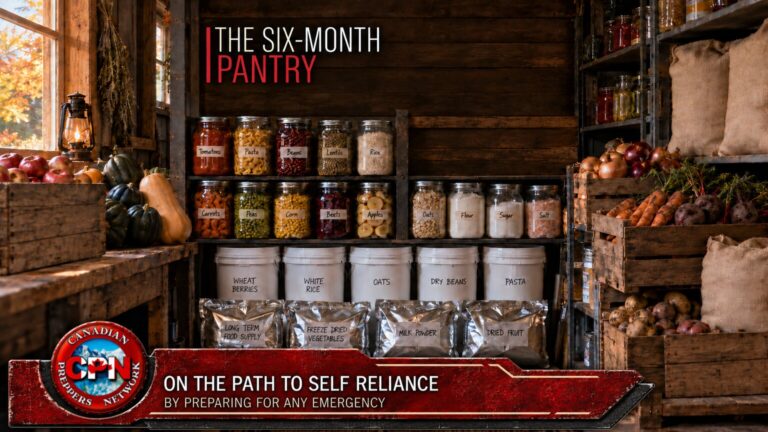
Proper organization matters here. Stackable, airtight food storage containers designed for dry goods (https://amzn.to/3YF8K2A) protect staples like flour, rice, oats, and pasta from moisture and pests while making rotation simple and visible during winter, when basements and storage areas are harder to access.
Power Reliability Determines What Food You Can Use
Food and energy preparedness are inseparable in winter. A pantry full of food is far less useful if you cannot cook, reheat, or boil water safely during a power outage. In cold weather, outages aren’t just inconvenient — they directly affect morale, warmth, and energy levels.
Prepared food that requires minimal cooking time, simple heat, or one-pot preparation becomes disproportionately valuable. Being able to prepare hot meals stabilizes households emotionally and physically during cold disruptions.
A compact backup cooking option, such as a small propane or butane stove suitable for emergency use with proper ventilation (https://amzn.to/3XQ9M4J), allows normal food routines to continue when grid power is unavailable. This capability often matters more than the size of the food supply itself.
Food preparedness should always be evaluated alongside how that food will actually be prepared under winter conditions.
Freezers Are Useful — Until They Aren’t
Many Canadian households rely heavily on freezers for food security, especially those storing meat, garden produce, or bulk purchases. Freezers are excellent tools, but winter exposes their limitations quickly.
Power outages place immediate pressure on frozen food. Snowed-in outbuildings become inaccessible. Cold air helps, but temperature swings during outages introduce uncertainty. In these moments, households often discover that they lack alternatives.
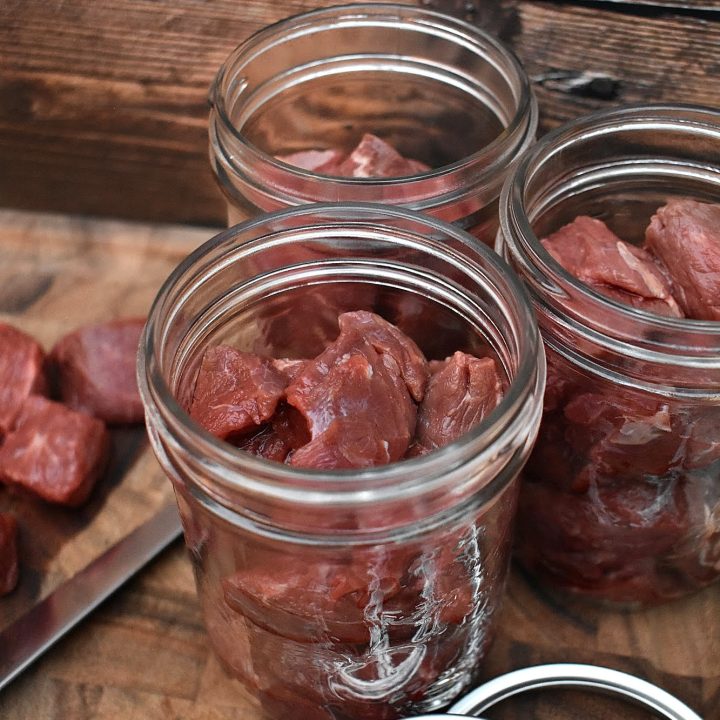
Food preparedness means having layers. Shelf-stable foods, preserved items, and low-energy cooking options reduce the urgency to save everything at once. This prevents rushed decisions, waste, and stress during outages.
Freeze-dried and dehydrated foods, used selectively, provide flexibility without replacing normal meals. A small supply of quality freeze-dried ingredients (https://amzn.to/3ZP7L8D) can supplement fresh or frozen food when access or power is limited, helping bridge gaps without forcing dietary changes.
Rotation Is the True Test of Preparedness
Food storage that isn’t rotated is not preparedness — it’s deferred waste. Winter exposes rotation failures quickly. Poor lighting, cold storage spaces, and disrupted routines make it obvious whether food is actually accessible and usable.
Effective food preparedness emphasizes:
- Foods your household already eats
- Clear labeling and organization
- Regular integration into meals
- Seasonal awareness (what freezes, what thickens, what clumps)
If food feels unfamiliar or inconvenient now, it will be ignored under stress later.
Rotation also builds confidence. When households know exactly what they have and how to use it, food becomes a stabilizing force rather than a source of anxiety.
Food Stability Supports Everything Else
Food disruptions cascade. Poor nutrition during winter increases illness risk, reduces tolerance to cold, and worsens stress. When meals become irregular or inadequate, decision-making suffers.
Preparedness that maintains consistent nutrition and familiar meals improves morale, physical resilience, and household cohesion. This is why food is always the first topic in the rotation — it underpins every other preparedness domain.
Food isn’t just fuel. It’s structure.
Practical Actions for This Week
Based on current winter conditions:
- Identify which meals you can prepare without grid power
- Rotate one shelf or container of stored food into normal use
- Test your backup cooking method safely
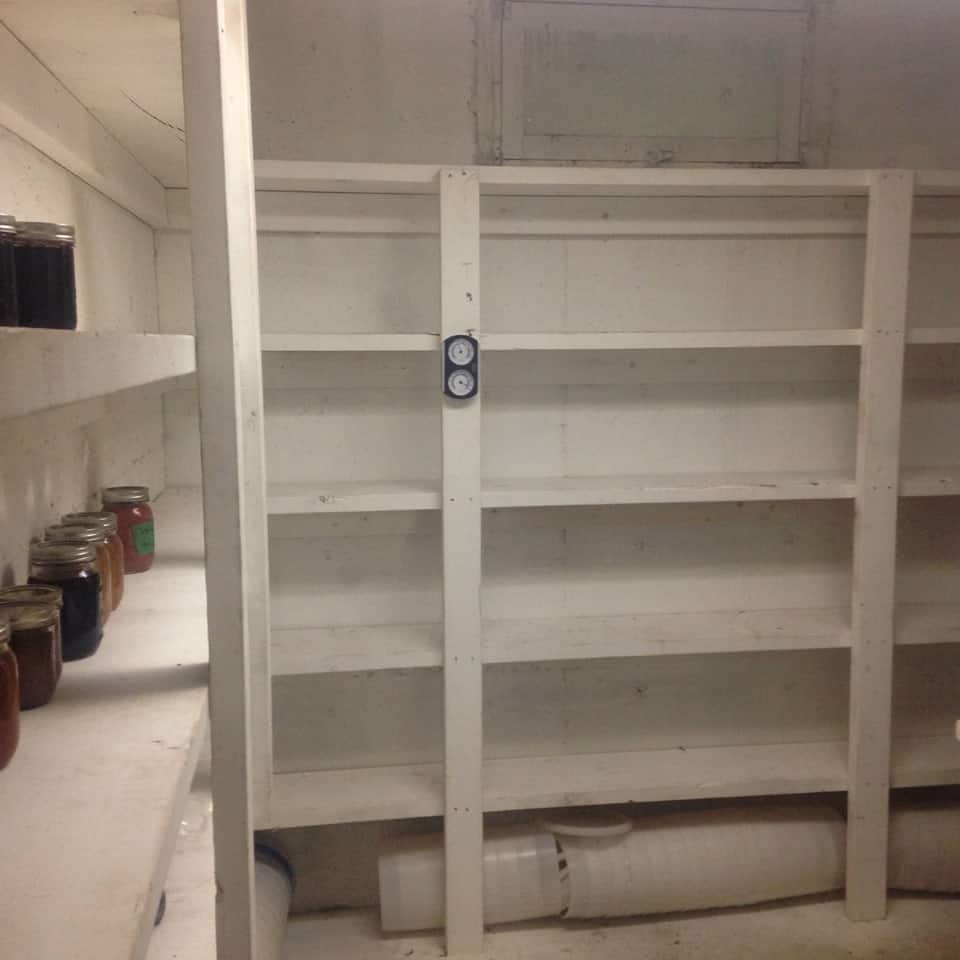
- Check food storage areas for moisture or freezing issues
Preparedness improves fastest when it is exercised quietly and consistently.
Acres of Preparedness
Short-term food storage is only one layer. Acres of Preparedness explores long-term food resilience — including production, preservation, cooking methods, storage design, and community-scale planning — all tailored to Canadian climates and extended disruptions.