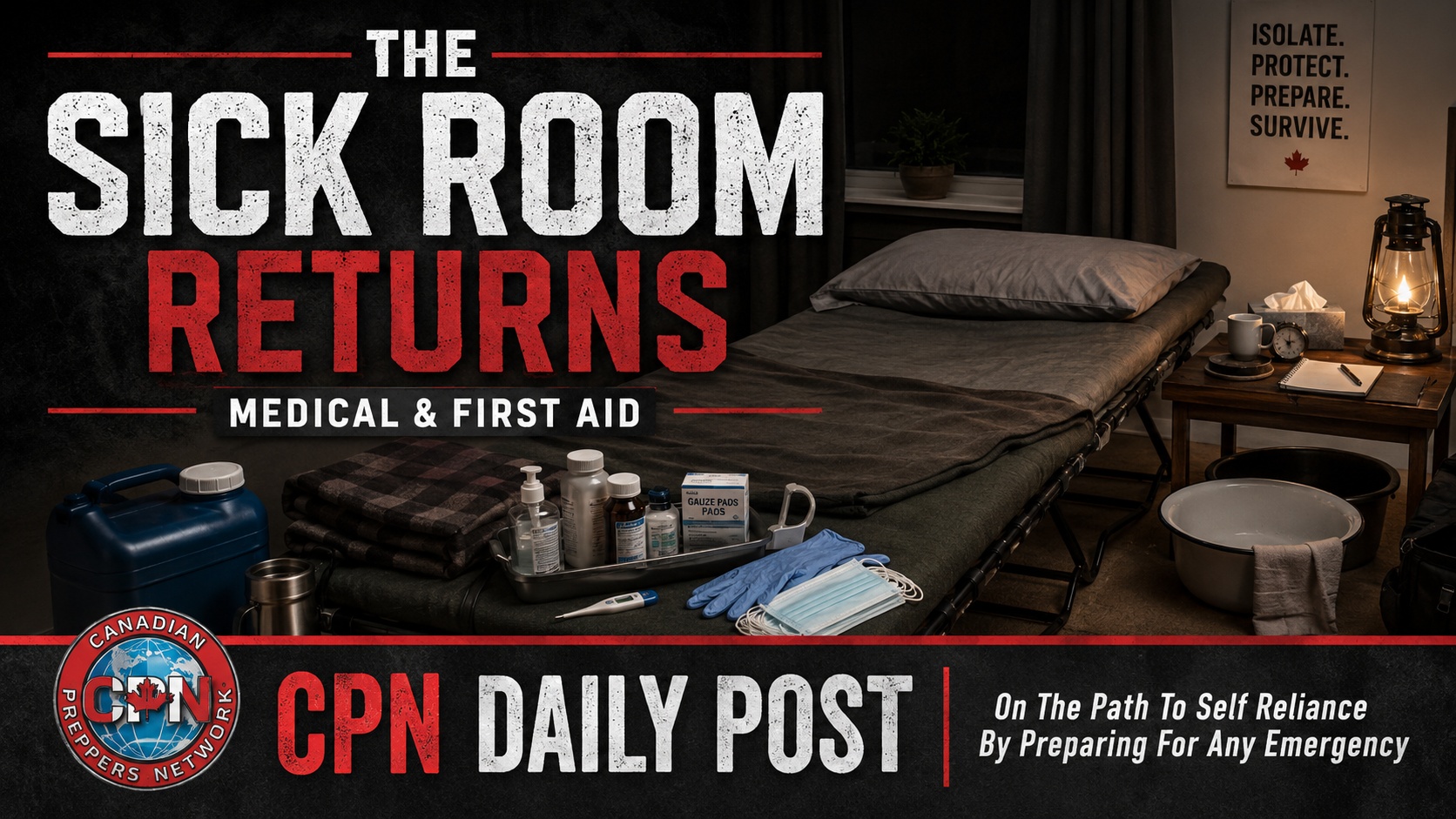
When clinics are overloaded, roads are bad, pharmacies are delayed, or help is simply too far away, every prepared household needs a plan for caring for the sick without letting the whole home fall apart.
Modern life has trained people to treat sickness as something handled somewhere else. You feel unwell, you call a clinic. A child gets worse, you head to urgent care. Someone needs medication, you go to the pharmacy. Someone is contagious, you hope the system absorbs the problem.
That works when the system is working.
But in a serious winter storm, prolonged outage, pandemic wave, fuel shortage, flood, wildfire evacuation, or wider breakdown, the old idea of the sick room comes back fast. Not because anyone wants to play doctor, but because illness inside a household can become a whole-house problem if there is no plan.
A sick room is not a hospital. It is not a replacement for professional care. It is a controlled home-care space meant to isolate illness, organize supplies, reduce spread, protect caregivers, and keep the rest of the household functioning until proper medical help is available or the illness passes.
For prepared families, homesteads, retreats, and rural households, this is not optional planning. It belongs beside food storage, water, heat, sanitation, communications, and security.
The Sick Room Is A System, Not A Spare Bedroom
The first mistake is thinking the sick room is just “where the sick person sleeps.” That is only part of it.
A useful sick room has a purpose. It separates the ill person from the main household. It keeps supplies in one place. It gives caregivers a routine. It reduces unnecessary movement through the home. It creates a clean boundary between the sick area and the rest of the living space.
That matters because illness spreads through habits. Shared cups, shared towels, poor handwashing, contaminated bedding, careless garbage handling, and people wandering through the house while sick can turn one patient into a household outbreak.
In normal times, that is inconvenient. In a long emergency, it can cripple the whole household.
If everyone gets sick at once, who hauls water? Who feeds animals? Who keeps the stove going? Who checks the generator? Who cooks? Who watches the road? Who makes decisions?
The sick room exists to protect the household’s ability to keep operating.
Choosing The Room
The best sick room is not always the nicest room. It is the room that is easiest to manage.
Ideally, it should be away from the busiest part of the house, easy to ventilate when weather allows, close enough to a bathroom to limit movement, and simple to clean. A room with unnecessary clutter, carpet, piles of fabric, and shared household storage is harder to control.
If there is no spare bedroom, choose a corner of a room that can be separated with distance, a screen, plastic sheeting, or a simple household barrier. The goal is not perfection. The goal is reducing contact and making routines obvious.
In a retreat or multi-family household, the sick area should be identified before anyone is ill. Waiting until people are feverish, tired, and stressed is how poor decisions get made.
Set The Boundary Early
A sick room needs a boundary. That boundary can be a closed door, a curtain, a marked floor line, or a simple “clean side / sick side” arrangement. The important thing is that everyone understands it.
Only necessary caregivers should enter. Children, visitors, curious relatives, and unnecessary traffic should stay out. Supplies should be passed in and out in a controlled way. Laundry, dishes, garbage, and bedding should have a routine.
This sounds strict because it needs to be strict. In a prolonged emergency, casual behaviour spreads illness. Discipline keeps the rest of the household functional.
The boundary also helps the sick person. It gives them a quiet space to rest, reduces confusion, and prevents constant interruptions from a household that is already under stress.
Caregiver Protection Starts With Habits
The caregiver is the weak point in many home illness plans. One person goes in and out of the sick room, touches bedding, handles dishes, wipes surfaces, checks temperature, then walks into the kitchen and starts preparing food.
That is how illness moves.
Caregiver protection begins with basic habits: clean hands, dedicated gloves when needed, a mask or respirator when appropriate, careful laundry handling, separate towels, separate dishes where practical, and no casual touching of the face while working in the sick area.
Hand hygiene is one of the simplest protective layers. Soap and water should be available. Hand sanitizer is useful when hands are not visibly dirty, but it should not replace proper washing when washing is possible.
Protective gear should be staged outside the sick room, not buried in a closet. If gloves, masks, garbage bags, wipes, thermometer covers, and hand cleaner are not easy to reach, people will skip steps when tired.
Build A Sick Room Kit Before You Need It
A sick room kit should be packed before anyone is sick. The middle of an outbreak is not the time to discover there is one thermometer, two pairs of gloves, no disinfectant wipes, and no clean bucket.
A practical sick room kit should include basic monitoring tools, hygiene supplies, cleaning supplies, bedding control, waste handling, and comfort items. It should not be built around pretending to run a hospital. It should be built around keeping the home organized and reducing preventable spread.
At minimum, consider storing a digital thermometer, spare batteries, disposable gloves, masks or respirators, hand sanitizer, soap, disinfectant wipes or appropriate cleaning solution, paper towels, tissues, garbage bags, a lined waste bin, dedicated towels, a washable blanket, a notebook, pens, a flashlight, and a way to keep drinking water close by.
A notebook matters more than people think. When someone is sick, memory gets unreliable. Write down temperature checks, fluid intake, symptoms, medications already taken, times, meals, and any changes. If professional medical help becomes available later, those notes are useful.
Know What You Are Not Trying To Do
The sick room is for care, monitoring, isolation, rest, hydration, cleanliness, and household control. It is not for guessing at serious medical treatment.
Do not turn the sick room into a place for experimenting with medications, mixing treatments, using old prescriptions, or delaying emergency care when someone clearly needs it. Preparedness does not mean pretending every problem can be solved at home.
Some conditions need professional help. Trouble breathing, chest pain, severe dehydration, confusion, worsening weakness, uncontrolled bleeding, severe allergic reactions, serious injuries, or symptoms that are rapidly getting worse should be treated as urgent warning signs.
A prepared household should have phone numbers, local clinic information, telehealth options where available, neighbour contacts, transportation plans, and backup communication methods written down. If the system is strained, it may take longer to reach help. That makes early recognition and good records even more important.
Water, Food, And Hydration Inside The Sick Room
Sick people need simple systems. They may not feel like eating. They may forget to drink. They may be too weak to get up safely. The caregiver should not be making everything up from scratch each time.
Keep drinking water available in a dedicated container or bottle. Use simple foods that are easy to digest and easy to prepare. Keep dishes separate where practical, and wash them carefully. Avoid creating a pile of contaminated cups and plates that move through the whole kitchen without thought.
In a grid-down situation, water becomes even more important. The sick room should not consume water carelessly, but it also cannot be neglected. Drinking, handwashing, cleaning, laundry, and sanitation all require planning.
If water is limited, the household needs priorities. Drinking water comes first. Hand hygiene and basic cleaning come next. Laundry may need to be controlled and batched. Disposable items may reduce washing needs, but they increase garbage. Every choice has a cost.
Laundry Can Spread The Problem
Bedding, towels, clothing, and washcloths from the sick room need a routine. Do not shake laundry. Do not drag it through the house uncovered. Do not mix it casually with the rest of the household laundry if someone is clearly contagious.
Use a dedicated laundry bag or lined container. Wash hands after handling. Clean the container if it is reused. Keep clean bedding separate from used bedding. In a power outage, laundry becomes harder, so the sick room should use bedding deliberately rather than creating unnecessary piles.
Prepared households should store extra sheets, pillowcases, towels, and washable blankets. Disposable bed pads can also help protect mattresses and reduce cleanup when someone is very ill.
Waste Needs A Plan
Used tissues, gloves, wipes, dressings, disposable masks, food waste, and other sick-room garbage should not float around the house. Use a lined waste bin with a lid if available. Tie bags securely. Keep waste away from children, pets, and food areas.
If normal garbage pickup is disrupted, waste management becomes more serious. Store waste in a secure place where animals cannot tear into it. Do not create a sanitation problem while trying to solve a sickness problem.
For households using backup toilet systems, buckets, composting toilets, or emergency sanitation setups, the sick room must be integrated into that plan. Vomit, diarrhea, and contaminated waste can overwhelm a poorly prepared household quickly. This is where gloves, bags, disinfectant, absorbent material, and clear routines matter.
Ventilation, Heat, And Carbon Monoxide
Fresh air can help reduce stale indoor conditions, but Canadian weather does not always cooperate. In winter, the goal is controlled ventilation without freezing the room or wasting precious heat.
Open a window briefly when safe and practical. Use fans carefully if they do not blow air from the sick area into the rest of the home. Keep the room warm enough for recovery, especially for children, seniors, or anyone already weak.
Backup heat must be handled with respect. Fuel-burning equipment can create carbon monoxide risk if used incorrectly. Outdoor cookers, charcoal grills, camp stoves, and generators do not belong inside the home, garage, tent, camper, or shed. Carbon monoxide alarms should be working before the emergency, not searched for after someone feels ill.
A sick person in a cold house is already under stress. A sick person in a house with unsafe heating is in danger.
The Sick Room In A Multi-Family Retreat
In a retreat setting, illness control becomes even more important. More people means more movement, more shared tools, more shared meals, more shared work, and more opportunity for one illness to spread through the whole group.
A retreat should have a sick-room plan before the first fever appears. Who decides when someone is isolated? Where do they go? Who cares for them? How are meals delivered? Which bathroom do they use? How are laundry and waste handled? How does the group keep working if one family is down?
This may feel uncomfortable to discuss in normal times. Discuss it anyway.
Retreats fail when people avoid hard conversations until the situation forces them. A serious group needs rules for sickness, hygiene, food handling, water handling, and shared spaces. The goal is not paranoia. The goal is keeping one illness from knocking out the entire retreat.
Do Not Forget The Caregiver
The caregiver needs protection, sleep, food, water, and relief. A burned-out caregiver makes mistakes. They skip handwashing. They forget notes. They mishandle laundry. They get short-tempered. They become the next patient.
If the household has more than one capable adult, caregiving should be organized. One person may handle direct care. Another may handle meals, water, laundry, supplies, animals, or outside chores. If only one caregiver is available, routines become even more important.
The sick room should make care simpler, not more chaotic.
Practice Before The House Is Sick
Preparedness is built before the crisis. Take one afternoon and decide where the sick room would be. Put the kit together. Label the bin. Print or write emergency numbers. Store extra gloves, masks, garbage bags, disinfectants, thermometer batteries, and bedding. Decide how laundry and waste would move.
Then walk through the process.
Where does the caregiver wash hands? Where does used laundry go? Where are clean sheets stored? How does food get delivered? How does the sick person call for help? Where is the flashlight? Where is the notebook? Where is the garbage staged if pickup stops?
These details sound small until they are missing.
The Old Skill Returns Because The System Is Fragile
The sick room is an old idea because households used to understand that illness had to be managed at home. Modern medicine is a gift, but it has also made many families helpless when the system is delayed or overwhelmed.
Preparedness means recovering some of that household competence without pretending to replace doctors, nurses, clinics, or hospitals.
A good sick room gives the household structure. It protects the healthy. It supports the ill. It keeps supplies organized. It gives the caregiver a routine. It reduces panic. It buys time.
In a serious emergency, buying time can matter.
Related CPN Resources
Medical & First Aid In Canada
https://canadianpreppersnetwork.com/canadian-preppers-network-preparedness-hubs/medical-first-aid-in-canada/
Water Collection & Purification In Canada
https://canadianpreppersnetwork.com/canadian-preppers-network-preparedness-hubs/water-collection-purification-in-canada/
Shelter & Heat In Canada
https://canadianpreppersnetwork.com/canadian-preppers-network-preparedness-hubs/shelter-heat-in-canada/
Food Procurement & Storage In Canada
https://canadianpreppersnetwork.com/canadian-preppers-network-preparedness-hubs/food-procurement-storage-in-canada/
Mental Resilience & Community Building In Canada
https://canadianpreppersnetwork.com/canadian-preppers-network-preparedness-hubs/mental-resilience-community-building-in-canada/
Preparedness Buying Box: Sick Room Supplies
Digital Thermometers
https://www.amazon.ca/s?k=digital+thermometer&tag=canadianprep-20
Disposable Nitrile Gloves
https://www.amazon.ca/s?k=disposable+nitrile+gloves&tag=canadianprep-20
N95 Respirators
https://www.amazon.ca/s?k=n95+respirator&tag=canadianprep-20
Hand Sanitizer
https://www.amazon.ca/s?k=hand+sanitizer&tag=canadianprep-20
Disinfectant Wipes
https://www.amazon.ca/s?k=disinfectant+wipes&tag=canadianprep-20
First Aid Kit Refill Supplies
https://www.amazon.ca/s?k=first+aid+kit+refill+supplies&tag=canadianprep-20
Disposable Bed Pads
https://www.amazon.ca/s?k=disposable+bed+pads&tag=canadianprep-20
Heavy-Duty Garbage Bags
https://www.amazon.ca/s?k=heavy+duty+garbage+bags&tag=canadianprep-20
Covered Waste Bin
https://www.amazon.ca/s?k=covered+waste+bin&tag=canadianprep-20
Emergency Weather Radio
https://www.amazon.ca/s?k=emergency+weather+radio&tag=canadianprep-20
Carbon Monoxide Alarms
https://www.amazon.ca/s?k=carbon+monoxide+alarm&tag=canadianprep-20
Official References
Government of Canada: Emergency Kits
https://www.canada.ca/en/services/policing/emergencies/preparedness/get-prepared/emergency-kits.html
Health Canada: Food And Drinking Water Safety In An Emergency
https://www.canada.ca/en/health-canada/services/food-drinking-water-safe-emergency.html
Public Health Agency of Canada: Hand Hygiene
https://www.canada.ca/en/public-health/services/healthy-living/hand-hygiene.html
Government of Canada: Reduce The Spread Of Respiratory Infectious Diseases
https://www.canada.ca/en/public-health/services/diseases/respiratory-infectious-diseases-reduce-spread-personal-protective-measures.html
Health Canada: Preventing Carbon Monoxide Exposure
https://www.canada.ca/en/health-canada/services/air-quality/pollutants/carbon-monoxide/preventing-exposure.html
Final Thought
The sick room is not glamorous preparedness. It does not look exciting in a gear photo, and it does not make people feel tough. But when sickness hits a household during a wider emergency, it becomes one of the most important systems in the home.
Set up the plan now. Choose the room. Build the kit. Store the supplies. Write the routines. Because when the sick room is needed, the household will already be tired, stressed, and short on options.
That is exactly when a prepared system matters most.